

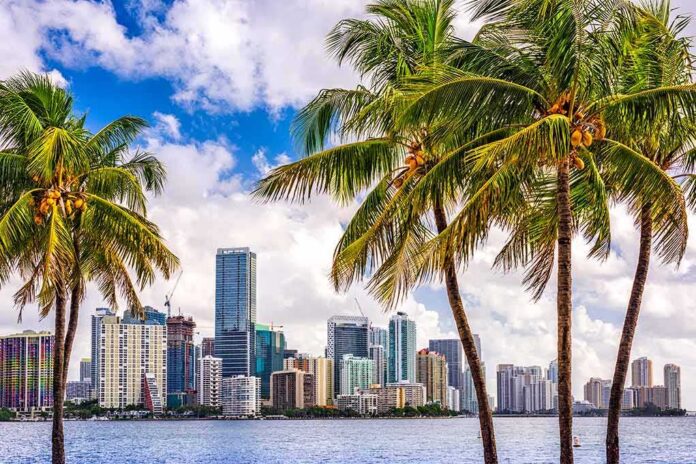
Miami topped a 70-city ranking as “America’s rudest city,” scoring 94.11 out of 100 based on online behavior signals, according to new reporting.
Story Highlights
- Miami ranked first for rudeness among 70 cities with a composite score of 94.11.
- Miami also led in rude-related internet searches per 10,000 residents in the study.
- Prior surveys likewise put Miami first for perceived rudeness among residents.
- The sponsor noted the ranking reflects online signals, not every resident’s conduct.
Study Finds Miami First In Composite Online Rudeness Ranking
Manhattan Mental Health Counseling analyzed online signals across 70 U.S. cities and ranked Miami first with a composite rudeness score of 94.11, ahead of Las Vegas at 91.84, according to the New York Post’s summary of the findings. The analysis drew on Yelp reviews, Reddit discussions, and search activity tied to rude behavior. The report framed Miami as dethroning New York for the title. These inputs were combined into a single score intended to show how often people encounter or discuss rude conduct online.
The same coverage reported Miami produced the highest rate of rude-related internet searches per 10,000 residents among the cities in the study. That measure suggests more people in Miami, or talking about Miami, searched for topics tied to rude acts. The approach used public online traces rather than in-person observation. The sponsor’s spokesperson cautioned that the ranking reflects a snapshot of online patterns and does not label every Miami resident as rude.
Earlier Surveys Also Put Miami At The Top For Perceived Rudeness
The new list aligns with earlier perception surveys that also placed Miami first. A 2024 Preply study, reported by PIX11, asked residents about rude behaviors like loudness, speakerphone use, and playing media without headphones, and ranked Miami at the top. Time Out reported that a 2026 Solitaire Streak survey of residents in 40 cities gave Miami a rudeness score of 99.29 out of 100, with locals rating average resident rudeness at 6.55 on a 0-to-10 scale. Each study used different inputs but pointed to the same headline.
These studies measured different things, which limits direct comparison. The Manhattan Mental Health Counseling ranking leaned on Yelp, Reddit, and search activity. The Preply and Solitaire Streak efforts asked residents about their own experiences and perceptions. Agreement in outcomes may catch attention, but it does not mean the methods measured the same construct. Still, the repeated first-place finishes keep Miami in the spotlight and shape public chatter about the city’s civility.
How To Read Attention-Grabbing City Rankings Without Overreach
Readers see these “best and worst city” lists often because they are easy to compile and share. They turn online signals and quick surveys into national leaderboards that travel fast on social media. The American Association for Public Opinion Research advises that survey quality depends on clear methods, known sampling, and reported margins of error. Without those details, results are hard to judge for representativeness or error range. That is a useful lens when a ranking leaps from feeds to dinner-table talk.
The Post’s summary did not include details like sample size, selection method, field dates, or weights for each data source in the composite score. That does not void the reported outcome, but it does set guardrails for how far to take it. The sponsor’s own note that the list reflects online behavior is one such guardrail. When readers see a city branded as “rudest,” they should remember the label flows from how much and how often people post, rate, and search about rude behavior, not a headcount of actual incidents.
What It Means For Locals, Tourists, And Public Life
Miami residents and business owners may feel the sting of a rude label, fair or not. Tourists might expect brusque service or loud crowds after seeing headlines. But city life is complex. Some neighborhoods are quiet and polite. Others are busy and blunt. Visitors can help by setting clear expectations, showing patience, and respecting local norms. Locals can help by modeling courtesy in lines, on roads, and in public spaces. Politeness costs little and pays back daily.
Move over, New York! Miami steals title of America's rudest city https://t.co/DBlJiCVs2p pic.twitter.com/Nuz8Z395vz
— New York Post (@nypost) November 8, 2026
For policymakers and community leaders, the practical takeaway is to focus on real behavior that people feel every day. Clear signs, transit etiquette drives, and customer-service training can raise standards without heavy-handed rules. Families and faith groups can set examples for kids on respect and calm talk. That is how a city’s tone changes. Not with a viral list, but with thousands of small choices that put grace, order, and neighborly duty first.
Sources:
nypost.com, news-press.com, pix11.com, travel.yahoo.com