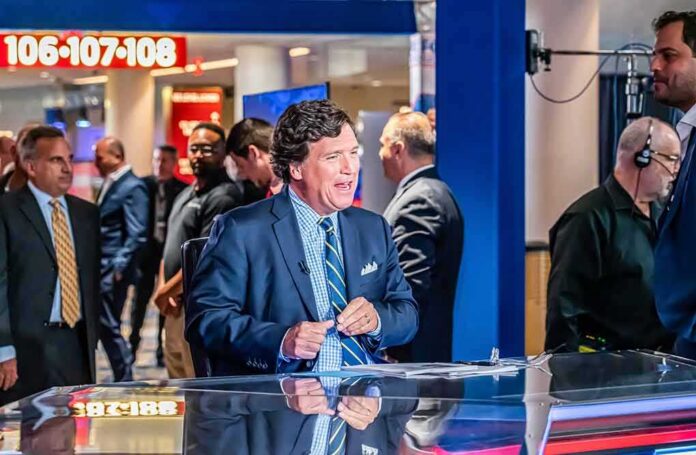
Tucker Carlson’s on-air claim that algebra is “fake math with letters” turned a school subject into a culture-war target heard by millions.
Story Snapshot
- Carlson questioned why algebra uses letters and called it “fake math,” per clips and recaps.
- Educators counter that algebra underpins many jobs and ties arithmetic to real problem solving.
- The record lacks a full original transcript, limiting certainty on context and tone.
- The flashpoint fits a long fight over what counts as “useful” learning in America.
What Carlson Said On-Air And Why It Landed
Clips from September 8, 2026 show Tucker Carlson asking why algebra puts letters into numbers and calling it “fake math.” The exchange links variables to a “matrix” that turns people into “slaves,” framing algebra as ideological, not just tough or dull. A recap quotes Carlson asking whether a guest used letters while building a kiln and if anyone he knows uses algebra, pressing the “useless” line to a broad audience. Coverage is based on clips, not a full show transcript.
The lack of a complete, host-published transcript creates uncertainty about exact wording and any caveats. The available evidence still shows a categorical swipe, not a narrow critique of teaching quality. That makes this more than a quip. Media fragments travel fast, and a clean claim like “fake math” sticks. The moment arrives amid deep distrust of institutions and schooling. Both left and right worry that elites play games while regular people struggle with bills and broken systems.
How Educators And Researchers Push Back
Math leaders say algebra matters because many workers must understand formulas and relationships. Educator Philip Uri Treisman called algebra a tool that brings arithmetic skills together for real tasks, not a luxury topic for professors. A 2023 education essay said math is part of daily life and that algebra helps people see big ideas, not just crank steps. These defenses claim algebra is a gateway for trades, engineering, finance, and tech, where variables model changing parts.
Research and teaching toolkits aim to make algebra clearer and more useful. Classroom studies link practical examples to better student success, including writing about why a concept matters to their own goals. National projects test evidence-based methods for middle and high school algebra, with concrete tasks that mirror work and life choices. The broader case is simple: when you compare options, set rates, or plan schedules, you use relationships that algebra names and organizes.
Why This Debate Keeps Returning
Fights over algebra often stand in for bigger questions: Who sets standards, and what is “practical” for a good life? Critics judge by immediate job use and see gatekeeping. Supporters point to how algebra unlocks more learning and better problem solving later. Commentary with sharp edges spreads faster than careful explanation, so “algebra is fake” goes viral while lesson plans do not. That pattern feeds the view that schools and media reward noise over substance.
'Good Little Goy Slaves': Tucker Carlson Goes on Bizarre RANT About… Algebra (Al-JEW-Bra?) — WATCH https://t.co/DYk1CPJoXf
— Michael Dorstewitz Backup (@MDorstewitzBkUp) September 8, 2026
Americans across the spectrum feel institutions have failed them. Many think leaders dodge hard fixes on wages, debt, energy, and safety. So when a famous voice mocks a core subject, people project larger anger onto the classroom. The risk is clear. If public talk treats basic tools as scams, students lose faith, teachers lose backing, and citizens lose shared skills. That drift helps the same elite class profit on confusion while families pay the price.
What To Watch Next
Watch for release of a full, host-side transcript or episode cut to clarify Carlson’s intent and quotes. Look for districts and states adjusting math paths to boost access without watering down core skills. Track whether business groups weigh in, since they hire workers who must compare rates, read charts, and plan projects. Follow classroom pilots that tie algebra to real tasks like budgeting and load limits, and see if those gains scale beyond a few schools.
Sources:
townhall.com, youtube.com, podcasts.happyscribe.com, podcasts.apple.com, singjupost.com, audible.com