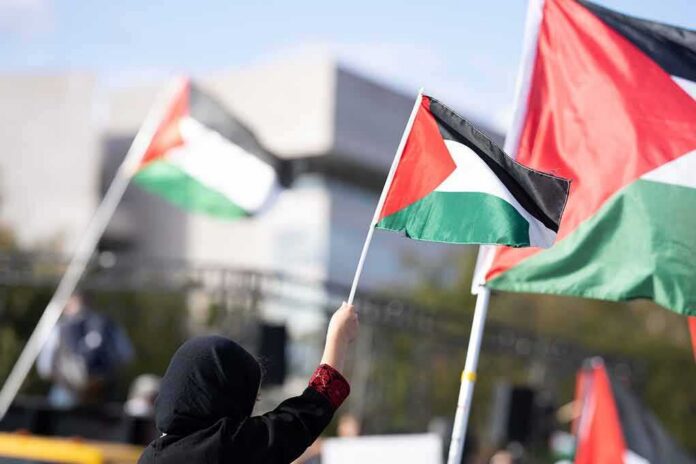
Gorillaz frontman Damon Albarn raised a Palestinian flag on a Florida stage and told fans to “never be neutral,” turning a concert into a political rallying cry.
Story Highlights
- Damon Albarn lifted a Palestinian flag at Orlando’s Kia Center and urged fans to “stand your position.”
- Multiple outlets reported the same quote and moment from the Sept. 17 show.
- Coverage linked the gesture to recent music-industry fights over pro-Palestinian speech.
- The show setting underscores how onstage political messages now drive culture-war flashpoints.
Albarn’s Onstage Message in Orlando
Reporters said Damon Albarn took a Palestinian flag from a fan at the Orlando Kia Center on September 17 and held it high. He told the crowd, “Don’t forget this. Ever. Stand your position. Don’t ever be neutral.” Outlets described the same moment and the same quote, and framed it as support for Palestine during the band’s United States tour opener. Photos from Orlando media captured the display and noted Albarn’s call to stay alert to world events.
Coverage from music and regional outlets repeated the details with little daylight between them. Complex and Royal News reported that Albarn lifted the flag and delivered the “don’t ever be neutral” line. Orlando Weekly emphasized that he warned fans not to turn a blind eye to what is happening today. The consistent reports point to a brief but clear message that asked the audience to pick a side on a public issue during a live show.
Why the Moment Landed in a Culture Clash
Several outlets placed Albarn’s line amid recent disputes over pro-Palestinian speech in concerts. Reporting linked the Orlando scene with controversy around Macklemore’s removal from Ed Sheeran’s United States tour dates after he voiced support for Palestine on stage. That link helped frame Albarn’s message as part of a wider industry struggle over what artists say in front of paying fans during shows. The framing shows how a short line can echo across the music world.
Israeli and British coverage also labeled the act as a pro-Palestinian statement, reflecting how symbols on stage are read through political lenses. In today’s media climate, a flag is not just cloth; it is a statement that triggers strong reactions online and in venues. The reports show the debate is no longer limited to social media posts. It is inside the concert hall, where audiences came for music but now often hear calls to activism.
What Was Said, What Was Not, and Why It Matters
Albarn’s words urged a stance but did not cite a policy demand, a charity, or a concrete action in the reports. The moment, as recorded by multiple outlets, centered on taking a side, not on specific steps. That leaves a narrow but firm record: a symbol, a quote, and a crowd. Media noted a social-video clip circulated, but the available reporting does not include an official full-band statement expanding on intent or next steps. The central facts remain consistent across stories.
For many concertgoers, the line between art and politics is now thin. Fans pay to hear songs, yet find themselves pulled into heated issues. That shift fuels backlash cycles and boycotts, while others cheer artists who speak out. Albarn’s Orlando line shows how a tour stop can become a flash point far beyond music. Consistent reporting across outlets indicates the message was deliberate and clear: do not sit out the fight over Gaza and Palestine, even at a show.
How This Fits the Larger Trend in Music
Wider coverage over the past two years shows that pro-Palestinian advocacy in music has grown more visible. Major events, public statements, and high-profile clashes now appear often in headlines. The Macklemore and Ed Sheeran dispute put the issue front and center in arenas across the country. Albarn’s moment arrives inside that same stream, where performers’ brief remarks move markets, shift lineups, and spark days of commentary. Concert stages have become regular forums for political speech.
Conservative audiences see a pattern: entertainment spaces are turning into platforms for one-sided activism that pressures those who disagree. The United States protects free speech, but many Americans also expect a concert to be a concert, not a lecture. Albarn’s call to reject neutrality at a Florida arena underscores this tension. The message was short, the signal was loud, and the reaction across media shows how fast culture fights now travel from stage to screen.
Sources:
facebook.com, twaslnews1.twaslnews.com, complex.com, uk.news.yahoo.com, ground.news, perthnow.com.au, readdork.com