

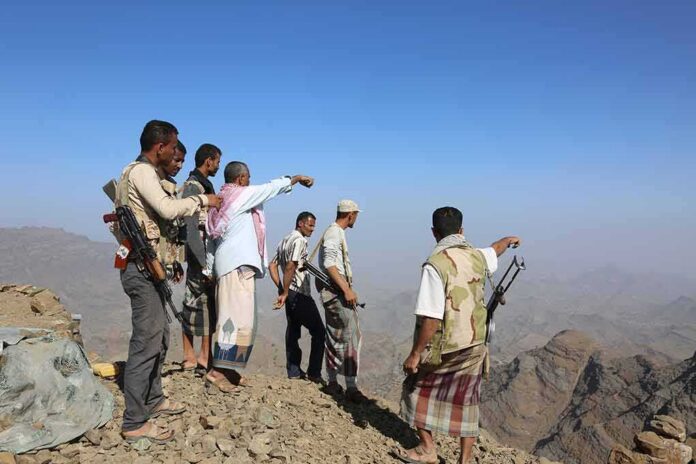
A rare daylight raid briefly toppled a Taliban district center, proving the armed resistance is bloodied but unbroken.
Story Highlights
- Resistance groups conducted hundreds of attacks across multiple Afghan provinces since 2021.
- Fighters briefly seized a district center in Badakhshan on July 17, 2026, before withdrawing.
- United Nations reporting verified significant opposition activity but no lasting territorial control.
- Taliban leaders dismiss the opposition as weak or fake, despite documented clashes.
Badakhshan Seizure Shows Real, If Short-Lived, Gains
On July 17, 2026, the Homeland Soldiers Front seized the Yaftali Sufla district center in Badakhshan for several hours. Reporting says the fighters overran district headquarters, police and intelligence offices, disarmed Taliban personnel, seized vehicles and equipment, raised their flag, and then pulled back in an organized withdrawal. Analysts called it a rare temporary loss of a district center since 2021. The episode showed planning, speed, and coordination, but not an ability to hold ground.
Persistent armed activity runs beyond Badakhshan. The Foundation for Defense of Democracies reported the National Resistance Front claimed more than 2,000 operations since 2021. The Afghanistan Freedom Front publicly claimed attacks in Kabul and across several northern provinces, and at least 20 in Kandahar since 2022. These claims show spread and tempo, even if many events rely on group statements and uneven independent checks.
Verified Attacks Without Sustained Control
The European Union Agency for Asylum summarized a United Nations assessment verifying 277 armed-opposition attacks from August 2024 through July 2025. That includes 165 attributed to the National Resistance Front and 55 to the Afghanistan Freedom Front. This confirms that real resistance activity exists, even as the same assessments say the groups do not hold territory or mount an existential threat to Taliban rule. The core fact pattern is activity without enduring control.
Independent analysts reach similar conclusions. War on the Rocks reports that resistance attacks have not turned into a strategic crisis for the Taliban and that no group has held a district. It also documents multiple fronts operating in Badakhshan over months, including guerrilla actions and a claimed assassination of Faizabad’s mayor. Activity is real and sometimes lethal, but fragmentation and limited resources cap the ceiling for now.
Taliban Denials Clash With Documented Clashes
Taliban officials have tried to brand the opposition as a mirage. A provincial governor said enemies who hope to disrupt Afghanistan’s stability would fail. The main spokesman claimed no active armed opposition exists in the country and said these groups live “on social media.” Those lines do not square with verified United Nations incidents and with reporting on firefights in Badakhshan and beyond. The denials read as propaganda, not ground truth.
Eurasia Review cites hundreds of claimed attacks and thousands of alleged Taliban casualties across several groups since 2021. The same analysis, and other reviews, stress that many claims come from opposition communiques and need verification. The challenge is clear: resistance messaging seeks to prove momentum, while access limits slow outside checks. That gap lets the Taliban wave away reports and argue the fight is fake, even when some events are confirmed.
What Matters Next: Unity, Supply, and Territory
The resistance must solve three problems to change the map. First, unity of effort across the National Resistance Front, the Afghanistan Freedom Front, the Afghan United Front, and smaller banners. Fragmented command wastes scarce men and arms and makes joint operations rare. Second, steady supply lines for weapons, cash, and recruits. Third, the ability to seize and hold at least one district for more than a day, with checkpoints, courts, and services to win locals and deter raids.
🔴 Anti-Taliban resistance groups claim 438+ verified attacks since late 2023
Over a dozen resistance groups led by former Afghan government officials have sustained operations across all 34 provinces despite lacking cross-border sanctuaries or state sponsors. A minimum of 438… pic.twitter.com/D4wucD2rPg
— NewsTongue (@NewsTongueX) October 27, 2026
For Americans who value strong borders, safe communities, and a foreign policy grounded in strength, the stakes are plain. A Taliban that faces only pinpricks at home spends its energy exporting hardline rule and cutting deals that undercut our security. A Taliban that must defend depth inside Afghanistan has less room to aid extremists. Verified attacks show the regime is not untouchable. But until the opposition can hold ground, the Taliban keeps the keys to the state.
Sources:
warontherocks.com, southasiatimes.org, euaa.europa.eu