
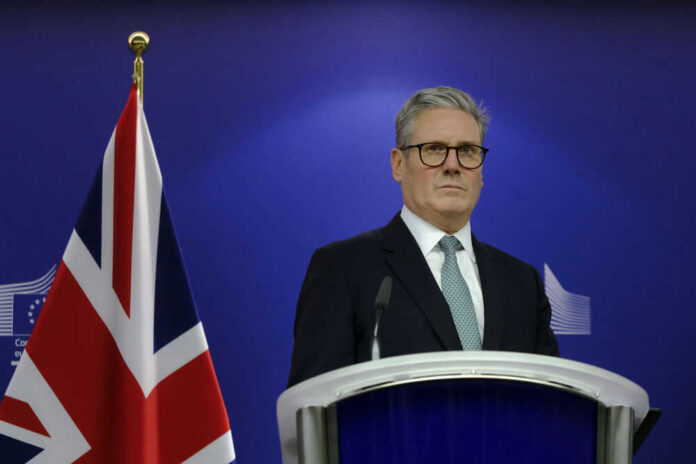
President Trump’s bold pressure on UK Prime Minister Keir Starmer has forced a critical shift, granting limited U.S. access to RAF bases amid escalating Iran threats—vindicating America’s demand for strong allies in the fight against nuclear aggression.
Story Snapshot
- Starmer initially blocked U.S. requests for RAF Fairford and Diego Garcia bases against Iran, prioritizing globalist legalism over alliance strength.
- Following U.S.-Israel strikes killing Ayatollah Khamenei on February 28, 2026, Starmer approved limited defensive use to target Iranian missile depots.
- Trump’s public Truth Social criticism of Starmer’s Chagos Islands deal pressured the UK to pause the sovereignty handover and support U.S. security needs.
- UK jets intercepted Iranian missiles but avoided offensive actions, highlighting pragmatic defensive alignment with American leadership.
- Reform UK slams Starmer for weakness, echoing conservative calls for full alliance commitment against Iranian extremism.
Initial UK Refusal Sparks Tensions
On February 18, 2026, President Trump posted on Truth Social criticizing Starmer’s plan to lease Diego Garcia under the Chagos Islands deal as a “big mistake,” linking it directly to the need for bases against Iran’s nuclear buildup. Media reports from February 19-20 confirmed Starmer rejected U.S. requests to use RAF Fairford and Diego Garcia for potential strikes. RAF Fairford, a key U.S. heavy bomber hub in Europe, required explicit UK consent unlike U.S.-controlled Diego Garcia. This stance prioritized international law over alliance pressures amid stalled U.S.-Iran nuclear talks and Iran’s site reinforcements post-2025 U.S. B-2 strikes.
Shift to Limited Defensive Approval
US-Israel joint strikes on Iran on February 28, 2026, killed Ayatollah Khamenei, prompting Starmer’s reversal. He announced limited U.S. use of Diego Garcia and RAF Fairford solely for destroying Iranian missile depots in a defensive capacity. Starmer’s X video late that day specified “specific and limited defensive purpose” to protect British lives and 200,000 UK citizens in the Middle East. UK jets intercepted Iranian missiles but did not participate in attacks. The Chagos deal paused pending Trump’s approval, underscoring U.S. leverage in securing vital military assets.
Trump’s Leverage and Chagos Dispute
Trump opposed the 2025 Chagos deal transferring sovereignty to Mauritius while retaining UK control of Diego Garcia for 99 years, calling it “great stupidity.” His public rebukes leveraged base access to halt the handover, vital for U.S. operations. UK Foreign Office defended the deal for base security, but Trump’s pressure prevailed. This dynamic reinforces U.S.-UK basing precedents against globalist decolonization pushes, aligning with conservative priorities for strong national defense and reliable alliances free from leftist overreach.
Reform UK’s Richard Tice criticized Starmer for insufficient U.S. support, accusing him of kowtowing to extremists. This reflects broader conservative frustration with hesitant leadership amid Iranian missile threats and nuclear defiance.
BREAKING: Starmer gives Trump permission to use RAF bases for defensive action against Iran
— Goldie Elaine (@TeresaB16548284) March 1, 2026
Impacts and Broader Ramifications
Short-term, the approval escalates U.S.-Iran conflict but shields Gulf allies and British interests through missile intercepts, risking Iranian retaliation. Long-term, it secures Diego Garcia via U.S. pressure and sets precedents for allied basing. Economic disruptions hit regional oil trade, while domestic UK backlash grows from Reform UK and anti-war groups decrying secrecy. White House notes slow nuclear talks progress. Starmer’s endorsement of U.S.-Israel actions prioritizes citizen safety over past refusals, validating Trump’s firm diplomacy.
Sources:
Starmer said unwilling to grant US permission to use UK military bases in Iran strike
Campaigners condemn Starmer’s secrecy over US attack on Iran
Starmer grants US limited use of UK bases in shift of stance
WSWS article on related events