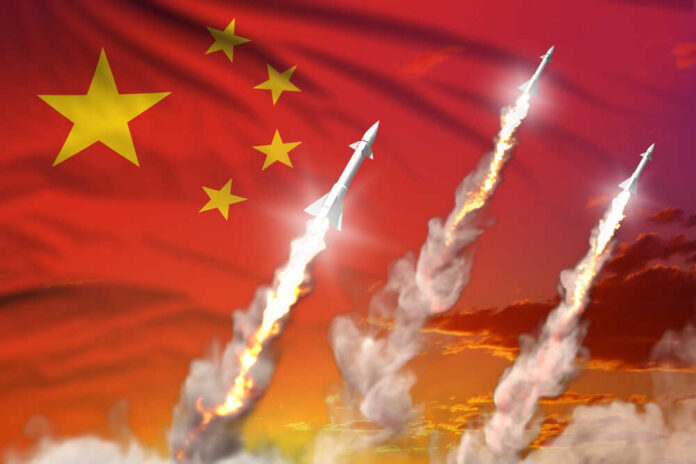
China’s hypersonic missiles threaten to sink America’s $10 billion aircraft carriers in minutes, forcing Trump’s administration to confront endless foreign wars that drain resources from American families.
Story Highlights
- China’s A2/AD strategy uses missiles, satellites, and drones to keep U.S. carriers far from its shores, challenging decades-old Navy doctrine.
- Each U.S. carrier costs over $10 billion, yet hypersonic threats could overwhelm all 10 in the first 20 minutes of conflict.
- MAGA base questions carrier-centric strategy amid promises to avoid new wars, echoing battleship obsolescence.
- U.S. planners reconsider safe distances, reducing rapid response power projection near Indo-Pacific allies.
Historical Reliance on Carriers Exposed
U.S. Navy aircraft carriers have anchored power projection since World War II. More than 85% of naval ordnance targeted land since 1941, with carriers operating 50 to 200 miles from enemy shores for air support. Vietnam highlighted limits, as interdicting North Vietnam’s Thanh Hoa Bridge cost 50 aircraft. This close-range doctrine now faces direct challenge from China’s integrated defenses. Conservative taxpayers question billion-dollar investments when adversaries evolve faster than strategy.
China’s A2/AD Strategy Targets Carrier Vulnerability
China built an anti-access/area-denial network to block carrier strike groups. Long-range missiles, hypersonic glide vehicles, reconnaissance satellites, over-the-horizon radars, and drones track and strike ships before they close in. Recent assessments show expanding missile arsenals push U.S. carriers beyond effective ranges, crippling quick responses in high-intensity fights. Defense officials warn 15 hypersonics could eliminate all 10 carriers early, undermining deterrence for Taiwan and allies.
Doctrinal Clash Questions Carrier Future
Analysts compare modern carriers to obsolete battleships, as hypersonics strike before operational positioning. U.S. Navy operates 10 carriers essential for global reach, yet critics note slow deployment and limited strike aircraft payloads hinder large-scale operations. Land-based bombers may shoulder more burden in early war phases. Trump supporters demand fiscal restraint, rejecting globalist entanglements that risk treasure without victory.
This vulnerability erodes constitutional priorities like strong national defense without overreach. High energy costs and inflation from past spending already burden families; endless tech arms races add insult.
Strategic Impacts Demand America-First Shift
Carriers at extended distances lose timely air support, weakening Indo-Pacific posture. Deterrence falters if vulnerabilities publicized, pressuring allies to doubt U.S. commitments. Force changes may favor submarines and distributed operations over mega-carriers. Investment debates intensify: pour billions into vulnerable decks or pivot to cost-effective alternatives? In 2026, Trump’s second term tests promises to end regime-change wars, prioritizing borders and economy over distant seas.
Expert views split: advocates stress early strikes and air defense roles, while skeptics highlight maritime limits versus land power. No consensus exists on carrier viability amid uncertainties in Chinese system specs. MAGA division grows as involvement in potential Iran conflicts mirrors China risks—high costs, uncertain gains.
Sources:
USNI Proceedings (1979): Historical perspective on carrier doctrine and power projection concepts
Geopolitika.it: Analysis of hypersonic missile threats to carrier operations