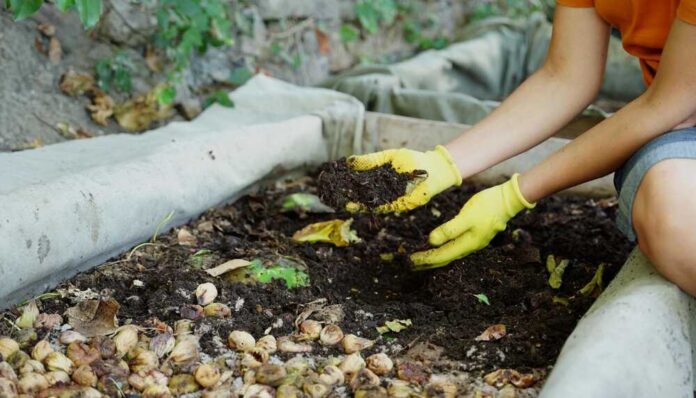
A DIY worm bin can turn your kitchen scraps and junk mail into rich compost—but the moment you treat it like a dumping ground for “anything organic,” it turns into a smelly, failed science project.
Quick Take
- DIY worm farms are built for household-scale inputs like food scraps and shredded paper, not large organic matter.
- Paper and cardboard aren’t “trash” in a worm bin; they provide bedding, aeration, and carbon to balance wet food scraps.
- Oversized or dense material can create low-oxygen zones, leading to foul odors and a bin that goes anaerobic.
- The “whole kangaroo” scenario highlights real limits: scale mismatch, long decomposition timelines, and hygiene risks.
What a DIY Worm Farm Is Actually Designed to Do
Home worm farms rely on vermicomposting, where worms and beneficial microbes break down organic waste under oxygen-rich conditions. Most DIY setups use simple containers such as stacked or paired boxes, sized for household use rather than bulk disposal. The key is staying inside the system’s natural limits: surface area, airflow, moisture control, and a worm population that grows over time but still can’t match commercial-scale compost operations.
For many families, the practical mission is straightforward: divert daily kitchen scraps from the trash and turn them into worm castings for gardens. The system works best when you feed small-to-medium scraps gradually, especially early on, so worms can keep up and the bin doesn’t sour. That “slow and steady” approach is the unglamorous truth that often gets lost in social-media compost hacks and trendy “zero waste” promises.
Food Scraps and Paper: The Carbon-Nitrogen Reality Check
Food scraps bring nitrogen and moisture, but they can also turn a bin into sludge if they aren’t balanced. Shredded paper, cardboard, paper towels, and similar materials function as carbon-rich bedding that helps keep the bin breathable. That aeration matters because oxygen prevents the conditions that produce strong odors. In plain terms, paper isn’t an optional add-on; it’s a stabilizer that keeps your worm farm from turning into a wet, compacted mess.
Best practices consistently point to controlling input size and maintaining balance. Cutting or tearing materials increases surface area, making it easier for worms and microbes to work. Mixing paper with food scraps also reduces compaction and helps keep moisture in the “damp sponge” range rather than a soupy puddle. When people complain that their worm bin stinks, the cause is often simple: too much food waste, not enough bedding, and not enough oxygen.
Why “A Whole Kangaroo” Breaks the System (And What That Teaches)
The kangaroo example is funny, but it makes a serious point about scale. A typical kangaroo can weigh roughly 18–66 kilograms, while many DIY bins are only a couple feet across. That mismatch creates immediate physical and biological limits. A large carcass would overwhelm the available surface area, demand far more worms than a household bin contains, and take months to years to break down even under better conditions.
Dense, wet organic matter also creates oxygen-depleted pockets. In a worm bin, that leads to anaerobic decomposition—exactly the condition that produces the “rotten” smells that drive people to quit. Even if someone tried to cut the material down, the volume and moisture load would still likely outpace what a small bin can process safely. The research sources reviewed do not describe home worm farms as suitable for large animal remains.
Conservative “Common Sense” Take: Don’t Let Good Stewardship Turn Into Overreach
Worm farming appeals to many homeowners because it’s local, practical, and doesn’t require a bureaucracy. That matters to conservatives who’d rather solve problems at home than be lectured by distant institutions about how to live. But the same principle applies inside the bin: it’s a tool with limits. When you treat a household worm farm like an all-purpose disposal system, you end up with failure—then someone will argue you “need” new rules, services, or fees.
For anything beyond household scraps and paper—especially large animal remains—the realistic options are professional-scale composting systems, specialized processes like fermentation-based approaches, or lawful burial where appropriate. That’s not “anti-compost”; it’s respecting scale, sanitation, and what a DIY system was engineered to handle. If you want the win—less waste, healthier soil, and fewer trash bags—keep the inputs small, balanced, and oxygen-friendly.
Sources:
https://echonet.org/family-activities/how-to-make-your-own-worm-compost-bin/
https://wormsdownunder.com/blogs/blog/worm-farm-tips-worms-love-paper
https://extension.wsu.edu/whatcom/hg/cheap-and-easy-worm-bin/
https://unclejimswormfarm.com/bedding-materials-for-worm-composting-bins/