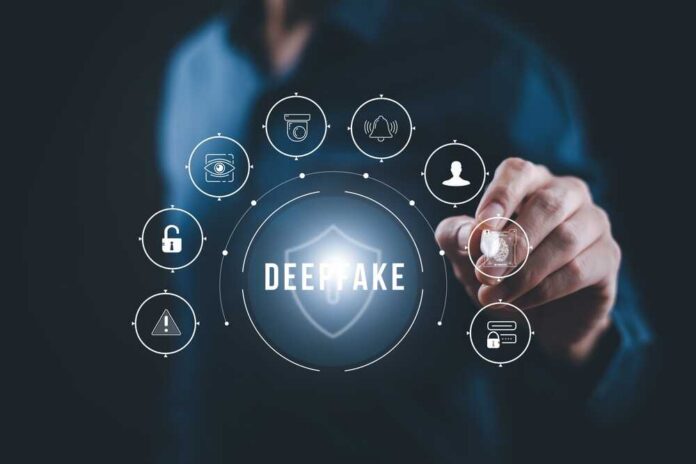
A $1 deepfake and a 20‑minute voice clone can now be enough to jam up an election—without ever touching a ballot box.
Story Snapshot
- A January 2024 New Hampshire robocall used fake audio of President Biden to discourage voters from participating, illustrating how cheap AI deception has become.
- Election-focused AI threats extend beyond deepfakes to large-scale voter suppression tactics, including automated mass voter-roll challenges.
- More than 20 major tech companies signed a 2024 Munich Security Conference accord promising labeling, watermarking, and coordination to curb AI election deception.
- States including Texas and Minnesota moved toward pre-election deepfake restrictions, while broader rules like the EU AI Act were still developing.
New Hampshire Robocall Showed How Fast AI Can Weaponize Trust
The January 2024 New Hampshire incident put a clear example on the table: a robocall circulated using fake audio of President Biden, urging voters to skip the primary. A political operative later admitted commissioning the call, and reporting described the production cost as minimal. The core danger was not sophistication but scale—AI makes impersonation cheap, quick, and believable enough to confuse ordinary voters who don’t have time to verify every message.
Generative AI’s post‑2022 leap in voice cloning, synthetic video, and automated content has lowered the barrier for this kind of fraud. The risk is less about one viral clip and more about a sustained flood: spoofed calls, fake candidate statements, and fabricated “official” notices that can spread faster than corrections. That puts election administrators and campaigns in a defensive crouch, forced to counter disinformation while also trying to run elections on time and under the law.
AI-Backed Voter Suppression Now Targets Systems, Not Just Minds
Deepfakes grab headlines, but research also highlights a parallel threat: AI-assisted voter suppression tactics aimed at overwhelming election systems. One cited concern is the use of tools that enable mass voter challenges based on questionable matching methods—such as scraping obituaries or prison data and presenting “matches” as if they were verified. Even when claims are weak, high-volume challenges can consume staff time, create long lines, and erode confidence in basic administration.
This is where constitutional concerns become concrete. U.S. elections rely on transparent rules, due process, and equal treatment—not last-minute data dumps that pressure local officials to make rushed decisions. When automation creates “faux legitimacy” for sloppy or misleading claims, the danger is that lawful voters get caught in bureaucratic crossfire. The research base does not prove widespread success of these tools, but it does document how scale and speed can burden officials and deter participation.
Big Tech Promised Labels and Watermarks, But Voluntary Deals Have Limits
In February 2024, more than 20 technology companies signed a Munich Security Conference accord pledging steps to tackle AI-driven election deception. The measures discussed in coverage included watermarking, transparency commitments, and reviewing models for election risks, with Meta also pledging platform-wide AI labeling. Industry leaders framed the effort as requiring cooperation among companies, governments, and civil society—an admission that no single platform can police the entire information ecosystem alone.
For voters who watched years of censorship fights and uneven “content moderation,” voluntary tech pledges raise a fair question: who sets the definitions, and who gets flagged? The cited reporting describes commitments to labeling and transparency, but it also shows the enforcement gap—rules are only as strong as the follow-through and the ability to attribute intent. If bad actors can operate across platforms, through robocalls, and via cutouts, a platform label may arrive too late to prevent the initial impact.
States Moved Toward Deepfake Restrictions as Federal Clarity Lagged
State governments were already experimenting with election-season deepfake limits. Research references Texas adopting a prohibition focused on a 30-day pre-election window, while Minnesota used a 90-day window. These approaches reflect a practical tradeoff: protecting voters near Election Day without creating an all-purpose speech regime year-round. The broader context also included emerging European rules aimed at deepfakes, but U.S. policy remained patchwork in the period covered by the sources.
BEWARE: AI’s New Role in Election Fraud https://t.co/l1JQwptD8d
— The Gateway Pundit (@gatewaypundit) March 13, 2026
The biggest open issue is verification and trust at the pace of modern media. The research cited here ends in early 2024, so it cannot confirm which safeguards ultimately worked best across the 2024 cycle. What it does establish is the direction of travel: AI reduces the cost of deception while increasing the speed of distribution, leaving voters to sort reality from fabrication in real time. That reality makes transparent rules, auditable systems, and clear lines of accountability more important—not less.
Sources:
https://aimagazine.com/ai-strategy/big-tech-companies-agree-to-tackle-ai-election-fraud
https://www.brennancenter.org/our-work/research-reports/preparing-fight-ai-backed-voter-suppression
https://www.ifes.org/publications/lesson-resilience-moldovas-resistance-election-interference
https://www.eptanetwork.org/images/documents/EPTA_Report_on_AI_and_Democracy_FINAL.pdf