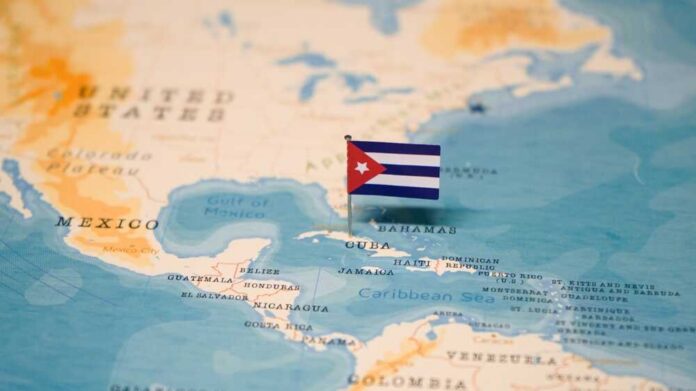
President Trump’s blunt talk about “taking Cuba” is forcing Americans to confront a high-stakes question: does U.S. pressure finally break a hostile regime, or does the rhetoric invite a new foreign-policy firestorm?
Story Snapshot
- President Trump said March 16 that he expects to have the “honor of taking Cuba,” describing the island as “very weakened” amid an economic and energy collapse.
- The comments follow months of escalating U.S. pressure tied to Cuba’s fuel shortages and blackouts, including steps that cut off Venezuelan oil flows to the island.
- Talks with Cuba are ongoing, according to Trump and Cuban President Miguel Díaz-Canel, but U.S. officials are signaling political concessions as the price of relief.
- The administration’s approach reflects a broader post-2025 posture of hard leverage in the region, with Secretary of State Marco Rubio openly welcoming political change in Havana.
What Trump Actually Said—and Why It Landed Like a Thunderclap
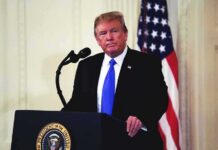
President Trump’s March 16 Oval Office remarks framed Cuba’s crisis as leverage, not a distant tragedy. Trump told reporters he believed he would be “having the honor of taking Cuba,” adding that he could choose to “free it” or “take it,” and he described the country as “very weakened.” The language built on his earlier “friendly takeover” talk, later tempered with warnings it “may not be” friendly.
Trump’s word choice matters because it collapses diplomacy, sanctions, and regime-change messaging into a single personal promise. Supporters hear resolve after years of what they viewed as soft, symbolic engagement; critics hear an alarming claim of unilateral power. What is verifiable from reporting is the timeline: Trump floated takeover language in late February, warned Cuba was “running on fumes” by March 10, and then tied next steps to ongoing talks.
The Pressure Point: Energy Collapse, Oil Leverage, and a Nation “Running on Fumes”
Cuba’s immediate vulnerability is energy. Reporting describes widespread blackouts, shortages, and a deteriorating grid, with the country facing its worst crisis in decades. A key driver is fuel supply. Cuba historically depended on subsidized Venezuelan oil; after U.S. actions in early 2026 shifted control over Venezuelan flows, the U.S. moved to block oil going to Cuba, tightening the screws on Havana’s ability to keep the lights on.
U.S. policy also included limited carveouts: the Treasury Department allowed some Venezuelan oil resale to private Cuban firms, but coverage says the volumes were insufficient for national needs. That detail undercuts any simplistic narrative that Cuba could quickly stabilize through narrow private purchases alone. It also clarifies why negotiations are being discussed in such urgent terms: electricity and fuel are not “nice-to-haves” for a modern society; they are the basic inputs for water, food distribution, hospitals, and public order.
Negotiations Under Duress: What Each Side Says It Wants
Trump said March 15 that the U.S. was “talking to Cuba,” signaling that action could follow after focus on Iran. On Cuba’s side, President Miguel Díaz-Canel confirmed talks on state television and said he wanted solutions “through dialogue.” Reporting also indicates the U.S. goal in these discussions is more specific than a sweeping purge: Washington is seeking the removal of Díaz-Canel without necessarily targeting the broader Castro family structure.
That distinction matters for Americans evaluating risk. A narrow demand can be framed as a negotiated transition; a broad demand reads like open-ended regime change. Still, the available reporting emphasizes that “significant differences” remain, suggesting no quick breakthrough is guaranteed. With both sides speaking publicly while bargaining privately, the rhetoric can harden positions even as back-channel talks try to find a face-saving offramp.
Constitutional Realities: Tough Talk vs. Lawful Action
For a conservative audience that cares about constitutional guardrails, the key is separating rhetoric from legal authority. A president can speak forcefully, impose sanctions through established processes, and direct diplomacy, but major military action carries legal and political constraints. The reporting to date centers on economic pressure, executive action declaring a national emergency tied to Cuba’s alignments, and the use of oil leverage—not a declared plan for invasion or annexation.
Where the concern is legitimate is clarity: maximalist language like “I think I can do anything I want with it” can fuel distrust abroad and confusion at home about U.S. intentions. Conservatives typically support peace through strength, but also expect lawful, accountable decision-making—especially after years when many felt federal power was routinely stretched at home. The strongest factual takeaway is that negotiations are ongoing and outcomes remain uncertain, even as pressure increases.
Regional Stakes: Migration, Security, and the Cost of Instability
Cuba’s collapse is not happening in a vacuum. Severe shortages can trigger internal unrest and outward migration, and U.S. policymakers have to weigh humanitarian consequences alongside security concerns. Reporting also frames Cuba’s geopolitical posture—its ties to adversarial powers—as part of the administration’s justification for escalation. That makes the crisis about more than fuel; it becomes a contest over influence in America’s near abroad.
(VIDEO) Trump Says He'll Have the 'Honor' of 'Taking Cuba' – 'Whether I Free it, Take it, I Think I Can Do Anything I Want with It' https://t.co/fosCVS4cQu #gatewaypundit via @gatewaypundit
— MaKettle65 (@MaKettle65) March 17, 2026
Secretary of State Marco Rubio’s support for political change reflects a longstanding hardline view common among Cuban-American communities, a bloc that strongly backed Trump in 2024 according to cited polling. Whether that support translates into a stable, pro-freedom outcome depends on what comes next: a negotiated transition, continued sanctions with limited openings, or a spiral that worsens instability. Current reporting does not confirm a final deal, only a tightening squeeze and active talks.
Sources:
Cuba Economic & Energy Crisis: Trump U.S. Explainer
Trump Says Talks With Cuba Ongoing, Action Possible After Iran
Trump Says U.S. Might Have a “Friendly Takeover” of Cuba Amid U.S. Fuel Blockade
Trump: U.S. Could Reach Deal With Cuba “Pretty Soon”
Justice Department Official Eyes Cases Against Cuba Leaders as Trump Floats “Friendly Takeover”