
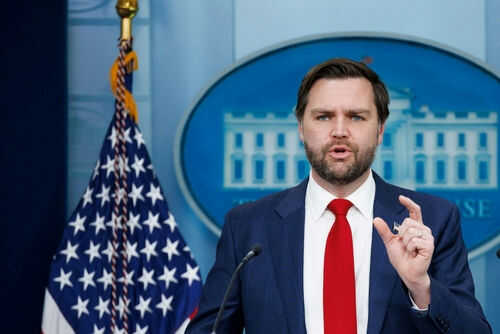
After 21 hours of face-to-face talks, Iran still refused America’s core “no-nukes” demands—leaving the Strait of Hormuz and global energy markets stuck in limbo.
Quick Take
- Vice President J.D. Vance led the highest-level U.S.-Iran in-person negotiations in decades, but the Islamabad session ended without an agreement.
- U.S. terms centered on preventing nuclear weapons development, dismantling enrichment capability, retrieving highly enriched uranium, and curbing Iran-backed militant funding.
- Strait of Hormuz access remained a major sticking point after Iran imposed warnings and toll-like controls that disrupted shipping.
- The failure raises near-term risks for renewed conflict and longer-term doubts that diplomacy can lock in post-war nuclear restrictions.
Marathon Islamabad Talks End With No Deal
Vice President J.D. Vance left Islamabad, Pakistan, early Sunday after negotiations with Iranian officials ran more than 21 hours and still collapsed without a deal. The talks took place at the Serena Hotel and followed a six-week U.S.-Israel war that began on Feb. 28, 2026, with extensive strikes on Iranian targets. Vance said Iran rejected U.S. terms, framing the outcome as “bad news” for Tehran rather than Washington.
Pakistan hosted the talks as a neutral venue, a reminder that regional powers still have incentives to prevent wider escalation even when the U.S. and Iran cannot agree. The meeting was also notable inside Washington because Vance—known publicly as skeptical of open-ended wars—led the delegation instead of Secretary of State Marco Rubio. That choice signaled the administration wanted a credible messenger to argue that military gains would be matched by a diplomatic end-state, not another cycle of temporary ceasefires.
America’s Red Lines: Nuclear Limits, Proxies, and Open Shipping Lanes
The U.S. negotiating package focused on durable nuclear and security constraints: commitments against nuclear weapons development, dismantling enrichment facilities, retrieving highly enriched uranium, and ending financial support for militant groups. The Strait of Hormuz was central as well, with U.S. demands reportedly tied to fully reopening passage without tolls or coercive controls. Those demands reflect a traditional U.S. interest that cuts across party lines: preventing a hostile regime from using a chokepoint to pressure allies and spike prices.
Iran’s side, led by parliamentary speaker Mohammad Bagher Ghalibaf, pushed back with a trust argument rather than technical concessions. Ghalibaf said there was “no trust” in the opposing side, citing prior wars and claiming Washington failed to build confidence. That posture highlights a core obstacle to any agreement: verification and enforcement require transparency, but transparency requires political willingness—something hardliners can portray as surrender. When trust becomes the headline, the practical work of verification, inspections, and compliance triggers often stalls.
The Strait of Hormuz Problem Hits Wallets at Home
Iran’s posture in the Strait of Hormuz has carried immediate economic consequences because the waterway is a key artery for global energy shipments. Reports of warnings to vessels and toll-like measures have slowed traffic and heightened uncertainty, conditions that typically push oil prices upward. For U.S. households already sensitive to fuel and grocery costs, the linkage matters: foreign policy misfires can land as domestic inflation. That reality also explains why the administration emphasized open passage as a non-negotiable condition.
What Happens Next: Deterrence, Diplomacy, and Domestic Politics
President Donald Trump entered the talks claiming the U.S. had already achieved a military victory while still warning that strikes could resume if diplomacy failed. Israeli Prime Minister Benjamin Netanyahu also signaled the fight was not necessarily finished. For Republicans, the immediate political test is whether firmness abroad prevents a nuclear-armed Iran without dragging the U.S. into another long war. For Democrats, the incentive remains to highlight any instability as proof the administration’s approach is reckless, even as the stakes for energy prices and security are shared.
https://nypost.com/2026/04/11/us-news/us-iran-fail-to-reach-peace-agreement-after-marathon-talks-in-pakistan/
The strongest confirmed takeaway is what is not yet known: neither side has publicly described a workable compromise, and no clear timeline for renewed talks has been established in the provided reporting. With the ceasefire described as fragile and the nuclear “red lines” unchanged, the next U.S. move likely depends on whether Iran alters its position on enrichment, uranium stockpiles, proxy funding, and Hormuz access. Until then, Americans should expect continued volatility risk in energy markets and continued tension in an already unstable region.
Sources:
https://time.com/article/2026/04/11/strait-of-hormuz-iran-peace-talks/