President Trump just teased a “New Dawn for Cuba” driven by American strength—without saying exactly what Washington is about to do.
Quick Take
- Trump used a Turning Point USA event in Phoenix on April 17, 2026 to promise a “New Dawn for Cuba,” calling it “70 years in the making.”
- His message directly targeted Cuban-Americans, referencing families “killed and brutalized” under Cuba’s communist system and ending with: “And now watch what happens.”
- Reports of recent U.S.-Cuba meetings in Havana add tension between public hardline rhetoric and quiet diplomacy.
- Cuban reactions described in reporting were mixed, with many focusing on Trump’s vague “very soon” timeline and lack of specifics.
Trump’s Phoenix message: “New Dawn,” no details
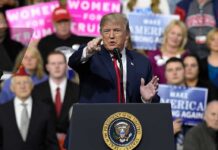
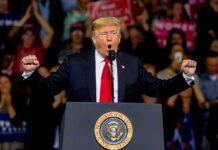
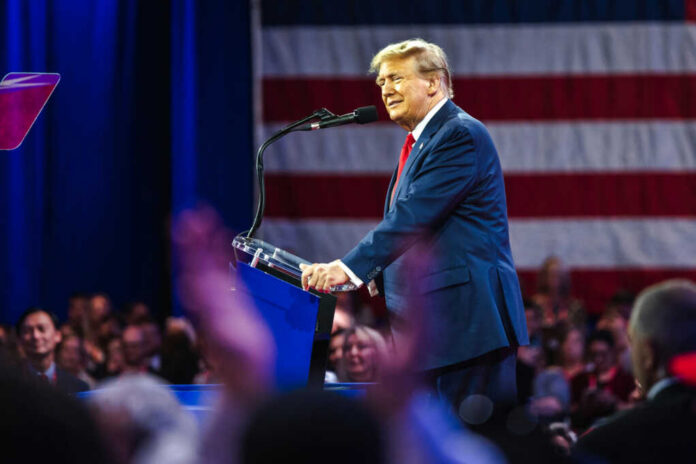
President Donald Trump delivered his clearest Cuba-focused rhetoric of 2026 during a Turning Point USA event in Phoenix, Arizona, on Friday, April 17. Trump framed the moment as a “New Dawn for Cuba” and described it as “70 years in the making,” language that connects today’s tensions to the long U.S.-Cuba standoff since the 1959 revolution. Trump tied the promise to American “great strength,” but he did not announce specific policy steps.
Trump’s closing line—“And now watch what happens”—has been interpreted in coverage as either a warning or a promise of imminent action. The facts available so far support only one conclusion: the White House is sending a signal while withholding operational detail. That ambiguity matters because it leaves room for multiple tools of pressure—diplomatic, economic, or military—without committing publicly to any one option, and it complicates how allies and adversaries plan.
Why the timing matters after Havana’s socialist anniversary rally
Trump’s remarks landed one day after Cuban leader Miguel Díaz-Canel led a rally in Havana marking the 65th anniversary of Fidel Castro’s declaration of Cuba’s socialist revolution. That sequencing is politically sharp: Havana reasserted its socialist identity and legitimacy, then Washington’s president answered with “new dawn” language implying change. Even without a formal policy announcement, the timing alone turns the exchange into a public contest of narratives—revolutionary permanence versus regime transformation.
The larger context is a relationship defined by more than seven decades of hostility and isolation. Trump’s “70 years” line essentially compresses that history into a campaign-style promise: America has waited long enough, and now it will act. For conservatives who see communist Cuba as a symbol of state control and failed ideology, the rhetoric will read like moral clarity. For skeptics, the lack of a defined plan raises questions about whether this is leverage for talks or a prelude to escalation.
Quiet talks, loud messaging: a familiar Washington pattern
Reporting also points to a parallel track: U.S. and Cuban officials have reportedly met recently in Havana amid ongoing talks. That creates a split-screen dynamic common in high-stakes foreign policy—private engagement paired with public pressure. Without verified details on what was discussed or agreed, it is impossible to measure progress. Still, the existence of meetings suggests the administration is at least keeping channels open while using rhetorical force to shape the negotiating environment.
How Cuban-Americans and Cubans are hearing Trump’s pledge
Trump aimed his message at Cuban-Americans, highlighting past brutality and family trauma tied to Cuba’s communist government. That constituency has long favored tougher U.S. posture, and the appeal fits domestic political reality as much as foreign policy. Meanwhile, coverage describing public reaction inside Cuba emphasized uncertainty: people questioned what “very soon” means and what concrete changes could follow. That gap—big promises, limited specifics—can energize supporters but also feed mistrust of government clarity.
From a limited-government perspective, the key takeaway is less about rhetoric and more about accountability: when leaders invoke “strength” and hint at major action, citizens deserve transparent objectives and lawful limits. The available reporting does not confirm any specific forthcoming measure—sanctions, diplomatic rupture, covert assistance, or military action—so responsible analysis has to stop short of prediction. For now, what’s certain is the administration has elevated Cuba back into headline status at a sensitive moment.
Sources:
Trump hints at Cuba action during event in Phoenix amid ongoing talks with island nation
Día exactamente… cubanos cuestionan a Trump por lo prometido
US and Cuban officials met recently in Havana amid new diplomatic push