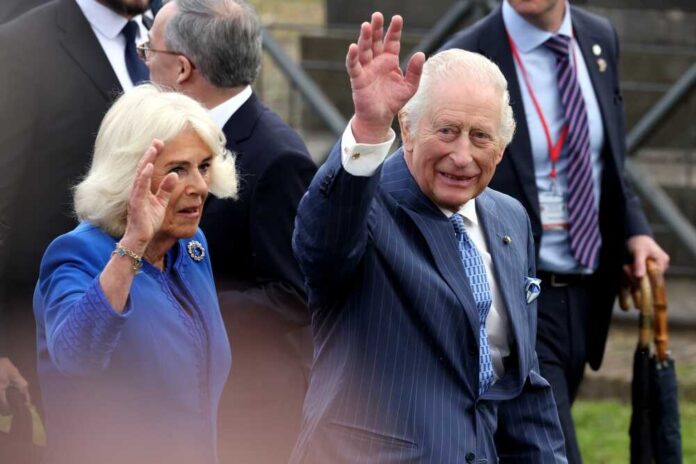
A British king just reminded Congress that no American president should govern “by the will of one”—and Democrats cheered like it was a rebuke of Trump.
Story Snapshot
- King Charles III addressed a joint session of Congress on April 28, 2026, and centered his message on checks and balances limiting executive power.
- Democratic lawmakers reportedly gave standing ovations during the King’s constitutional passages, underscoring how foreign diplomacy can become domestic political theater.
- The speech leaned heavily on shared Anglo-American legal heritage, including Magna Carta and its influence on U.S. constitutional law.
- Charles also emphasized NATO, support for Ukraine, and shared sacrifice tied to 9/11 as he and Queen Camilla continued a symbolic U.S. visit.
What King Charles Actually Said—and Why It Landed Politically
King Charles III used his rare platform before a joint session of Congress to stress a core constitutional principle: executive power must be constrained by checks and balances. Reports highlighted his reference to Magna Carta and the idea that liberty is protected “not by the will of one but by the deliberation of many.” Democrats stood and applauded at those lines, a reaction that amplified the perception that the message carried an edge in 2026 Washington.
Charles’s defenders argued the remarks were framed as universal democratic values rather than a direct shot at President Donald Trump. Even so, the timing—during a high-profile state visit that included meetings with Trump and a White House state dinner—made the speech unusually easy to interpret through an American partisan lens. In today’s climate, symbolism becomes substance fast, and televised moments can harden into talking points before any official response is even on the record.
Magna Carta, American Courts, and the “Limits on Power” Theme
The King’s Magna Carta emphasis mattered because it tied modern American constitutionalism to an older argument: law restrains leaders, even leaders with broad popular support. Politico noted that the U.S. Supreme Court has cited Magna Carta in rulings dating back to 1789, giving Charles’s historical references a practical American legal hook rather than mere ceremony. That history is also the irony—an inherited monarch lecturing a republic on limiting executive power.
For many conservatives, the underlying principle is familiar and not inherently controversial: separated powers are designed to prevent abuses by any branch. The tension comes from who is treated as the “threat” at a given moment. Democrats clearly received the King’s framing as validation of their long-running critique of Trump’s strong executive posture. Republicans, meanwhile, are likely to view the applause as another example of opponents using any outside megaphone to imply illegitimacy.
NATO, Ukraine, and the Shared-Sacrifice Message
Charles didn’t keep his speech confined to constitutional philosophy. Reports say he cited the upcoming 25th anniversary of 9/11, referenced NATO’s Article 5 response, and called for “unyielding support” for Ukraine in a spirit comparable to the alliance’s post-9/11 unity. The visit’s itinerary reinforced that theme: after Washington, the King and Queen traveled to New York to visit the 9/11 memorial, with additional symbolic defense remembrances planned.
Those NATO and Ukraine lines intersect with a known friction point in Trump-era foreign policy. Politico recounted past controversies over Trump’s rhetoric toward NATO and allied burden-sharing, including earlier remarks that prompted pushback in the U.K. The King’s emphasis on alliance cohesion can be read as reassurance to European partners—and as a gentle public nudge to an American administration that has often demanded tougher terms from allies as a condition of U.S. commitment.
The “King Trump” Angle: What’s Documented—and What Isn’t
The research provided raises a provocative claim that the White House was “calling Trump a King,” but the included reporting also flags a key limitation: the cited materials do not document a direct White House statement using that “king” language. That gap matters. Without an on-the-record quote, it’s hard to evaluate whether “King Trump” is a verified administration message, a media label, or a loose characterization circulating online. Readers should separate documented remarks from viral framing.
King Charles received raucous applause as he highlighted the importance of checks and balances in his address before Congress.
Charles’ speech highlighted the Supreme Court’s history of citing the Magna Carta in rulings since 1789.https://t.co/nTUra4sgCs
— POLITICO (@politico) April 28, 2026
The broader takeaway is still clear even with incomplete documentation: Washington has entered a phase where constitutional arguments—checks and balances, legitimacy, “threats to democracy”—are routinely deployed as weapons, sometimes with help from foreign figures whose main intent may be diplomatic. For voters across the spectrum who already believe the system serves elites first, the spectacle of a monarch’s speech becoming instant partisan ammunition is another reminder that governing has blurred into permanent messaging.
Sources:
Politico live updates: King Charles Washington visit — checks, balances, standing ovation