
History repeats itself at the Washington Hilton, where a 2026 armed intruder nearly breached Secret Service lines at the White House Correspondents’ Dinner, reigniting alarms over the venue’s long-standing security flaws first exposed by Reagan’s 1981 shooting.
Story Highlights
- Armed suspect Cole Tomas Alan charged the hotel lobby on April 25, 2026, sparking a shootout with Secret Service agents before reaching the ballroom.
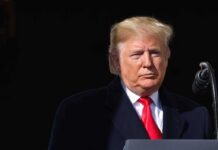
- President Trump labeled the Hilton “not a particularly secure building,” pushing for events at the White House ballroom amid his past assassination threats.
- No high-profile attendees harmed; a wounded officer recovered quickly, but the incident evacuated hundreds and rescheduled the WHCD.
- The “Hinckley Hilton” nickname stems from John Hinckley Jr.’s 1981 attack outside the same venue, highlighting persistent vulnerabilities in public hotels.
- Suspect’s manifesto expressed shock at lax outer security, fueling debates on balancing openness with protection for leaders and citizens.
2026 Attack Unfolds at Infamous Venue
On April 25, 2026, at approximately 8:36 p.m., Cole Tomas Alan, 31, from Torrance, California, checked into the Washington Hilton armed with a shotgun, handgun, and knives. He charged through the public lobby, bypassed outer areas, and attempted to breach the Secret Service checkpoint near the ballroom hosting the White House Correspondents’ Dinner. Agents exchanged gunfire, subduing the suspect unharmed while one officer sustained a vest-protected wound. Attendees, including President Trump, VP JD Vance, and Cabinet members, remained safe inside.
The rapid response prevented ballroom entry, but the breach exposed gaps in securing a large public hotel for elite gatherings. National Guard units assisted in evacuating hundreds, and the White House Correspondents’ Association rescheduled the event within 30 days. Investigation confirmed Alan as a lone actor with no further threats.
Trump Calls Out Recurring Security Lapses
President Trump, speaking on April 26 and 27, criticized the Hilton as “not a particularly secure building” with past “difficulty.” He advocated moving high-profile events to the White House ballroom, citing its superior protections. Trump praised Secret Service agents for their heroism and called the suspect “very sick.” This stance aligns with heightened alerts following his 2024 assassination attempts survival.
The suspect’s manifesto, sourced via Bloomberg, revealed his surprise at minimal early detection, such as no magnetometers in outer areas. Hotel management affirmed full cooperation with federal probes, emphasizing safety priorities. WHCA President Weijia Jiang confirmed protocol-driven evacuation kept all safe.
From Reagan Era to Today: Persistent Risks
The Washington Hilton earned its “Hinckley Hilton” moniker on March 30, 1981, when John Hinckley Jr. fired into a crowd outside, wounding President Reagan via ricochet, Press Secretary James Brady, agent Timothy McCarthy, and officer Thomas Delahanty. That incident prompted Secret Service upgrades like a dedicated presidential entry, yet lobbies stayed public-facing.
Man Who Shot Reagan at Hotel That Hosted WHCD Says Venue Is 'Just Not a Secure Place' https://t.co/KfFOS0s1Y4
— Mediaite (@Mediaite) April 28, 2026
WHCD security focuses on the ballroom two levels below the lobby, with magnetometers at the sole viable entry. Experts note the hotel’s scale defies full lockdowns, creating perceptions of laxness despite robust inner perimeters. Law enforcement views the single checkpoint as effective, as agents contained Alan pre-ballroom.
Implications for Government Trust and Security
This incident disrupts short-term plans with rescheduling costs and heightened DC alerts, while long-term it bolsters Trump’s venue reform push. Hospitality and security sectors face scrutiny over mixed-use sites. Politically, it revives debates on openness versus safety, echoing frustrations across political lines with elite events that prioritize glamour over citizen security.
Americans on both sides weary of deep state priorities see such lapses as symptoms of a federal apparatus more focused on self-preservation than protecting leaders who champion individual liberty and limited government. The 1981 fixes fell short, underscoring need for common-sense reforms to safeguard the American Dream from needless threats.
Sources:
https://millercenter.org/the-presidency/educational-resources/the-attempted-reagan-assassination