A new push for a national billionaire tax is giving the left a fresh opening to raid private wealth and grow Washington’s power over your money.
Story Snapshot
- California Governor Gavin Newsom is calling for a federal minimum tax on Americans worth over $100 million, while still fighting a similar wealth tax in his own state.
- Newsom wants Washington to rewrite inheritance rules, raise corporate tax rates, and clamp down on how wealthy Americans use their assets, all in the name of “economic reset.”
- Critics across parties warn that wealth taxes drive jobs and investment out of states, shrink revenues, and threaten funding for schools and healthcare.
- Newsom’s move is widely seen as part of a 2028 presidential play, raising big questions about constitutional limits, enforcement, and the future of property rights.
Newsom’s National Billionaire Tax Push
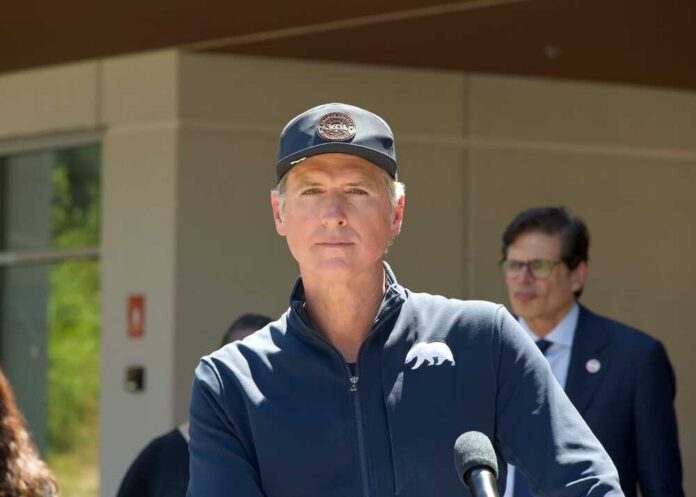
California Governor Gavin Newsom has launched a public campaign for a national tax on Americans with very high net worth, even as he continues to oppose a wealth tax on billionaires in his own state. In a Substack post and video, he calls for a federal “true minimum tax” on anyone with more than $100 million so they pay at least the same tax rate as their workers. He describes this as part of a broader “economic reset for America” and a new “social contract” for the country.
Newsom centers his pitch on the idea that wealth is too concentrated and that the rich use legal loopholes to avoid taxes. He highlights data claiming the richest 10 percent of Americans hold about two-thirds of the nation’s wealth. He also attacks what he calls a “tax-free lifestyle loan,” where ultra-wealthy people borrow against large stock portfolios and report little or no taxable income while still funding lavish lives. He argues that closing these practices is needed to “democratize” the economy and protect American democracy from concentrated power.
Key Features of the Federal Wealth Plan
Newsom’s proposal focuses first on setting a federal minimum tax level rather than a pure annual tax on total wealth. The idea is that people at the top would have to pay at least the tax rate that ordinary workers pay on wages, even if their income comes mainly from investments. He also calls for ending the practice of borrowing against stocks to sidestep income taxes, and for rewriting inheritance rules to address what he claims is a $124 trillion wave of intergenerational wealth transfer. He warns this could create a “permanent American aristocracy” if Congress does not act.
Beyond the billionaire minimum tax, Newsom wants Washington to restore corporate tax rates to where they were before the 2017 tax cuts signed in President Trump’s first term. He argues this, along with closing offshore tax loopholes, would help fund major new federal programs. In his messaging, he says revenue from these changes could pay for universal child care, free college, worker retraining, and expanded healthcare. However, he has not released formal revenue estimates or detailed budget scoring for the federal plan, unlike studies done for California’s state initiative.
Clash With California’s Billionaire Tax Initiative
Newsom’s national push comes just as a California ballot measure, widely known as the California Billionaire Tax or Proposition 40, qualified for the November 2026 ballot. That state proposal would impose a one-time 5 percent tax on the net worth of residents worth more than $1 billion, with 90 percent of revenue going to healthcare programs and the rest to food assistance and education. A study from the University of California, Berkeley estimates the measure could raise around $100 billion over five years from roughly 200 people.
Despite backing a national billionaire tax, Newsom has made clear he will vote against the California measure and is working politically to stop it. He argues a state-only wealth tax will drive billionaires to move away, taking income tax revenue and jobs with them. The state’s Legislative Analyst’s Office has warned the wealth tax could bring a short-term spike of “tens of billions” in new revenue but also cause a long-term drop of “hundreds of millions” a year as high earners leave California. Business groups and critics say this would hurt funding for key programs and damage the state’s economy.
Political Motives, Constitutional Fights, and Conservative Concerns
Major outlets report that Newsom’s national tax push is tightly linked to his plans for a possible 2028 presidential run. Aides frame the proposal as the opening plank in his “economic reset” agenda, aimed at defining him as a champion of tax fairness on the national stage. At the same time, Democrats like Congressman Ro Khanna have called his plan a “distraction,” arguing it is not a true wealth tax and blasting what they see as hypocrisy for opposing California’s version while cheering a federal one.
𝐍𝐄𝐖𝐒𝐎𝐌: 𝐂𝐀𝐋𝐈𝐅𝐎𝐑𝐍𝐈𝐀 𝐑𝐄𝐆𝐔𝐋𝐀𝐓𝐈𝐎𝐍 “𝐂𝐑𝐄𝐀𝐓𝐄𝐃 𝐓𝐇𝐄 𝐂𝐎𝐍𝐃𝐈𝐓𝐈𝐎𝐍𝐒” 𝐅𝐎𝐑 𝐄𝐋𝐎𝐍 𝐌𝐔𝐒𝐊 𝐓𝐎 𝐁𝐄𝐂𝐎𝐌𝐄 𝐀 𝐁𝐈𝐋𝐋𝐈𝐎𝐍𝐀𝐈𝐑𝐄
Gavin Newsom, explaining who really built Tesla: “𝘐𝘵 𝘸𝘢𝘴 𝘳𝘦𝘨𝘶𝘭𝘢𝘵𝘪𝘰𝘯 𝘪𝘯 𝘊𝘢𝘭𝘪𝘧𝘰𝘳𝘯𝘪𝘢… pic.twitter.com/HQaJrZPeWK
— M.A. Rothman (@MichaelARothman) July 14, 2026
Newsom’s plan would also face steep constitutional and enforcement questions in Washington. Commentators note he has no authority to create a national tax himself and would need Congress to pass detailed legislation defining what counts as wealth, how to value assets, and how to tax non-resident billionaires who hold property in the United States. Past efforts to tax wealth directly have run into concerns about the Constitution’s limits on federal direct taxes and fears of government overreach into private property. For many conservatives, the idea of a federal wealth tax looks like another step toward punishing success, centralizing power in Washington, and putting family savings and business ownership at risk.
Sources:
feedpress.me, abcnews.com, cnn.com, kcra.com, cnbc.com, theguardian.com, foxbusiness.com, bostonreview.net, taxfoundation.org