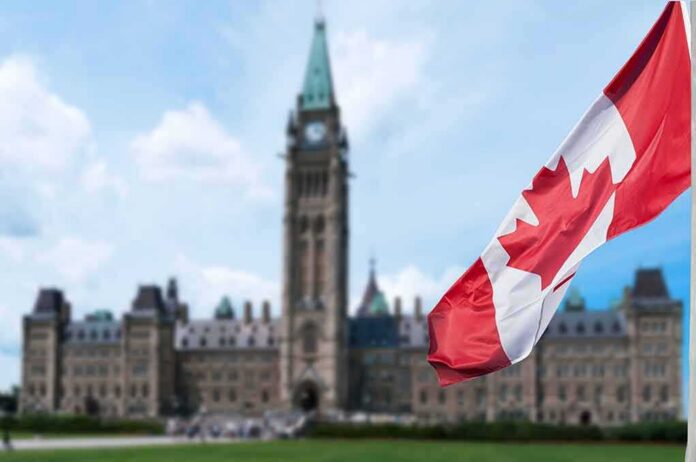
Canada’s prime minister said he considered a U.S. military attack a “nonzero” risk and planned for it.
Story Snapshot
- Prime Minister Mark Carney told The New York Times he studied a low-probability U.S. military action scenario.
- Carney called it “extreme tail risk” and said it was “not a base case,” but still planned for it.
- Major outlets repeated the same quotes, confirming the public nature of the admission.
- Carney linked the thinking to a push to reduce reliance on U.S. tech and defense supply chains.
Carney Publicly Describes Planning For “Extreme Tail Risk”
The New York Times published an on-the-record interview where Prime Minister Mark Carney said he considered a U.S.-led military action against Canada as a low-probability but nonzero risk. He called it an “extreme tail risk,” said it was “not a base case,” and argued leaders must prepare for remote scenarios as part of risk management. Canadian Broadcasting Corporation and other outlets repeated these same quotes, showing the admission was made publicly and consistently across coverage.
The interview took place at The New York Times headquarters in Midtown Manhattan. The paper described it as a wide-ranging discussion. Carney did not provide details about specific steps taken, but he framed the review as responsible planning. He also linked the stance to a larger Canadian effort to harden national capabilities in case relations worsen or supply access is cut. That explanation set his comments within a broader policy program, not a prediction of conflict.
Broader Policy: Cutting Reliance On U.S. Systems
The New York Times reported that Carney is working to reduce Canada’s dependence on U.S. technology and defense sourcing. The goal is to limit Canadian exposure to pressure or threats from abroad, including from the United States if politics turn harsh. The Times said this includes moving away from reliance on American satellites and other key platforms. That policy frame helps explain why he would weigh a remote military scenario as part of a national risk review.
Separate New York Times reporting earlier in 2026 said Canada would spend about 32 billion Canadian dollars to upgrade northern bases and related defense infrastructure. That plan points to real investments in homeland defense. While not proof of any single scenario, it shows a shift from peacekeeping toward stronger territorial defense. It also reflects a world where allies still plan for shocks. Responsible governments build options before a crisis, then hope they never need them.
What Carney Did Not Disclose And Why It Matters
Carney declined to give specifics on preparations. He did not describe military deployments, intelligence steps, or civil-defense moves. He kept the focus on the principle of planning for unlikely but severe outcomes. That gap limits what the public can confirm about the practical side. The policy message remains clear: Canada is reviewing even remote dangers and trying to lower leverage points where outside actors could squeeze the country.
🚨 CARNEY REVEALS CANADA STUDIED CONTINGENCY PLANS FOR POTENTIAL US MILITARY THREAT
OTTAWA, CANADA – Carney's admission matters because it confirms that concerns about Canadian sovereignty have moved from political rhetoric into formal government risk assessment. Trade friction,… pic.twitter.com/8hXI1z4lsg
— The Content Factory (@tcf_updates) September 25, 2026
The comments landed in a sensitive space for both countries. The United States and Canada share deep defense ties, including joint air defense command structures and long-standing cooperation. That is why any talk of conflict is unusual and draws outsized attention. The reporting here centers on Carney’s acknowledgment of planning for a remote risk, not on evidence of any imminent military action by the United States.
Why This Matters For U.S. Conservatives
Carney’s words will be used to pressure Washington while President Trump works to restore secure borders, fair trade, and energy strength. Claims that paint the United States as a threat can be a lever for Canada to seek more autonomy in technology and defense sourcing. That may weaken North American supply chains if it shifts contracts abroad. It may also feed old globalist habits that put international vendors ahead of U.S. workers and industry.
Conservatives should see two truths at once. First, allies plan for far-off dangers, even if they never happen. Second, headline writers can turn a planning remark into a story about “invasion,” which inflames talk and undermines trust. The facts in the reporting show Carney called the risk remote and did not present hard evidence of a U.S. plan. The focus should stay on strong borders, fair trade, reliable energy, and respect between neighbors.
Key Takeaway For Readers
Carney publicly said he considered a U.S. military action scenario and prepared for it as a low-probability risk. He tied that to a broader push to cut reliance on American systems and to invest in defense at home. The disclosure is newsworthy but does not show an imminent threat. For Americans who back secure borders, limited government, and strong industry, the answer is the same: keep the homeland strong, keep allies honest, and keep the focus on results.
Sources:
insiderpaper.com, cbc.ca, nytimes.com, winnipegfreepress.com, piquenewsmagazine.com, europesays.com