

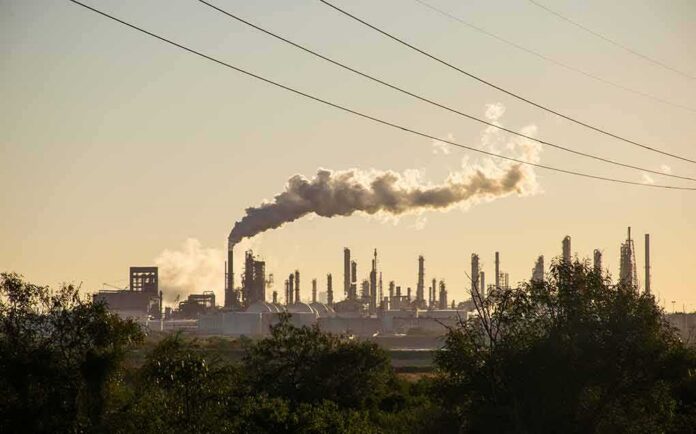
Ukraine’s war on Russian refineries continued despite President Trump’s announced pause, with reports pointing to a strike on Moscow’s Kapotnya facility that risks higher fuel prices and wider shocks.
Story Highlights
- President Trump announced a proposed halt on energy-target strikes; both sides signaled no final deal.
- Reports claim a Ukrainian strike hit Moscow’s Kapotnya refinery days after Trump’s statement.
- Kyiv has kept hitting Russian refineries this year, cutting output and tightening fuel supply.
- Any fresh refinery hit near Moscow could rattle global energy markets and U.S. consumers.
Trump’s Energy Pause Met With Immediate Doubts
President Trump said Ukraine and Russia agreed to stop hitting each other’s energy sites to calm fuel prices. Ukraine’s President Volodymyr Zelenskyy and the Kremlin described it as a proposal, not a signed deal. They welcomed the idea in public comments but did not confirm any pact. This matters because gas and diesel costs hit family budgets fast. A stop to strikes could ease supply fears, but only if both sides actually follow through on the pause.
Reuters reported both Kyiv and Moscow kept striking energy targets after Trump’s statement. Ukraine acknowledged a refinery hit in Russia’s Volga region as part of its wider campaign. Moscow signaled openness to talks on energy targets but tied that to broader demands on shipping and sanctions. That set the tone for more pressure, not less. The facts show no binding ceasefire on energy sites was in place when these latest actions occurred.
Claimed Strike On Moscow’s Kapotnya Raises Stakes
A partisan outlet reported that Ukraine struck the Kapotnya refinery in Moscow days after Trump’s post. The refinery supplies fuel to the capital region, so any real damage there would be a symbolic and logistical blow. Independent outlets have verified other recent refinery strikes, but the specific details and timing for Kapotnya on this date rely on limited sourcing. If confirmed, a hit that close to the Kremlin would show Ukraine’s reach and put new stress on Russia’s fuel system.
Past reporting this year shows Ukraine has stepped up deep strikes on Russian refineries. These attacks have forced shutdowns or output cuts at major plants and triggered fuel shortages in some areas. Analysts and officials say this reduces revenue that funds Russia’s war and complicates its logistics. That is why each claim of a new refinery strike becomes a big story. It influences markets, policy talks, and battlefield momentum all at once.
Energy Markets And American Wallets
Oil and diesel supply fears rise each time a large refinery is hit. When several plants go offline, even for days, traders price in risk. That tends to push up costs that American families see at the pump and in freight bills. Reuters noted Ukraine’s refinery campaign has doubled strikes this year, causing repeated output losses. Markets also react to headlines about Moscow-area hits because they hint at wider disruption. This feedback loop is fast and punishes working families.
President Trump’s push for a mutual halt aimed to break this cycle. Kyiv has said it would pause if partners can secure a real Russian stop to attacks on Ukraine’s grid and fuel sites. That condition remains unmet, according to multiple reports. Without a verified deal, both sides keep striking to gain leverage. That means price pressure can return quickly. It also means Washington must balance strong support for allies with the need to protect U.S. consumers from avoidable spikes.
What Conservatives Should Watch Next
Watch for official confirmation on the Kapotnya incident and any measurable impact on Russian fuel output. Look for signs that Moscow will actually halt strikes on Ukraine’s energy network. That is the key test for any mutual pause. Track refinery outage data and shipping flows, which move markets more than statements. Finally, hold Congress to account on policies that raise energy costs at home. America needs reliable supply, fewer mandates, and strong domestic production to blunt foreign shocks.
Six Days After Ukraine Agrees to Halt Attacks on Russian Refineries – They Strike Kapotnya Refinery in Moscow, to Screw Russia Global Energy Markets, AND Trump!https://t.co/NUq9X2VwO0
— Common Sense Evaluation ™ (@CSEvaluation) September 20, 2026
If there is no real pause, expect more back-and-forth strikes and more price risk. That cycle helps no one here at home. A verified halt would calm markets and protect family budgets. But a paper truce that only one side honors is worthless. Facts on the ground will decide. Until then, American strength means making energy here, securing our supply chains, and refusing global games that drain our wallets and weaken our security.
Sources:
thegatewaypundit.com, reuters.com, cnn.com, aljazeera.com, turkiyetoday.com, mid-day.com, newsukraine.rbc.ua, meduza.io