

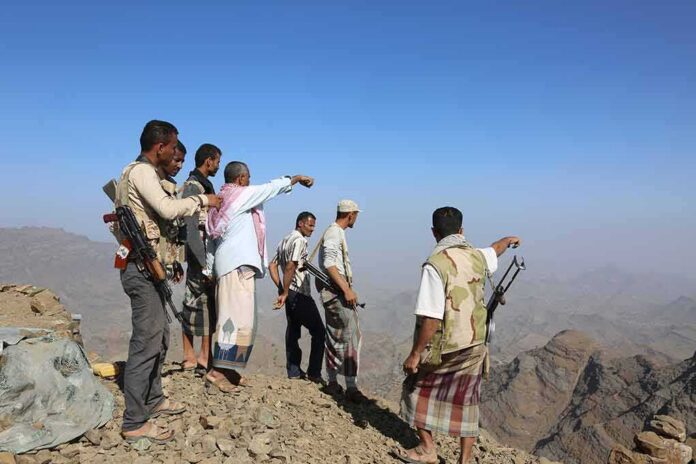
Armed clashes near the Bab al-Mandeb Strait now threaten a key global shipping lifeline and raise fresh stakes for U.S. energy security.
Story Snapshot
- Yemen government forces are fighting the Houthis along the Red Sea corridor near Bab al-Mandeb.
- Houthi gains toward Dhubab increase pressure on the strategic strait that links Asia and Europe.
- Reports say both sides rushed reinforcements and traded strikes along high ground by the coast.
- Saudi Arabia is preparing operations aimed at breaking a Red Sea chokehold, sources say.
Fighting Intensifies Near the Red Sea Chokepoint
Yemeni government units clashed with Houthi fighters near the Bab al-Mandeb Strait after days of movement along the coast. Reuters cited Yemeni sources who said Houthi attacks pushed government-aligned forces south toward Dhubab, a town that sits on the strait across from Perim Island. The advance raises the risk to ships that pass between the Red Sea and the Gulf of Aden. Government forces reported counterstrikes to blunt momentum and protect routes along the shoreline.
Al Jazeera reported government-aligned forces were reinforcing positions and preparing counterattacks along the corridor leading to the strait, even as front-line control seesawed in nearby coastal zones. Chinese state media, citing a Yemeni military official, said both sides surged reinforcements into rugged terrain overlooking the waterway and traded strikes as fighting deepened. These moves show both sides understand the stakes. Whoever holds the heights and towns near the coast can threaten or secure passing cargo.
Why Bab al-Mandeb Matters to American Families
Analysts describe Bab al-Mandeb as a narrow gate with outsized impact. About 15 percent of global sea trade moves through the Red Sea route tied to this passage, which connects Asia to Europe through the Suez Canal. When fighters push south along Yemen’s coast, they gain leverage over this route, which can raise shipping costs and fuel prices that hit family budgets back home. That pressure is exactly what Iran’s partners seek: influence over vital oil lanes when markets are already tight.
Strategic studies groups warn the danger is not only who plants a flag, but who can make transit riskier or more expensive through missiles, mines, or drones based along the coast. Even a credible threat can push insurers to hike rates and reroute ships around Africa, adding weeks and costs that ripple through prices on store shelves. For Americans who remember spikes from past supply shocks, this is the kind of squeeze that punishes workers and seniors first.
Regional Response and Next Steps
Reporting says Saudi Arabia is preparing operations to reverse rapid Houthi gains and break a Red Sea chokehold following last month’s coastal advance. Yemen’s government units, backed by Riyadh, reported strikes on Houthi positions in Mokha as part of efforts to stabilize the shoreline and contest approaches to the strait. These actions aim to keep sea lanes open and stop Iran-backed pressure on global energy routes before it hardens into a lasting block.
Yemeni forces announced the recapture of the Bab al-Mandab Strait after liberating Dhubab district from Houthi forces following clashes.#Yemen #BabAlMandab #Dhubab #Houthis #YemeniArmy #Breaking pic.twitter.com/Ba80pqCKmQ
— Arab Daily Scoop (@Arabdailyscoop) October 5, 2026
Some outlets noted claims and counterclaims about exact control of specific towns and islands along the corridor, which often shifts amid active combat. What remains constant is the strategic map. The side that holds Dhubab, nearby high ground, and access to Perim Island can shape the flow of ships. That is why both camps pour in men and gear. That is also why the United States and partners watch the coastline day by day for signs of either a breach or a hold.
What This Means for U.S. Policy Under President Trump
The United States has a clear interest in free navigation, lower energy costs, and stopping Iran’s reach. The reporting shows Houthi advances have increased their ability to pressure Bab al-Mandeb, which puts a second oil artery at risk alongside the Strait of Hormuz. Conservative policy priorities point to firm support for partners keeping sea lanes open, stronger missile and drone defense for ships, and tighter action on the networks that feed Iranian proxies.
Practical steps include closer coordination with Saudi and Yemeni forces working the coast, more maritime patrols, and clear red lines against attacks that endanger cargo and crews. Those measures defend American families from higher prices and deter those who would use chaos as leverage. The facts from the ground are simple: battles near a narrow strait can raise costs in your town. Holding that line protects paychecks, savings, and America’s energy security.
Sources:
youtube.com, reuters.com, aljazeera.com, en.wikipedia.org, jpost.com, crisisgroup.org, geopoliticalmonitor.com, theconversation.com, csis.org