
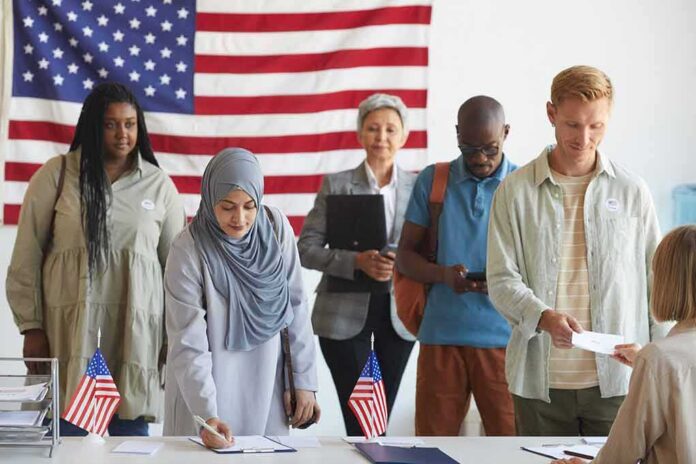
California officials admitted in court they cannot verify voter citizenship beyond self-attestation, even as the Justice Department says about 20,000 likely noncitizens are on the rolls and seeks to set aside their mail ballots pending checks.
Story Highlights
- The Justice Department sued California, alleging about 20,000 likely noncitizens are registered and/or voted.
- Federal prosecutors asked a court to set aside vote-by-mail ballots from flagged voters until citizenship is verified.
- California leaders refused the request, saying the list lacks proof and detail, and warned against disenfranchisement.
- The Justice Department charged 28 people in related voting offenses, showing concrete cases amid a larger dispute.
Federal Lawsuit Targets Alleged Ineligible Voters
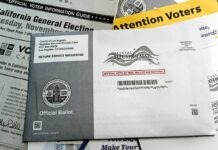
The United States Department of Justice filed a complaint on October 15, 2026, against California and key election officials. Prosecutors alleged more than 20,000 likely noncitizens were on the voter rolls and that some received or returned vote-by-mail ballots in a federal election. The government asked a federal court to require the state to set aside those ballots until officials verify citizenship through records, not just a checked box on a form. The case places election integrity at center stage.
Justice Department filings said federal analysts identified individuals using names, birth dates, and addresses. They delivered the list to California on a password-protected device. Reporting described a spreadsheet of about 20,000 names and a request for quick review before ballots were counted. A Justice Department spokesperson said the flagged names were manually reviewed, and the total could grow as checks continue. That framing signals a targeted approach, though the full methodology is not public.
Ballot Safeguards Sought Before Counting
Prosecutors asked the court to stop the state from counting mail ballots from flagged voters until citizenship is proven. They also sought an order to segregate those ballots. The request aims to prevent unlawful votes from mixing with valid ballots, which would be hard to untangle later. This is a narrow, process-focused remedy tied to federal election law. It does not purge rolls outright or cancel votes without review. It pauses counting while status is verified.
Federal officials later announced criminal charges against 28 people in California for election-related offenses. Reports said those defendants were drawn from or connected to the larger flagged list. These cases show concrete examples where investigators say the law was broken. The charges do not prove every other flagged entry is ineligible. But they do undercut claims that the federal list is baseless. The court will weigh the broader list while those prosecutions move forward.
California Pushes Back on Evidence and Timing
California Secretary of State Shirley Weber and Attorney General Rob Bonta rejected the federal request. They said the list lacked enough detail to act on, warned against disenfranchising voters, and declined to withhold ballots. They argued the Justice Department did not present a full voter-by-voter proof set and criticized the short turnaround time. Their stance keeps ballots in the counting flow unless a court intervenes. That position heightens the standoff with federal prosecutors.
Los Angeles Times and other outlets reported sharp exchanges over verification and transparency. California officials questioned how the list was built and why earlier, larger estimates shrank to about 20,000. Meanwhile, the Justice Department described high-confidence matches across federal records and urged prompt action before certification. The public has not seen the underlying files, which limits outside testing of error rates. That lack of shared data fuels the political fight.
What This Means for Election Integrity and Voters
Election law bans noncitizens from voting in federal races. The Justice Department’s approach here is surgical: set aside only the ballots linked to flagged names until citizenship is confirmed. That protects lawful votes and respects due process if done quickly and fairly. California’s refusal to pause counting creates risk that disputed ballots could be mixed in and become impossible to separate later. The court’s decision will shape how states handle similar disputes going forward.
Two facts can both be true: proven cases appear relatively rare in national studies, and even small numbers can swing close races. That is why process matters. A clear chain of custody, fast notice to affected voters, and documented record checks are essential. The clean fix is simple: verify, then count. President Trump’s administration put the issue squarely before a judge. Now California must show that its systems can confirm citizenship with more than a checkmark.
Sources:
thegatewaypundit.com, justice.gov, usatoday.com, abcnews.com, newsweek.com, latimes.com, usnews.com