

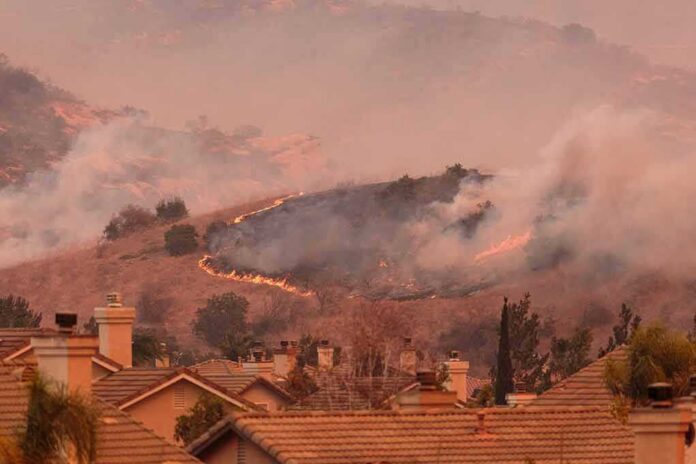
California steered $368.7 million in wildfire recovery money into general low-income housing with no guaranteed units for fire survivors, raising hard questions about who the aid actually serves.
Story Snapshot
- State awarded about $369 million to affordable rental projects without reserving units for survivors.
- Officials point to a separate $107.3 million program that prioritizes survivors for 673 units.
- Housing department says it funds projects but does not place people into units.
- Critics say broad spending leaves displaced families behind during recovery.
What California Did With Wildfire Recovery Funds
California allocated about $368.7 million in wildfire recovery aid to developers of affordable rental housing. The awards did not require projects to reserve a set number of units for displaced wildfire victims, according to investigative reporting that reviewed the funding terms and recipients. State housing officials describe their role as administering funds and programs, not managing properties or assigning tenants to units, which leaves the final placement of survivors to property managers and local systems.
Officials argue that building more affordable units across a region helps ease rent pressure and offers survivors options near jobs and schools. They say this broader strategy supports long-term recovery without pushing all new housing into burn scars that may remain risky or hard to rebuild quickly. That approach, however, often depends on general eligibility rules and waiting lists. Survivors must still qualify under normal income limits and compete with other applicants for available apartments.
The Separate Pot That Prioritizes Survivors
Alongside the broad awards, the state launched a disaster-specific effort in Los Angeles County. California committed $107.3 million for nine projects that will create 673 affordable rental homes. Officials said those units would be offered first to residents displaced by the January 2025 fires through clear preferences and priority policies tailored to survivors. State releases also cited earlier awards that, together, bring the planned affordable total near 1,000 units countywide.
The housing department also said it worked to prioritize fire-displaced people on waiting lists for the affordable properties it funds when applicants meet normal standards. In June 2025, surveys of funded properties showed 723 vacant units statewide, which the state framed as part of the capacity to absorb displaced households as they seek homes during recovery. These steps represent a targeted channel, but they run separate from the larger $368.7 million that set no survivor-reservation rule.
Why Critics Say The Balance Is Off
Critics argue that the main recovery money should have tied awards to clear, enforceable survivor access. They point to families still living in temporary setups while new construction funded with recovery dollars sets no survivor minimums. They also say shifting large sums to broad affordable projects blurs the purpose of disaster aid, which should first replace homes for those who lost them, then widen the safety net for others as budgets allow.
California pours $369M in wildfire recovery funds into low-income housing – but reserves none for fire victims https://t.co/yAzJkPP93V
— JV (@joveg8) October 19, 2026
Supporters of the state’s plan counter that fast, flexible production across many cities can stabilize rents and keep survivors close to work, schools, and care. They stress that the disaster-specific program does include first-offer preferences for those displaced and that the department does not control property management or unit assignments. That defense accepts a trade-off: wider affordability gains now, but fewer guaranteed doors reserved for families burned out of their homes.
What This Means For Recovery And Accountability
The split approach reflects a real policy tension. Governments often try to fix two problems at once: replacing lost homes and easing a larger housing crunch. The record shows California built a survivor-priority track in Los Angeles County while steering a much bigger pool into general affordability with no survivor set-aside. The gap between stated goals and enforceable access is the core issue, and it matters most to families still waiting for a door they can open today.
Sources:
nypost.com, us.headtopics.com, hcd.ca.gov, caloes.ca.gov, mynewsla.com