

Six people—four adults and two children—are missing after a single-engine Cessna went down near Mississippi’s Horn Island, prompting a multi-agency search in rough coastal waters.
Story Snapshot
- The U.S. Coast Guard says six people were aboard the downed plane near Horn Island.
- Debris, life vests, a life raft, and the aircraft cabin were found northeast of the island.
- The flight departed New Orleans Lakefront Airport bound for Fort Myers, Florida, officials said.
- The Federal Aviation Administration and National Transportation Safety Board are investigating.
Coast Guard Confirms Six Aboard; Search Focuses Northeast of Horn Island
U.S. Coast Guard Sector Mobile reported that four adults and two children were aboard a single-engine Cessna when it crashed into the water northeast of Horn Island on Tuesday afternoon. Crews placed the crash site about two nautical miles from the barrier island, a stretch of the Gulf that can turn fast and unforgiving. Local reports said the initial alert came in the mid to late afternoon, with teams moving quickly to set search patterns over the debris field.
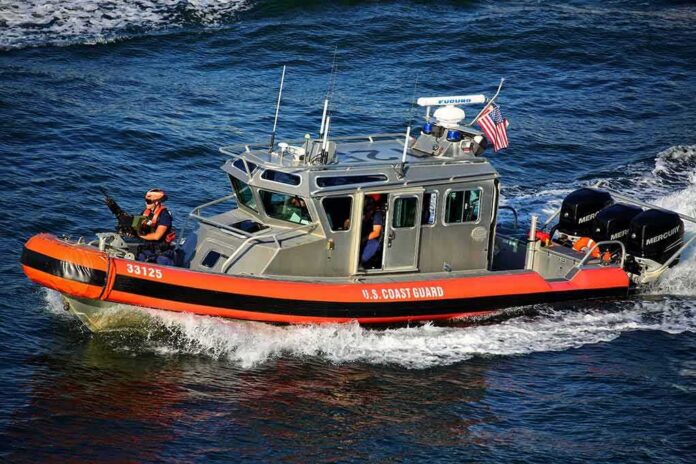
Responders reported finding the aircraft cabin, three life vests or life jackets, and a life raft near the suspected impact point. Those items point to a violent water entry and a possible ditching attempt. The Coast Guard worked with the Mississippi Department of Marine Resources to sweep the area by boat and air. Search crews faced fading daylight and choppy seas, conditions that complicate spotting people or floating gear in the water.
Flight Path: From New Orleans Toward Fort Myers Before Contact Was Lost
Officials told local outlets the Cessna departed New Orleans Lakefront Airport and was headed for Page Field Airport in Fort Myers, Florida. Reporters cited federal authorities who said contact with the aircraft was lost in the afternoon as it transited the Gulf along Mississippi’s coast. One station placed the incident near 3 p.m., while another reported loss of contact closer to 3:45 p.m., reflecting the rush of early updates as responders mobilized.
Investigators have not released the pilot’s identity, the passenger identities, or ages for the two children, and they have not described a cause. The model was described as a Cessna Centurion 210 by one national outlet, while others used a broader single-engine label, a common gap early on. The Federal Aviation Administration and the National Transportation Safety Board will coordinate on records, radar returns, weather, and wreckage to establish sequence and probable cause in the coming weeks.
Multi-Agency Response and What Comes Next for the Investigation
The U.S. Coast Guard led the search alongside the Mississippi Department of Marine Resources, with the Federal Aviation Administration and the National Transportation Safety Board handling the investigative track. That structure follows standard federal practice: the National Transportation Safety Board leads civil accident investigations, while the Federal Aviation Administration supports with records, technical staff, and safety follow-up under established orders and procedures.
🇺🇸 UPDATE: LIFE JACKETS, LIFE RAFT, and CABIN located after Mississippi plane crash
A Cessna 210 flying from New Orleans to Fort Myers suddenly lost altitude about 30 minutes after takeoff.
Flight data shows the aircraft descending from 8,800 feet at a staggering 18,000 FEET… https://t.co/YaTGBMo9aT
— Mario Nawfal (@MarioNawfal) November 25, 2026
Officials will examine radar and radio data, maintenance logs, and recovered parts to narrow causes. Weather, mechanical failure, fuel status, and pilot factors will be on the list. The National Transportation Safety Board typically issues a preliminary report within several weeks. That early document shares basic facts, not final conclusions, and helps families and the public understand what happened while a deeper analysis continues.
Families Waiting, Crews Working: Why Quick Search Efforts Matter
General aviation water crashes demand fast, organized searches. Survival often turns on time, visibility, and rescue assets on scene. A peer-reviewed review of water landings from 1989 to 2022 found that the U.S. Coast Guard rescued more than one-third of occupants in documented ditchings, showing why rapid response increases odds in these rare events. Every hour on the Gulf reduces body heat and strength, so aviation and marine teams push hard before night and weather close in.
What Local Readers Should Watch For
Local readers should expect updates on confirmed identities, debris recovery, and any weather or mechanical leads. Agencies will share when divers or salvage teams recover major pieces, which can clarify whether the aircraft broke apart before impact or on contact. Officials will also confirm any beacon hits, the aircraft’s exact tail number, and a firmer timeline. Until then, the search remains the priority, with investigators preserving evidence for a methodical, fact-driven final report.
Sources:
ksl.com, cnn.com, aircrashdb.com, nola.com, edition.cnn.com, wlox.com, faa.gov