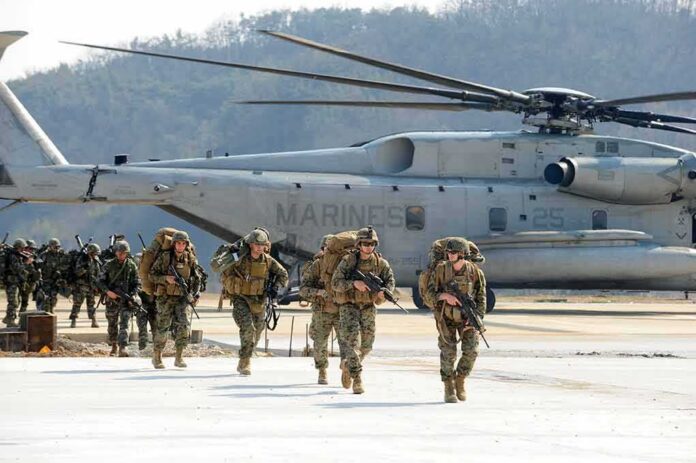
America has ended its troop mission in Iraq, capping a wider Middle East pullback that brings our service members home while keeping pressure on terrorists.
Story Highlights
- The Pentagon confirmed all U.S. troops left Iraq on September 30, 2026, ending a 12-year mission against the Islamic State.
- The withdrawal followed a 2024 U.S.-Iraq agreement and was finished in phases under President Trump’s watch.
- U.S. forces also handed over the last major base in Syria in April 2026, marking a major shift in posture.
- Washington plans limited training and intelligence support to Iraqi partners even after troops left.
What Changed: Mission Complete in Iraq
The United States completed its troop withdrawal from Iraq on September 30, 2026. Pentagon officials called it an orderly departure that closed a 12-year fight against the Islamic State. They said Operation Inherent Resolve in Iraq formally ended, consistent with a 2024 joint statement and U.S. interests. The move brings American troops home after two decades of rotations. It also reduces direct exposure to militia attacks and lowers the cost of an open-ended mission.
Reuters reporting states the exit was agreed in 2024 and then executed in phases, with the final date set for late 2026. The timeline began before, and finished during, President Trump’s current term. That shows planning can survive political shifts when both countries commit to a schedule. It also shows a practical model for conservatives who want results: negotiate clear goals, set milestones, and hold partners to the deal until the last convoy rolls.
Parallel Shift in Syria: Bases Handed Over
On April 16, 2026, the United States handed over its last major base in Syria to the interim Syrian government. Analysts described it as the end of more than a decade of U.S. presence there. Congressional researchers also recorded earlier steps. They wrote that U.S. forces pulled out of an outpost in southern Syria in February 2026 and that officials said more withdrawals were coming. Together, these moves mark a steady drawdown across both Iraq and Syria.
The Pentagon said Washington will still provide targeted training and intelligence support to Iraqi partners even after the troop exit. That matters for two reasons. First, it keeps pressure on any Islamic State cells that try to regroup. Second, it avoids the blank check of a large deployment. Limited help can back allies without exposing American families to the costs of another forever war. That is a middle path between endless presence and total neglect.
What Supporters and Skeptics Argue
Supporters say bringing forces home reflects common sense. They point to years of expensive rotations and rising risks from militias and drones. They also note that partners must stand up their own defenses if they want a stable country. Critics warn that Iran-backed groups could seek gains and that Islamic State remnants could test security. Reuters coverage shows both reactions on the ground: some Iraqis cheered, others feared a vacuum might follow.
Strategic voices also split on posture. The RAND Corporation found overseas presence can help deter hostile measures, arguing that proximity may lower the odds of proxy wars and intimidation. An Army War College analysis said keeping facilities in places like Bahrain and Qatar supports fast crisis response and sends deterrent signals during spikes in tension. These points reflect a real debate, even as facts on the ground now show a U.S. pullback in Iraq and Syria.
Conservative Lens: Security First, No Blank Checks
Conservatives want a safer America, a strong military, and no waste. The Iraq and Syria drawdowns fit that aim when they cut exposure and costs while keeping terror on the run. The 2026 Iraq departure followed a binding plan and finished in good order, which is how responsible government should work. The shift also puts pressure on local leaders to carry their share, which is fair after years of U.S. blood and treasure.
Trump said he no longer wants a deal with Iran as reports said the U.S. military is preparing for possible strikes, including a resumed campaign that could target Iranian energy, infrastructure and nuclear sites.
— Finance Mastering (@FinanceMaste) October 8, 2026
Questions remain. The research here documents the withdrawals but does not yet prove long-term security gains or partner capacity at scale. More data from the Pentagon or United States Central Command on post-withdrawal threats would help test the results. For now, the record shows a real change: troops home from Iraq, major positions vacated in Syria, and a narrower mission focused on training and intelligence when needed. That is retrenchment with guardrails, not retreat.
Sources:
theamericanconservative.com, reuters.com, newscord.org, congress.gov, richtmann.org, rand.org