

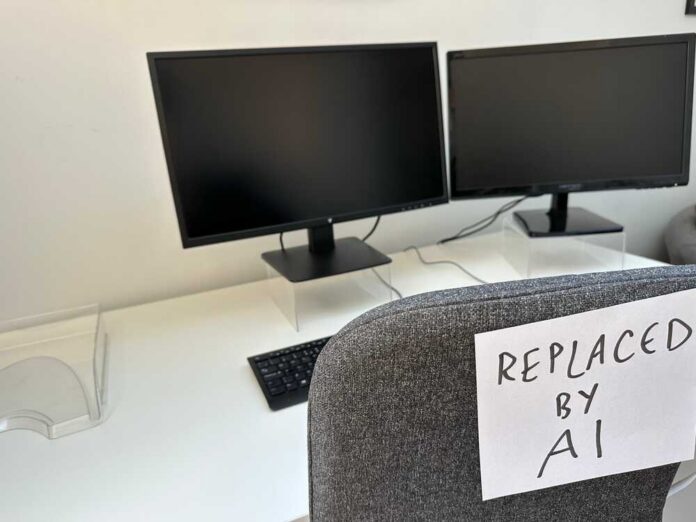
A startup is cutting nearly a quarter of its workers while floating “million‑dollar salary bands” for a select few—spotlighting an AI era where elites win big and everyone else takes the hit.
Story Snapshot
- ClickUp reportedly laid off up to 22 percent while touting “million‑dollar salary bands” tied to AI-driven performance [3].
- Leaders frame the cuts as efficiency moves to speed profitability and prepare for an initial public offering [1][2].
- Evidence for the new top-end pay structure remains secondary, with no primary compensation documents disclosed [3].
- Severance support is described but incompletely detailed in public reporting [5].
Management’s Stated Rationale: Efficiency, Profitability, and Initial Public Offering Readiness
ClickUp leadership publicly tied staff reductions to a push for efficiency, profitability, and an eventual initial public offering. Reports quote the chief executive describing “restructuring changes to optimize our business for utmost efficiency,” arguing the move accelerates a path to profitability and positions the company for going public [1]. Additional coverage states the company confirmed significant cuts while preparing for a possible initial public offering, emphasizing workforce sizing as a corporate-finance decision rather than a retreat [2]. These are management assertions absent independent financial filings accompanying the statements.
ClickUp’s chief executive also linked the restructuring to artificial intelligence adoption and a compensation overhaul, advocating a “100x organization” and proposing “million‑dollar salary bands” for employees who deliver outsized impact with artificial intelligence tools [3]. This framing suggests a shift toward concentrated rewards for a smaller nucleus of top performers. However, the available materials are secondary and do not include a primary compensation memo outlining eligibility, ranges, or approval authority, leaving open questions about the scope and implementation of these bands [3].
AI-Driven Productivity Claims Meet Documentation Gaps
Coverage credits artificial intelligence productivity gains as a driver for headcount changes, but the record does not quantify how many roles were automated versus eliminated for budget or structural reasons. There is no breakdown of role categories, automation exposure, or measured productivity uplifts tied to artificial intelligence deployment in the reporting [1][2][3]. Assertions about “100x” contributors remain aspirational language rather than verified outcomes; no post-layoff performance or customer metrics have been publicly produced to validate the promised multiplier effects [3].
The company’s broader culture appears built around high performance, tool-centric execution, and internal artificial intelligence upskilling, including weekly experimentation that aims to automate repetitive work. Leaders previously spotlighted large-scale hiring and internal product usage to reinforce a high-output environment, which is consistent with the narrative of rewarding peak performers during restructuring [6]. That said, secondary interviews and videos do not substitute for primary data demonstrating that higher bands retained top talent or that artificial intelligence adoption measurably improved throughput after the cuts [6].
Hiring, Severance, and What Is Still Unknown
While reducing staff, leadership has said hiring would continue in targeted areas, aligning with a reallocation strategy instead of a blanket freeze [1]. Past reports also indicate severance support for affected employees, citing a “comprehensive severance package” that includes 12 weeks, though the summary is truncated and does not fully detail benefits or eligibility [5]. These points, if accurate, portray a transition that is calibrated rather than indiscriminate, but again, documentation in the public domain remains incomplete and largely secondary.
For conservative readers tracking how artificial intelligence reshapes work, this case shows a familiar tension: concentrated rewards at the top, less stability for everyone else, and a narrative that financial markets demand leaner staffing before a listing. Management’s argument—pay more for measurable value and move faster—aligns with limited-government principles that prize merit and efficiency. Yet claims require proof. Without transparent role-level data, compensation policies, and post-layoff performance metrics, stakeholders cannot verify whether this is smart discipline or shiny rhetoric.
Accountability Questions Conservatives Should Watch
Investors and employees should press for primary materials: the chief executive’s full announcement, any board or investor decks backing profitability timelines, and the compensation policy that defines the promised bands [1][2][3]. Clear role-by-role impacts and artificial intelligence productivity evidence would separate disciplined management from trend-chasing. If the company delivers audited performance improvements, sustained customer gains, and transparent pay architecture, it bolsters the merit case. If not, the risk is an inequality spectacle masking a simple cost cut, which erodes trust and undermines free-market credibility.
Sources:
[1] Web – ClickUp unexpectedly lays off 7% of its staff – HiCounselor
[2] Web – Tech Layoffs: SaaS Startup ClickUp, Once Valued At $4B, Cuts 10 …
[3] YouTube – ClickUp’s $4B valuation doesn’t protect it from layoffs
[5] Web – ClickUp, valued at $4B, to lay off 10% of employees – People Matters
[6] Web – ClickUp Discussions – Blind