Venezuelans are still digging through rubble and red tape one week after twin earthquakes crushed towns along the coast.
Quick Take
- Search crews and aid teams are still working in hard-hit areas after the June 24 quakes.
- Officials say the death toll passed 1,700, with rescue work still underway in La Guaira and beyond.
- Authorities have also faced accusations that they tried to funnel donations through the federal government.
- U.S. teams and other foreign responders have entered the country and helped with rescues.
Rescue Work Continues Under Heavy Damage
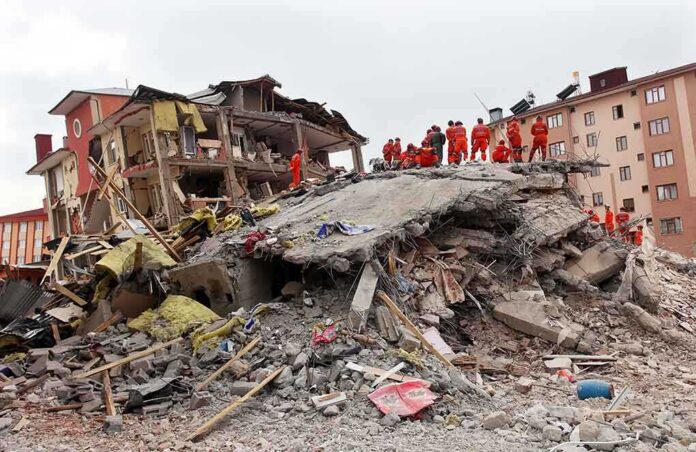
Authorities and aid groups say the search for survivors has not stopped. The State Department said the quakes struck on June 24, caused major damage in several cities, and prompted an immediate U.S. response with disaster teams and urban search-and-rescue personnel. Reports from the ground describe collapsed buildings, disrupted roads, and a country still trying to count the missing while families keep searching by hand.
Local and international crews have pulled people from the wreckage even as the rescue window narrows. The Wall Street Journal reported that firefighters and paramedics from Virginia extracted a father and son who had been trapped for four days. Other reports say rescue teams from many countries have joined the effort, while officials continue to warn that damage to airports, roads, and communications is slowing the pace of recovery.
Claims of Political Control Over Aid
The sharpest dispute is over who controls donations and volunteer work. The New York Times reported that opposition volunteers said police and civil protection officers tried to stop charity drives unless donations flowed through the federal government. The same report said volunteers were barred from setting up independent donation centers and that access to La Guaira was restricted to authorized personnel, which critics saw as a way to keep relief under government control.
Those claims matter because disaster relief depends on speed, trust, and open access. When officials limit who can deliver supplies, residents lose time they cannot afford. The government has said access limits were needed to keep roads clear for heavy machinery and rescue work. That explanation may fit the logistics, but the available reporting does not settle whether the rules were only about traffic or also about political control.
What The Record Shows So Far
The broader record cuts both ways. Reports say Venezuelan officials coordinated with the United Nations to secure body bags and allowed more than 2,000 international rescuers from 27 countries to enter the country. Other coverage says the government was still working with foreign teams while rescue operations saved lives, including a newborn and his mother rescued from rubble days after the quakes. That means the crisis is not a simple story of total closure.
Caracas (AFP) – A three-year-old boy was rescued from the rubble in Caracas on Tuesday, a Jordanian rescue team said, six days after twin earthquakes hit Venezuela, killing almost 2,000 https://t.co/jyzJG8RzKT f https://t.co/Hipu60ww56 pic.twitter.com/eDM4KTcq26
— zeta panama (@zetacompa) July 1, 2026
Even so, the reporting leaves real questions about local control. The strongest evidence in the available package points to opposition volunteers being blocked from running independent donation efforts and to authorities reserving official labels for government-backed sites. At the same time, the government says it is managing a dangerous disaster zone and directing outside help where it can be used best. For Venezuelans on the ground, the main issue is plain: they need relief, not a power struggle.
Sources:
insiderpaper.com, nytimes.com, wsj.com, npr.org, youtube.com