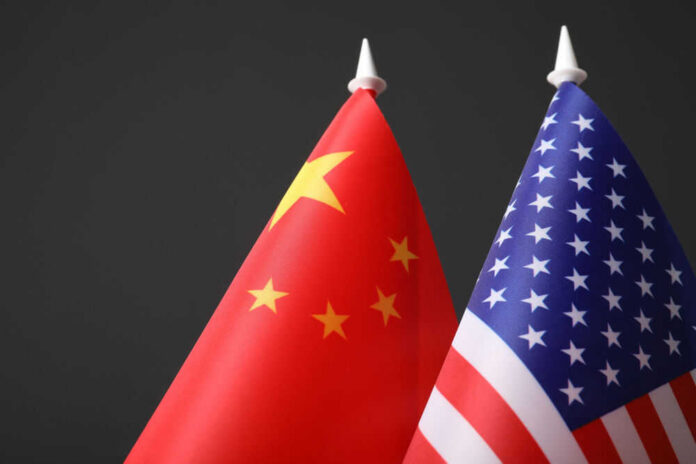
China has flatly rejected President Donald Trump’s claims that it meddled in U.S. elections, calling the allegations “pure fabrications” and “malicious smears.”
Quick Take
- Trump said declassified files show China obtained 220 million U.S. voter records and exposed major election weaknesses.
- China denied the accusations and said it has never and will never interfere in U.S. elections.
- U.S. intelligence assessments have said there is no evidence China altered votes, ballots, or election results in 2020.
- Officials said voter databases can be vulnerable, but data access is not the same as changing an election outcome.
Trump Leans on Declassified Intelligence
Trump used a prime-time address to claim that White House-reviewed intelligence documents show China carried out one of the biggest election data compromises in history. He said the material points to the acquisition of 220 million U.S. voter files and described the data as including names, addresses, phone numbers, and party preferences. The White House also posted the declassified material online as part of its election integrity release.
Trump’s allies argued that the files expose serious weaknesses in how states store voter data. The released documents say centralized election-related databases, poll books, and official election websites can be vulnerable to exploitation. A Department of Homeland Security memo cited in reporting said compromised voter registration data could be used to obtain absentee ballots, alter voter information, or delete registrants. That warning supports concern about security, but it does not by itself prove election tampering.
Beijing Rejects the Charge
Chinese officials answered quickly and forcefully. Foreign Ministry spokesman Lin Jian called the claims “pure fabrications” and said they were “groundless statements” and “malicious smears.” Beijing said China has never interfered in U.S. elections and has no interest in doing so. The denial fits a long-running pattern in which Chinese officials reject U.S. accusations of election meddling as politically driven.
The sharp pushback matters because Trump framed the issue as more than a data breach. He tied the alleged compromise to election integrity and suggested hidden damage inside the American system. Chinese officials, by contrast, tried to draw a bright line between cyber access, influence efforts, and actual interference in voting. That distinction is central to the public fight now unfolding.
What the Intelligence Record Says
U.S. intelligence reporting has been more limited than Trump’s accusation. The March 2021 intelligence assessment said China did not attempt to alter voter registration, ballot casting, tabulation, or results in the 2020 election. Reporting on the new release says the majority view of the intelligence community remained that China considered influence activity but did not try to change the election outcome. That is a narrower finding than Trump’s broad claim.
Would China retaliate over the new US election documents?
Trump’s release of intel showing China accessed American voter registration data in 2020 has Beijing on the defensive.
China’s likely response: Strong public denial and accusations of “smearing” or “Cold War mentality.”…
— The Mavion Corporation (@mavionx) July 17, 2026
That gap between data collection and election interference is important for readers who want the facts straight. Public voter information can be gathered, bought, or stolen, and that alone does not prove votes were changed. Even so, the concern is not imaginary, since election data systems are valuable targets and foreign actors have tried to use influence operations in past cycles. The unresolved question is how much of Trump’s new evidence shows risk, and how much shows actual meddling.
Sources:
insiderpaper.com, timesnownews.com, instagram.com, reddit.com, abcnews.com, scmp.com