An Israeli airstrike killed four people in Gaza City, Palestinian officials say, as the war grinds on with no end in sight and a humanitarian crisis that has drawn sharp condemnation from the United Nations and world governments.
Story Snapshot
- Palestinian officials report four people killed in an Israeli strike on Gaza City.
- The UN says Gaza has gone over a month with zero food, fuel, or medicine allowed in.
- UN Secretary-General António Guterres confirmed the total aid blackout began in early 2025, after Israel reinstated a full blockade when the ceasefire collapsed in March.
- Both the U.S. government and the Israeli military found no solid evidence that Hamas was systematically stealing large amounts of aid.
Strike Kills Four in Gaza City
Palestinian officials say an Israeli airstrike struck Gaza City and killed four people. The strike is one of many Israel has carried out across the Gaza Strip as its military campaign against Hamas continues. Israel says its strikes target Hamas weapons sites and fighters. The Israeli military confirmed a recent strike on a Hamas weapons production facility in southern Gaza, saying the operation was aimed at dismantling the group’s military capacity.
The fighting comes as Gaza’s civilian population faces severe shortages of food, water, and medicine. The conflict started after Hamas launched a deadly attack on Israel on October 7, 2023, killing roughly 1,200 Israelis and taking around 250 hostages. Israel responded with a sustained military campaign aimed at destroying Hamas. That context matters — but so does what has happened to civilians caught in the middle since then.
UN Reports Total Aid Blackout for Over a Month
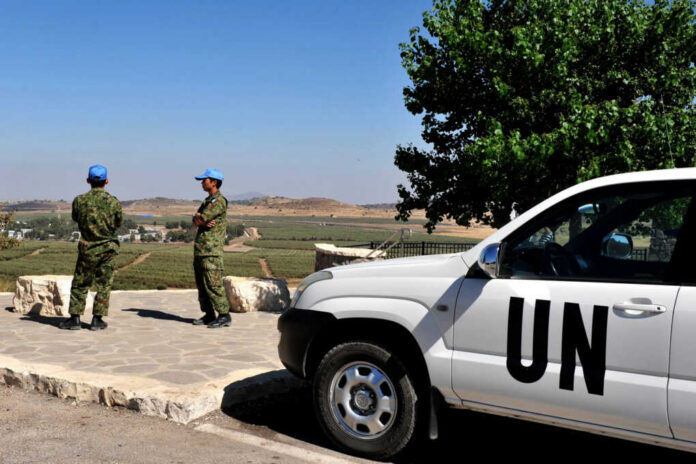
UN Secretary-General António Guterres stated that for more than a month, not a single truck carrying food, fuel, medicine, or commercial supplies was allowed into Gaza. That statement came in April 2025. A UN document confirmed Israel reinstated a tighter blockade after the ceasefire fell apart in March 2025. The United Nations Relief and Works Agency for Palestine Refugees in the Near East said the blockade was keeping aid from reaching around one million children in danger.
UN humanitarian chief Tom Fletcher called the blockade “alarming” and said it violated the terms of the ceasefire deal. The UK government, speaking at the United Nations Security Council, urged Israel to “immediately remove unjustifiable restrictions” on aid and noted that Israel’s rules were blocking essential items and limiting deliveries to a single crossing. After 11 weeks of a full blockade, Israeli authorities opened a brief window to allow some aid through before closing it again.
Hamas Aid Theft Claims Don’t Hold Up to Scrutiny
Israel and some officials argued that Hamas was stealing aid meant for civilians — a claim used to justify limiting what goes into Gaza. But that argument has run into a wall of evidence. An internal U.S. government review found no proof that Hamas was widely stealing American-funded humanitarian aid. A separate analysis by the United States Agency for International Development reviewed 156 reported theft incidents and could not pin most of them on Hamas.
The Israeli military itself, according to reporting by the New York Times, found no evidence that Hamas was regularly stealing from the United Nations. Two senior Israeli military officials confirmed this finding. That does not mean Hamas is blameless — isolated incidents have been reported — but the claim that Hamas was systematically looting aid at a scale that justified a full blockade does not appear to be supported by the evidence gathered by the U.S. or Israel’s own military.
A War With No Clean Answers
Conservatives rightly support Israel’s right to defend itself after the horror of October 7. Hamas is a terrorist organization that attacked civilians and still holds hostages. Those facts are not in dispute. At the same time, a blockade that cuts off food and medicine from a million children — and that even U.S. and Israeli military reviews cannot justify with evidence of widespread Hamas theft — raises hard questions. Supporting a strong ally does not require ignoring facts on the ground.
Watch| Footage of an Israeli airstrike on a street near Al-Wehda Stadium, south of Gaza City. pic.twitter.com/N2xrJpBCxj
— Al-Jarmaq News (@Aljarmaqnetnews) July 13, 2026
The Trump administration has maintained strong backing for Israel throughout its second term. But with U.S. government reviews now contradicting key justifications for the blockade, the pressure on all parties to find a path forward — one that keeps military pressure on Hamas while allowing aid to reach civilians — is growing. The war’s next chapter will test whether any of those parties are willing to act on the facts rather than the narratives.
Sources:
insiderpaper.com, un.org, washingtonpost.com, bbc.com, youtube.com, ngo-monitor.org, facebook.com, politics.stackexchange.com