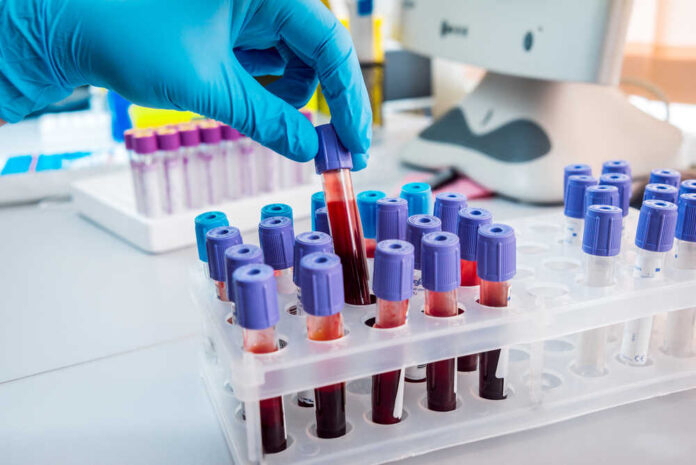
A pricey new “cancer blood test” is being marketed as the next big breakthrough—even as key questions about false alarms, follow-up scans, and real-world life-saving proof remain unsettled.
Quick Take
- Multi-cancer early detection (MCED) tests aim to spot cancer “signals” from a simple blood draw, potentially expanding screening beyond the few cancers routinely screened today.
- Some MCED tests are already commercialized, but experts still lack long-term outcome data proving they reduce cancer deaths in broad populations.
- Industry projections suggest earlier detection could reduce late-stage cancer diagnoses, yet those projections are not the same as demonstrated survival benefit.
- Patients face tradeoffs: an annual price around $1,000, uncertain insurance coverage, and the possibility of false positives leading to imaging and invasive follow-up.
Why MCED testing is suddenly everywhere
Multi-cancer early detection screening is built on new sequencing and machine-learning techniques that look for tiny fragments of tumor-related material in blood. Advocates frame it as a way to close a stubborn gap in U.S. screening, because widely accepted screening tools exist for only a handful of cancers. The promise is straightforward: find more cancers earlier, when treatment is simpler, cheaper, and more likely to succeed.
That pitch resonates with families who have watched cancer show up late and spread fast. It also fits an American appetite for innovation that can bypass slow-moving institutions. But conservatives and liberals alike have learned to be cautious when a new health product is sold with certainty while the fine print says the benefits are still being studied. In this space, “early detection” can mean better outcomes—or it can mean uncertainty and costly downstream testing.
What the tests can (and cannot) claim right now
Current cancer-detecting blood tests are described as detecting a limited set of cancer types today, with researchers working to expand that range dramatically over time. Several products are positioned as additions to standard screening, not replacements. That distinction matters: Americans who already skip colonoscopies, mammograms, or other established tests will not be “covered” simply because a new blood test is available, especially if insurers treat it as optional.
Companies and researchers cite modeling that suggests population-wide use could reduce the share of cancers found at stage four. Modeling can be useful for planning, but it is not the same as a completed, long-term trial proving fewer deaths. The gap between promising detection capability and proven mortality reduction is the central reason skepticism persists, including among patients who try the tests and come away unsure whether the information actually improves their health decisions.
The hidden cost: what happens after a positive “signal”
The hardest part of MCED is not the blood draw—it is what follows a positive result. Clinical workflows described for some tests include physician evaluation, common lab work, and imaging such as CT scans extending from the neck through the pelvis, with PET scans in some cases. That can mean more radiation exposure, more specialist visits, and more time off work, even if the signal turns out not to be cancer.
Patient advocates and experts have raised concerns about unintended harm, including anxiety and unnecessary procedures triggered by false positives or ambiguous findings. This is where trust in institutions gets tested: families want doctors to take cancer seriously, but they also do not want a new testing pipeline that pushes them into expensive, stressful follow-up with unclear payoff. The policy question is whether the system has safeguards to prevent overdiagnosis and overtreatment.
Coverage, equity, and the politics of medical “innovation”
MCED tests have been described as costing about $1,000 per year, which immediately raises practical questions about who gets access and who is left out. Employers and health systems are potential gatekeepers, and reimbursement decisions by insurers could determine whether the technology becomes routine or remains a premium product. When access hinges on job status or zip code, it reinforces a broader public belief that elites get cutting-edge care first.
Limited government does not mean blind faith in either corporations or bureaucracies. The conservative-friendly takeaway is to insist on transparent evidence before mandates, subsidies, or “standard of care” pressure locks families into a costly pathway. The left’s concern about unequal access also overlaps with that demand for clarity: if the benefits are not proven, taxpayers and patients should not be rushed into underwriting a nationwide rollout. For now, MCED remains an intriguing frontier with real potential—alongside real unanswered questions.
Sources:
The next frontier: cancer detection and treatment innovation
Multi-Cancer Early Detection: The Next Frontier in Screening Is Here
Annual Review article on multi-cancer early detection (MCED)
Exploring the Next Frontier of Cancer Biomarkers in Precision Medicine
PubMed entry: multi-cancer early detection related research
New frontier: the very early detection of cancer signals
Next frontier in cancer detection: closing the screening gap
The Next Frontier for Colorectal Cancer Screening