China’s new patrol push near Taiwan is testing the island’s resolve and exposing Beijing’s steady pressure campaign.
Quick Take
- Taiwan said Chinese coast guard and naval patrols near the island were **provocative** and disruptive.[1][2]
- China said the patrols were a **law-enforcement operation** tied to maritime rights and sovereignty.[2][3]
- Taiwan’s defense forces said they monitored the activity and responded with ships, aircraft, and missiles.[1][2]
- The dispute comes as Taiwan and China clash over the legal status of waters east of the island.[2][3]
Taiwan Pushes Back on Chinese Patrols
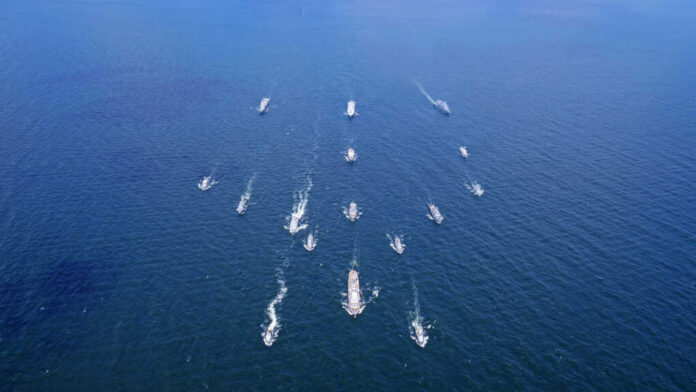
Taiwan’s defense ministry said Chinese aircraft and warships carried out what it called “so-called joint combat readiness patrols” near the island.[1] The ministry said the moves “harass the airspace and seas around us” and “blatantly undermine the status quo.”[1] That language is unusually sharp for Taipei, which usually tracks these incidents without such direct public criticism.[1]
Taiwan’s public warning fits a broader pattern of gray-zone pressure from Beijing.[1][2] Chinese patrols, coast guard moves, and air activity now appear often enough that they are almost routine, yet each one adds strain.[1][2] For readers who care about sovereignty and order, the problem is simple: China keeps probing, and Taiwan keeps having to spend real resources to answer it.[1][2]
China Calls It Law Enforcement
China said its coast guard activity east of Taiwan was a “special maritime traffic law-enforcement operation.”[2] Chinese state media said the patrols were meant to protect maritime rights and sovereignty after Japan and the Philippines began talks on maritime boundaries.[2][3] Beijing also said Taiwan was reacting to a lawful operation, not a military threat.[2][3]
That defense matters because it shows Beijing is trying to wrap pressure in legal language.[2][3] China did not present charted patrol routes, boundary maps, or detailed vessel logs in the material provided.[2][3] Without that evidence, Taiwan’s claim that the patrols were “provocative” remains stronger in the public record than China’s broad legal argument.[2][3]
Why the Standoff Still Matters
The deeper fight is not just about one patrol. It is about who gets to define the waters around Taiwan, and whether Beijing can slowly expand its reach without open war.[2][3] Taiwan says Chinese ships have contacted merchant vessels, asked for their origin and destination, and claimed jurisdiction in waters Taipei sees as outside Beijing’s authority.[2] That is the kind of pressure that wears down small states first.
The 2nd Mechanized Infantry Battalion of the 🇹🇼Republic of China Army Guandu Area Command conducted a combat readiness patrol to simulate countering threats against port facilities in Keelung, northern Taiwan, on 6/5.
(Youth Daily News) pic.twitter.com/bzxmGeYe9p
— Taiwan Defense News Tracker 🇹🇼 (@TaiwansDefense) June 6, 2026
The timing also matters because these patrols came after fresh regional maritime talks involving Japan and the Philippines.[2][3] Beijing linked those talks to its response, which shows how quickly China turns diplomacy into leverage.[2][3] For a conservative audience, the lesson is familiar: when a communist power talks about “rights” and “stability,” it often means more control, more pressure, and less freedom for everyone else.[2][3]
Sources:
[1] Web – Taiwan Says It Won’t Tolerate Chinese Patrols, Vows Expulsions
[2] Web – China Deploys 100+ Vessels Near Taiwan After Trump-Xi Summit
[3] Web – China Deploys More Warships Near Taiwan After High-Stakes …