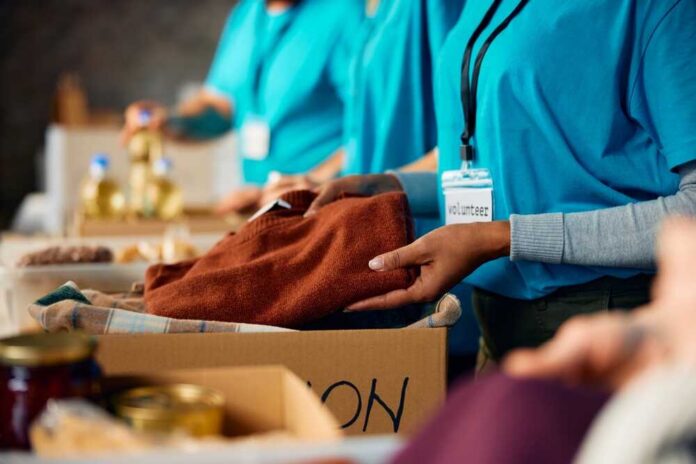
Your “good deed” donation can turn into trash faster than you think—because charity shops are being swamped with low-quality overflow they literally can’t sell or store.
Story Snapshot
- Donation centers and charity shops increasingly reject bags at the door because backrooms are already full.
- Fast fashion and broken, low-value household goods are a major driver of “unsellable” inventory that charities must pay to discard.
- Research tracking clothing donations shows many items don’t get reused locally and can be exported abroad due to oversupply.
- Estimates cited by circular-fashion advocates suggest a large share of textiles ultimately end up landfilled, including donated clothing.
Why Charity Shops Say “No Thanks” at the Door
Charity shop operators have limited space, limited staff, and a mission that depends on selling donated goods quickly. When backrooms are stacked and racks are full, accepting more donations becomes a liability instead of a blessing, because the store still has to sort, price, store, and dispose of what cannot be sold. In a widely shared account from a UK antiques dealer, shops refused donations simply because they were “full,” not because the items were inherently bad.
That same account points to a reality many donors don’t see: a flood of low-quality “decluttering” bags can clog a store’s ability to move good inventory. If a shop receives piles of damaged toys, worn-out clothing, or cheap items that won’t sell, staff time gets consumed sorting and discarding instead of merchandising. In practical terms, charities can end up functioning like a waste-processing middleman—an arrangement that feels good to donors but can quietly shift disposal costs onto the very organizations people claim to support.
The Fast-Fashion Pipeline That Turns Donations Into Waste
Researchers tracking clothing donations have documented a “dark side” to the modern donation stream: wealthy cities generate far more secondhand clothing than local resale markets can absorb. A 2025 study cited in coverage of the issue found that donations from multiple major cities were overwhelmingly shipped abroad because domestic reuse capacity lagged behind supply. The pressure is amplified by fast fashion’s sheer volume and low durability, which produces more garments that are difficult to resell and expensive to handle.
Environmental concerns also tie back to basic economics. When donation quality drops, charities face higher sorting burdens and greater disposal risk, while synthetics can persist for long periods if landfilled. Circular-fashion advocates cite estimates that a high percentage of textiles ultimately go to landfill, including items originally donated. Exact percentages vary by source and location, but the direction of the trend is consistent: more clothes bought cheaply and discarded quickly creates a system where “donate it” becomes a moral cover for a supply chain that already produces too much.
Who Gets Hurt When Donations Become a Dumping Ground
Low-income shoppers are often sold the idea that charity shops are a dependable alternative to pricey retail. When stores are overwhelmed—or when they close due to weak sales and high overhead—working families lose a practical option for affordable clothing and household goods. Resellers and small dealers also feel the squeeze when donation streams become dominated by unsellable items. The UK perspective highlighted in the practitioner account connects the dots: storerooms jam, stores can’t process, and quality merchandise gets harder to keep on the floor.
What Donors Can Do That Actually Helps (Without More Bureaucracy)
Evidence in the available research points to a simple conclusion: the most “charitable” move is often upstream—buy less, buy better, and donate only what a neighbor would realistically pay for in good condition. When items are clean, functional, and seasonally appropriate, they are far more likely to be sold and converted into real support for a cause. When items are damaged or worn out, donors should use legitimate textile recycling options where available, or dispose of them properly instead of outsourcing guilt to a charity bin.
For Americans watching this from 2026, the lesson fits a broader frustration many conservatives share: feel-good slogans can hide broken systems. The donation pipeline, like so many “green” and “social good” schemes, can end up punishing ordinary people while letting large-scale overproduction continue unchecked. The research provided doesn’t tie the problem to one single viral “manager confession,” but it does show a durable pattern—too much low-quality stuff chasing too little real demand, with charities and communities stuck managing the consequences.
Sources:
https://www.thecooldown.com/green-business/clothing-donations-study-recycling-waste-impacts/