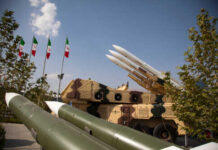

Poland’s airspace was brazenly violated by a Russian missile, and now Russia’s ambassador is thumbing his nose at Polish authorities—raising real questions about NATO’s backbone and the West’s willingness to defend its own borders.
At a Glance
- A Russian cruise missile entered Polish airspace on March 24, 2024; Warsaw lodged a sharp diplomatic protest.
- Russian Ambassador Sergei Andreev refused a Polish summons, calling it “immaterial” and demanding more evidence.
- Poland’s government is publicly questioning Moscow’s commitment to diplomatic norms per international law.
- The incident is reopening wounds from prior missile incursions and reigniting debate about NATO’s readiness in Eastern Europe.
Russian Missile Incursion Tests Poland, NATO, and Diplomatic Norms
On March 24, 2024, a Russian cruise missile reportedly breached Polish airspace, setting off alarm bells in Warsaw and throughout NATO. Polish authorities moved fast, launching a formal diplomatic protest and summoning Russian Ambassador Sergei Andreev to explain his government’s actions. The ambassador’s response? An outright refusal to show up, dismissing the summons as pointless because, in his words, Poland failed to provide evidence for the violation. This dismissive attitude is exactly what infuriates anyone who believes in national sovereignty and the rule of law.
Watch a recap: DW News March 24 | Russian cruise missile breaches Polish airspace
Poland is not some obscure outpost—it’s a frontline NATO member, a key supporter of Ukraine, and a country with a long memory of Russian aggression. For those who respect the rule of law and the sanctity of borders, the refusal of Russia’s ambassador to even engage diplomatically is a slap in the face. The Polish Foreign Ministry didn’t mince words, publicly challenging whether Andreev is upholding his responsibilities under international law.
Missile Incursions: Pattern or Accident?
This is not the first time Poland has come under fire—literally and figuratively—thanks to Russian missiles. The scars are still fresh from the November 2022 explosion in Przewodów that killed two civilians, and the December 2022 incident where a Russian KH-55 missile crossed Polish territory before being discovered by a civilian months later. Each time, Poland—backed by NATO—has been forced onto high alert, scrambling defenses and convening emergency meetings. Yet, instead of accountability, all Warsaw gets from Moscow is denial, obfuscation, and a parade of diplomatic snubs.
This pattern of Russian behavior is as predictable as it is dangerous. Poland’s leadership, including President Andrzej Duda and Prime Minister Mateusz Morawiecki, have repeatedly had to reach out to NATO and European allies for support. These aren’t isolated accidents—they are part of a broader strategy by Moscow to test the limits of NATO’s patience and unity.
Watch a report: Putin appoints new Russian ambassador to Poland | TVP World News
NATO’s Eastern Flank: Paper Tiger or Real Deterrent?
Every time Russia violates Polish airspace, it’s not just testing Poland—it’s testing NATO. Article 5 is supposed to mean that an attack on one is an attack on all, but what happens when these “gray zone” incidents pile up and the response is little more than strongly worded letters and diplomatic indignation? The Polish public, especially those living near the border, want more than government statements and empty promises. They want real air defense, real accountability, and real deterrence. Polish officials are under intense domestic pressure not just to talk tough, but to actually show Moscow that these provocations come with consequences.
Security analysts and military professionals are sounding the alarm, warning that NATO’s eastern flank remains vulnerable. Calls for greater investment in early warning systems, missile defense, and rapid response capabilities are growing louder. The risk here is not just another “accident.” If a future incident results in casualties, or is perceived as intentional, the pressure for escalation will be tremendous. The time for dithering is over—either NATO gets serious about defending its members, or it risks becoming a paper tiger whose warnings mean nothing to aggressors like Putin’s Russia.