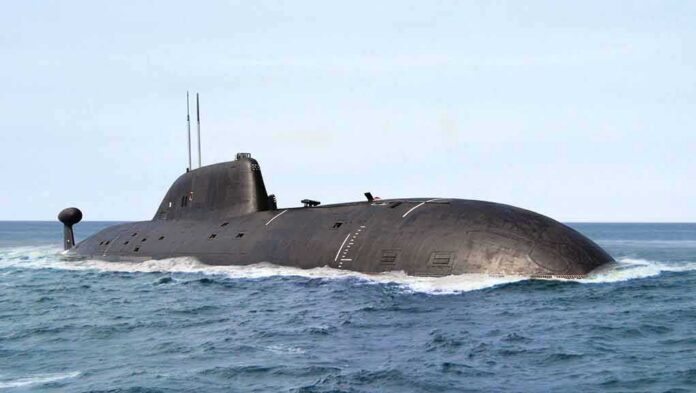
The Soviet Navy’s K-222 still stands as a hard-to-ignore Cold War record breaker, but the story also shows how a flashy speed claim can outrun hard proof.
Quick Take
- K-222 is widely reported to have hit **44.7 knots** underwater during trials.
- Sources also repeat a propulsion figure of **80,000 horsepower** from twin nuclear reactors.
- Its **titanium hull** made it a one-off Soviet experiment, not a mass-built class.
- The boat’s fame rests on speed, but its noise and upkeep problems were serious.
The Record That Made K-222 Famous
K-222 earned its reputation by posting a submerged speed figure that most submarines could not approach. Multiple reference and history sources say the boat reached 44.7 knots in a full-power trial, and one Spanish naval history review describes that number as the submarine’s key technical claim. The same sources frame K-222 as the fastest submarine of its era and, in some retellings, the fastest manned object ever sent underwater.
The propulsion story is tied to two VM-5 pressurized-water nuclear reactors and a total output often listed at 80,000 horsepower. That power fed twin shafts and steam turbines, which helped explain how the boat could push into such extreme speed territory. The available research repeats that figure across several summaries, but it does not include a primary Soviet engineering sheet that shows the original calculation or test method.
Titanium, Speed, and a Very Loud Hull
K-222 was built as Project 661 and became known as the Papa class in Western references. Its titanium hull was the feature that made it unusual and expensive, and it is the reason so many later accounts treat the submarine as a special case rather than a normal fleet boat. The design was a testbed for speed, not a model the Soviet Navy copied on a large scale.
That same design came with heavy tradeoffs. Multiple secondary accounts say the submarine was very noisy at high speed, with cavitation and flow noise that made it easier to detect. Some sources also describe titanium welding problems, structural stress, and difficult maintenance. Those details do not erase the speed record, but they do undercut any claim that the boat was a clean all-around success.
Why the Missile Loadout Claim Is Less Settled
The armament picture is less tidy than the speed claim. Most of the retrieved material describes K-222 as carrying 10 SS-N-9 anti-ship missiles, but one transcript summary says SS-N-7 missiles instead. That split matters because it shows how later retellings can blur technical details while still repeating the same headline about the boat’s speed.
For readers trying to separate legend from record, the main point is simple. The available material strongly supports that K-222 was exceptionally fast and technologically daring, and it also shows that the submarine was noisy, costly, and hard to maintain. What the research package does not provide is a primary trial log, a design bureau file, or a U.S. Navy speed audit that would settle every claim behind the superlatives.
Sources:
19fortyfive.com, nationalinterest.org, linkedin.com, globalmilitary.net, armada.defensa.gob.es, voinanet.ucoz.ru, reddit.com