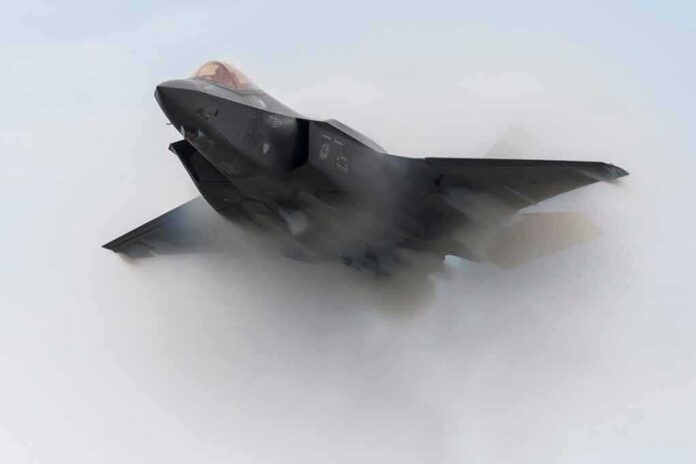
A Marine F/A-18D on a routine training flight crashed into a Washington mountainside, yet the pilot walked out alive and talking to deputies.
Story Highlights
- The Marine F/A-18D crashed near Rimrock Lake during routine training; the cause is under investigation.
- The pilot safely ejected and was recovered by Yakima County deputies with minor injuries.
- The crash sparked a wildfire that local crews contained after the impact.
- Bodycam images and reports show a bloodied but stable pilot taken to a local hospital.
Crash During Routine Training Near Rimrock Lake
Marine Corps officials and multiple reports say an F/A-18D Hornet went down near Rimrock Lake during a routine training exercise. The crash site sits in the mountains of central Washington, about 55 miles southeast of Seattle. Reporters placed the event around midday, with witnesses noting smoke and fire in the area after impact. The Marine Corps described the event as a non-fatal aviation mishap, and investigators are now working to determine what went wrong.
Local news outlets reported a fire tied to the crash zone, and fire crews moved quickly to contain it. Officials later said the fire was out, while some nearby roads stayed closed for safety and recovery work. Early reports did not show injuries on the ground. The scene underscores how fast a training mishap can threaten forests and towns. Quick action by first responders helped stop a small wildfire from becoming a larger disaster.
Pilot Ejected, Found Alive, And Treated For Minor Injuries
The pilot ejected from the Hornet and survived. Reports say Yakima County Sheriff’s Office personnel found and recovered the Marine after the ejection. Rescue images and body-worn camera coverage circulated widely and showed a bloodied but steady pilot who could speak with deputies. Officials said the pilot had minor injuries and went to a local hospital for evaluation and care. The Aviationist and local outlets each confirmed the safe ejection and rescue sequence.
Marine Corps Times also reported that the pilot was safely recovered and treated for minor injuries. Together, these accounts align on the key points: routine training, an ejection that worked as designed, and a fast handoff to local responders. While the aircraft was lost, the survival of the pilot reflects how military ejection systems save lives. Standard medical checks after an ejection are common, which tracks with the decision to move the pilot to a hospital.
Unit Identification And Area Impact
Open reporting identified the aircraft as a Marine F/A-18D Hornet tied to Marine Aircraft Group 11 within the 3rd Marine Aircraft Wing. Some outlets linked the jet to Marine Fighter Attack Squadron 323, known as the “Death Rattlers.” Those details match the broader attribution to units based under Marine Aircraft Group 11. Officials have not released the pilot’s name, which is routine while the service handles notifications and reviews.
A Marine pilot punched out of an F/A-18D Hornet over Rimrock Lake, Washington on June 13. Low-level training on the VR-1355 route through the Cascades. The jet went into the hillside and touched off a wildfire.
Bodycam the Yakima County sheriff just released shows him walking… pic.twitter.com/SMwZrHsYeK
— IredcapI (@IredcapI) August 18, 2026
The crash prompted a quick response across agencies. Sheriff’s deputies reached the pilot, fire crews knocked down the flames, and road closures kept the public clear of hazards. Local television and military outlets carried consistent facts about the time, place, rescue, and fire. This kind of coordination protects nearby communities and helps investigators secure the area. It also shows how local law enforcement supports military training that keeps our forces sharp and ready.
What Comes Next In The Investigation
The Marine Corps says the cause is under investigation, and officials have not published a final report. That process can take time as teams review wreckage, training plans, and pilot statements. Early in any mishap, the public sees only the basics: where it happened, who survived, and what hazards followed. Here, those basics are clear. The Marine pilot lived. The aircraft is lost. A small wildfire began and ended. The full why and how will come later, after the safety review.
For families near training routes, the takeaways are direct. Strong first response limited the fire. Clear road controls kept people safe. Routine military training must continue so our aviators stay skilled, especially in challenging terrain and weather. Under President Trump, the focus on readiness remains high, but safety still matters. This mishap shows both sides: a tough loss of a jet, and a ready network that saved a Marine and protected a community.
Sources:
thegatewaypundit.com, migflug.com, duboisaviation.com, militarytimes.com, nbcrightnow.com, marinecorpstimes.com, theaviationist.com