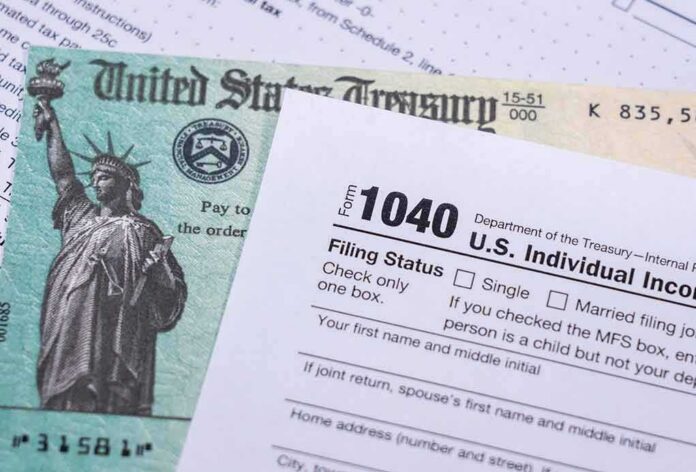
Americans just saw a $43 billion jump in tax refunds, putting real cash back into family budgets.
Story Highlights
- The Internal Revenue Service reported $296.067 billion in refunds through April 17, a 17% rise year over year.
- More refunds went out to more people, and the average refund climbed to $3,275.
- Media and analysts confirm the surge but debate its wider economic meaning.
- Academic research shows most taxpayers get refunds due to overwithholding, shaping how to read the spike.
IRS Data Show a Clear Surge in Refunds
The Internal Revenue Service reported $296.067 billion in tax refunds issued through April 17, 2026. That total is up from $253.116 billion a year earlier, a 17.0% increase. The agency also reported 90,411,000 total refunds issued and an average refund of $3,275. These figures capture returns filed by the April deadline and processed through that week. The numbers reflect broader participation and larger checks, which means more households received more money back this season.
The Wall Street Journal reported the same trend during filing season updates. The outlet noted the Internal Revenue Service increase as a confirmed data point rather than as a claim about the whole economy. This framing matters. It anchors the news in what the government actually did and paid out, not in forecasts or spin. Readers can trust the refund spike as fact, then judge the impact on their own budgets and communities.
What Bigger Refunds Mean for Household Budgets
Families who got refunds saw real relief. An average of $3,275 pays down a credit card, fixes a car, or fills the freezer. Millions chose direct deposit, speeding access to funds. Parents can catch up on bills. Seniors can handle a repair or medical cost. Households use refunds to get ahead, build a cushion, or wipe out debt. That is why filing season matters. The money is yours, and now it is back where it belongs: in your hands.
Some analysts claim the lift may fade as prices move. They argue higher refunds can act like a short burst of stimulus, raising demand and possibly nudging inflation. Others say a refund surge alone is not proof of long-run strength. Those are fair caveats. Yet none of that changes the core fact that the Internal Revenue Service sent out far more money this season than last, and that families control how to use it today.
Why Refunds Are Common—and Why This Spike Stands Out
Economists have long shown that most Americans get refunds because they overpaid during the year. Withholding tables pull more from paychecks than final tax bills for many people. That creates a yearly lump sum when you file. Over three-quarters of taxpayers receive refunds for this reason. Knowing this helps us read the surge with clear eyes: refunds reflect both policy and paycheck settings, not just the broader economy’s pulse.
Even so, this year’s increase is unusually large. The Internal Revenue Service data show gains in both the number of refunds and the average size. That makes the result harder to dismiss as a pure timing quirk. When more people get checks and the checks are bigger, households feel it. For conservatives focused on letting Americans keep more of what they earn, this is a concrete step in the right direction.
How to Make the Windfall Work for You
Households can turn a onetime refund into lasting strength. Paying down high-interest debt locks in a risk-free return. Building an emergency fund covers a car repair without new debt. Investing in skills or a home project can raise future income or cut future costs. Families know their needs best. Washington should respect that. The government’s job is to stop waste, cut red tape, and keep taxes low so work pays and savings grow.
My tax guy Jerome started filing amended returns for dead clients claiming they were owed refunds, having the checks sent to "estate representatives" (his friends), then splitting the money.
Found out when my dead uncle's "estate" got a $4,000 refund check.
We'd settled his…
— marqix ☆ (@fwmarqix) September 3, 2026
Critics will say the surge proves little. They will point to price pressures and argue the boost will fade. But the data show a simple truth: the federal government returned more of your money this year, to more people, and faster by direct deposit. That is a win for workers and retirees. It is also a reminder that policy should serve families, not the other way around. Keep what you earn. Spend it how you choose. That is common sense—and it works.
Sources:
wsj.com, justthenews.com, legion.org, irs.gov