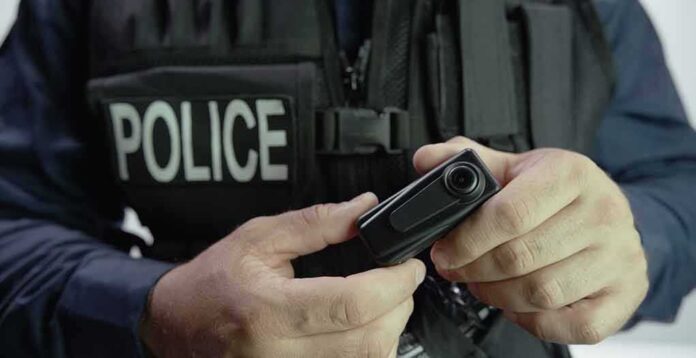
ICE has tied traffic stops to body cameras, and that move undercuts the media spin that tried to turn a safety policy into scandal.
Quick Take
- Immigration and Customs Enforcement now requires at least one body camera on vehicle stops.
- The agency’s written policy says cameras support accountability and public trust.
- ICE first set a body-camera policy in 2024, then updated it again in 2025.
- Reporting says the rule limits traffic stops until equipment reaches more field offices.
ICE Puts Cameras Before Traffic Stops
U.S. Immigration and Customs Enforcement told officers they may resume traffic stops only when at least one officer on scene wears a body camera. Fox News reported that officers without access to cameras are not authorized to conduct those stops, and that the rollout is still moving through the agency’s field offices.
The policy is a clear enforcement rule, not a public-relations stunt. Immigration and Customs Enforcement said the update provides standards for body worn cameras across enforcement work and was issued in line with Department of Homeland Security policy and an executive order on accountable policing. The agency also said the cameras are meant to improve trust, transparency, and effectiveness.
The Written Policy Goes Beyond One Stop
Body cameras are not new for the agency. Department of Homeland Security records show Immigration and Customs Enforcement issued a body-camera policy on January 12, 2024, and later updated it again on February 19, 2025. The 2024 directive says officers must record enforcement activity at the start of an encounter, or as soon as safely possible, and should shut the camera off only when the scene is secure.
The 2025 guidance kept that same basic structure. It requires activation at the start of enforcement activity and deactivation when the activity ends. The policy also covers a wide range of field work, including at-large arrests, brief investigatory detentions, warrant execution, and other public-facing enforcement actions. That makes the camera rule part of normal policing procedure, not a special exception for headlines.
Why the Rule Became a Flash Point
The latest traffic-stop rule followed fatal shootings involving Immigration and Customs Enforcement officers in Texas and Maine, according to reporting from Reuters and Government Executive. That context matters because the agency’s response looks like a standard accountability step after a serious use-of-force problem. White House border czar Tom Homan said officers would wear at least one body camera during vehicle stops, and reporting said the rule would remain in place as equipment reaches more offices.
There is also a practical limit that critics will notice. ABC News reported that Immigration and Customs Enforcement’s release policy gives the agency broad control over what footage may be made public, including language that any release must be in the agency’s “best interests”. That does not erase the camera mandate, but it does show the government still holds most of the power over the footage. For readers who want less spin and more order, the main fact is simple: the cameras are now part of the stop itself.
Sources:
redstate.com, foxnews.com, ice.gov, reuters.com, dhs.gov, uticaphoenix.net, youtube.com, aila.org