

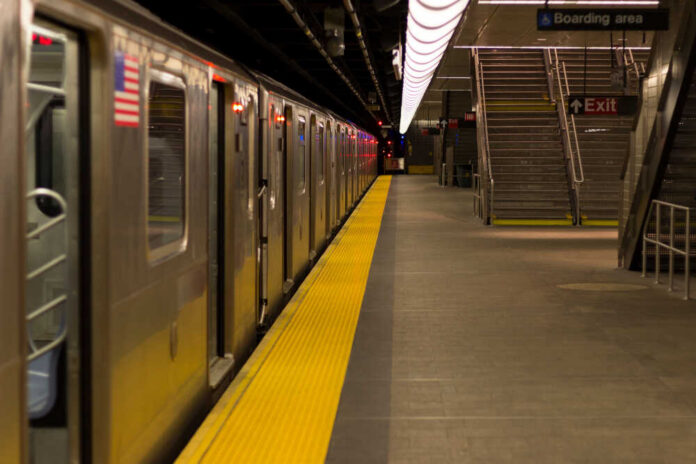
A New York City commuter can get stabbed in broad daylight and the suspect may still vanish into a system that seems built to excuse disorder rather than stop it.
Quick Take
- Reports say a 33-year-old straphanger was stabbed multiple times in a New York City subway attack, with police initially indicating the attacker was still at large.
- Separate district attorney case summaries show prosecutors have recently pursued attempted-murder and felony assault charges in other “unprovoked” subway stabbings.
- Public frustration is growing over a basic question: why do repeat crises in transit safety persist despite years of promises, funding, and overlapping agencies.
- Officials often point to mental illness, homelessness, and post-pandemic instability, but riders mainly experience the bottom-line result—fear and unpredictability.
What the latest subway stabbing report says—and what remains unclear
New York City tabloids reported a disturbing episode: a 33-year-old subway rider stabbed multiple times, with police describing a chaotic assault and an ongoing search for the suspect. The report, however, is thin on verifiable public details in the materials provided here, including an exact station, train line, time, and whether any arrest followed. That lack of clarity matters, because it feeds a wider credibility problem around transit crime reporting and official accountability.
District attorney summaries from Queens and Manhattan show that when suspects are identified, prosecutors can and do bring serious charges tied to subway violence, including attempted murder and assault counts in separate incidents. Those case writeups underscore a point many riders already believe: the subway isn’t just dealing with “quality of life” complaints. It is dealing with episodes that resemble street-level violent crime, occurring in a confined space where victims have limited escape routes.
Prosecutors describe “unprovoked” attacks that mirror riders’ worst fears
The Queens District Attorney describes a case in which a subway rider was charged with attempted murder for an “unprovoked” stabbing of another straphanger. The Manhattan District Attorney outlines a separate indictment connected to a stabbing during a “vicious assault” in a Harlem train station. These summaries do not prove every high-profile headline is accurate, but they do establish a pattern: officials are confronting violent incidents that appear random, fast, and devastating—exactly the kind that break public confidence in daily commuting.
For conservatives and many moderates, “unprovoked” is the keyword. It signals a breakdown of order where law-abiding people cannot reliably avoid trouble by minding their own business. For liberals focused on equity and social services, the same word raises different questions about mental health, substance abuse, and homelessness. Both sides, however, end up at the same place: ordinary working people are being asked to accept unacceptable risk as the price of living in a major American city.
Why “system failure” claims keep resurfacing in transit safety debates
New York’s subway is governed by overlapping layers of responsibility—city leadership, the MTA, and multiple law-enforcement entities—yet riders still experience a sense that nobody is truly in charge. The research provided also points to post-COVID instability, homelessness, and mental-health crises as contributing factors. When violence spikes, governments often respond with visible deployments and announcements, but the public’s frustration is rooted in outcomes: whether stations feel controlled, whether repeat offenders are deterred, and whether basic rules are enforced consistently.
That frustration now fits into a broader national mood in 2026: many voters—right and left—believe government protects institutions first and citizens second. In transit, that can look like endless spending on programs and bureaucracy while riders are told to lower expectations. Conservatives tend to see it as a failure of deterrence and enforcement. Liberals often see it as a failure of care systems. Either way, the rider stuck on a platform at night mostly sees abandonment.
The policy tension: public order versus revolving-door risk
District attorneys can charge cases after the fact, but preventing the next attack depends on what happens before violence—policing presence, enforcement of rules, and the handling of people in crisis. The public argument usually collapses into slogans, yet the practical tradeoff is real: a system that avoids intervention to reduce complaints can unintentionally increase danger for commuters. The social media discussion around this latest reported stabbing shows anger aimed at city leadership and agencies that seem unable to maintain basic safety.
Straphanger, 33, stabbed multiple times in NYC subway attack – crazed attacker still on the loose: cops https://t.co/dKXw54yIGH pic.twitter.com/MbcmtygNIq
— New York Post (@nypost) May 10, 2026
Based on the limited, uneven details available in the research packet, the responsible conclusion is narrow: New York City’s subway continues to generate serious violence reports, and prosecutors’ own case descriptions confirm that “unprovoked” stabbings have occurred in recent years. What remains unsettled is whether officials will align incentives toward prevention—visible control, swift consequences, and functioning mental-health interventions—or whether commuters will keep hearing the same promises while incidents like this continue to dominate headlines.
Sources:
Subway Rider Charged With Attempted Murder For Unprovoked Stabbing Of Fellow Straphanger
Subway Attack: Man Indicted For Stabbing Straphanger During Vicious Assault In Harlem Train Station