
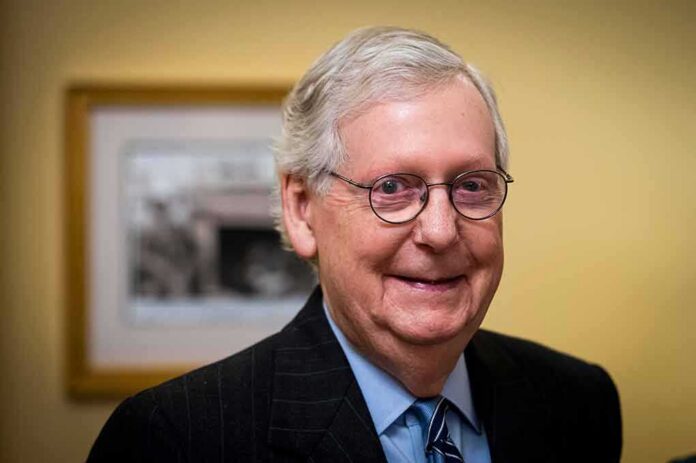
Kentucky’s Democrat governor is pressuring a hospitalized Republican senator to disclose private medical details or quit, turning health privacy into a political weapon.
Story Highlights
- Gov. Andy Beshear demanded Sen. Mitch McConnell give a detailed health update or consider resignation.
- McConnell said he briefly lost consciousness after a fall, had mild pneumonia, and had no stroke or heart attack.
- The Senate’s doctor cited McConnell’s childhood polio affecting mobility and said he was not yet cleared to return.
- Kentucky law now requires a special election to fill any Senate vacancy; no temporary appointment is allowed.
Beshear’s Ultimatum And The Call For Public Disclosure
Democrat Gov. Andy Beshear sent a formal letter demanding Sen. Mitch McConnell give Kentuckians a direct health update and prove he is fit to serve. Beshear said voters are “increasingly concerned” and asked McConnell to share details or consider resigning if he cannot reassure the public. His office framed the push as transparency. The letter came after weeks of limited updates from McConnell’s staff while the Senate was out of session. The pressure raises sharp questions about privacy and power in a heated election cycle.
Beshear’s move mirrors a broader playbook: demand disclosure, then float resignation if details fall short. He repeated the request days later, saying proof of capacity should be shown now. That escalation landed even as staff said McConnell continued working with aides on Kentucky and Senate matters during recovery. The tactic appeals to those who want more clarity. But it also risks using another person’s medical chart as a political lever. Many voters see a line between transparency and coerced exposure of private records.
What McConnell And Doctors Have Said So Far
Sen. McConnell broke his silence in mid-July. He said he was briefly unconscious when he fell and went to the hospital. He added that doctors ruled out a heart attack, stroke, concussion, fractures, tumors, and hemorrhage. He said he had a mild case of pneumonia and was focused on recovery. He stated he remains fit to serve, though he would not yet return to vote on the Senate floor. That message set a public baseline while avoiding day‑by‑day medical disclosures.
The Office of the Attending Physician for Congress later added key context. The office said McConnell’s childhood polio remains a significant factor in his mobility. It also said he was not yet medically cleared to return to Congress. McConnell’s team said he was still improving, doing physical therapy, and keeping up with Kentucky and Senate work with staff support. These are concrete updates from named sources. They explain the absence without claiming a hidden crisis or a secret diagnosis.
The Legal Stakes In Kentucky If A Seat Opens
Kentucky lawmakers changed succession rules in 2024. The governor can no longer appoint a temporary senator. If a vacancy occurs, the governor must call a special election. Voters, not party insiders, choose the replacement. No “placeholder” appointment can tip the balance for months. That means any push that creates a vacancy goes straight to the ballot box, where Kentuckians decide who fills the seat. These rules lower the payoff for partisan games about timing.
The Constitution sets age, citizenship, and residency for senators. It does not impose medical fitness tests or forced disclosure. Illness alone does not vacate a seat. Attendance and fitness issues are managed by Senate rules and by voters at the next election, not by a governor’s demand letter. Ethicists argue the public has an interest in health issues that could impair core duties. But there is no legal duty for sweeping medical releases for sitting members. That is why these fights hinge on norms, not law.
Transparency, Privacy, And A Standard That Cuts Both Ways
Calls for openness often sound good until they become one‑sided. If Beshear’s standard is full medical transparency or resignation, that bar would apply to every elected official, including Democrats he supports. Many Americans favor honest updates on fitness to serve. But many also value medical privacy and the doctor‑patient bond. A fair approach asks for clear, regular status reports about capacity to work, without forcing private charts into the public square absent medical necessity or incapacity.
They suck on the candy as long as possible!!
CBS News now reports something unusually tense in Kentucky politics:
Governor Andy Beshear says he has not heard a single word from Senator Mitch McConnell, despite formal requests for updates on McConnell’s health after his… pic.twitter.com/JWJfKyP3r5— Jarl Finland (@jalle51) August 16, 2026
President Trump’s voters expect even treatment, not selective outrage. Here, McConnell gave a public account, denied major acute events, and said he is working with staff as he rehabs. The Senate’s doctor confirmed mobility challenges and a pause on returning, which explains the schedule. Voters can weigh these facts and decide if they feel represented. What they should reject is any attempt to use a health scare to grab power outside the ballot box. In America, the voters choose.
Sources:
thegatewaypundit.com, apnews.com, wlwt.com, ms.now, thehill.com, washingtonexaminer.com, newsweek.com, washingtonpost.com, thenationaldesk.com, facebook.com