Russia and North Korea just opened their first road bridge, tightening a sanctioned bloc’s supply line across the Tumen River.
Story Snapshot
- The one-kilometer, two-lane bridge opened to vehicles on Sept. 7, 2026.
- Moscow and Pyongyang cast the link as a milestone in a growing partnership.
- The crossing boosts capacity to move people and goods between the two countries.
- Delays on the Russian side trailed earlier targets before the opening date arrived.
Bridge Opening Marks A New Russia–North Korea Corridor
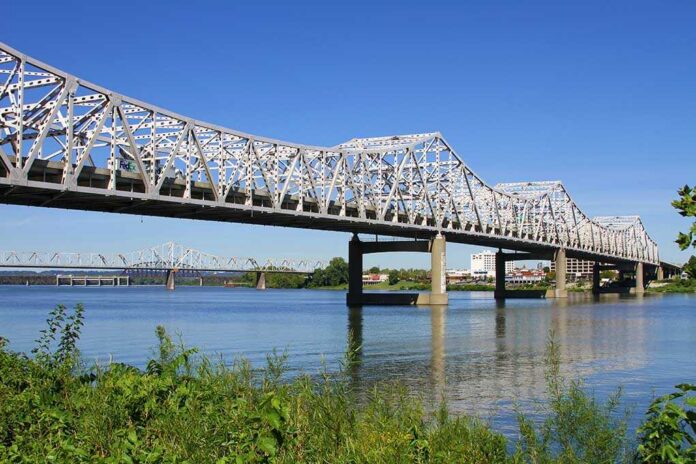
Russian and North Korean officials opened their first road bridge across the shared border on September 7, 2026. Reports showed vehicles crossing the span, confirming traffic is now moving over the Tumen River. The structure, named the Yakov Novichenko Bridge, runs about one kilometer and carries two lanes. It connects Russia’s Far East to North Korea’s Rason area. Officials on both sides called it a key step in a closer partnership that has grown over the past two years.
The new road link adds to an older rail bridge and limited air links that long served as the only direct routes. Russian and North Korean statements framed the opening as a boost to trade, tourism, and routine cross-border movement. Russia’s transport figures earlier outlined planned capacity for vehicles and daily travelers, signaling an intent to scale traffic beyond rail-only limits. The opening follows a construction start announced in 2025 and several public milestones since then.
What The Crossing Can Carry, And Why It Matters Now
The bridge’s design and two-lane layout enable up to hundreds of vehicles per day, based on prior transport ministry guidance for the project. That throughput can support steady truck traffic, which is more flexible than trains. The link also bypasses long detours through other borders. For two countries under heavy sanctions, a direct road route offers speed, control, and predictable scheduling. Those features make the crossing valuable for both everyday commerce and higher-priority shipments.
Moscow and Pyongyang have highlighted the road’s value for legal trade and people-to-people ties. Analysts have also tracked the project using satellite imagery as deadlines slipped during 2026. A July assessment flagged unfinished Russian-side facilities, pushing back mid-June goals. The final launch in early September followed visible work to complete checkpoints and access roads. The end result is a functioning span that both governments can now use daily.
How We Got Here: Timelines, Delays, And Ceremonies
Russian leaders announced construction in spring 2025 and held formal events marking progress on the bridge deck later that year. State and independent outlets documented the sequence of promises and target dates. Through the first half of 2026, the schedule slid as work continued on customs and inspection sites. By late summer, reports indicated a September opening was possible. On September 7, Russia’s state media and international outlets confirmed the ribbon-cutting and live traffic.
Russia and North Korea have opened their first road bridge across the Tumen River, creating a new land link and strengthening economic, logistical and strategic ties between Moscow and Pyongyang. https://t.co/Bm6enVutsS
— Sahby Mehalla | مهالة صحبي (@sahbymehalla) September 8, 2026
The opening fits a larger pattern since President Vladimir Putin’s outreach to Pyongyang. Infrastructure has become a sign of strategic intent as well as a practical tool. Leaders in both capitals describe the bridge as proof of a “landmark stage” in ties. The message is clear: the two sides plan to keep building links that work around Western pressure and give them options at their own border, on their own timeline, under their own rules.
Why American Readers Should Care
The bridge is a real-world logistics gain for two authoritarian states that often act against United States interests. A working road corridor can move goods faster and with more discretion than rail alone. That can help both regimes cushion sanctions and find new ways to trade. It also signals that pressure campaigns need strong enforcement and clear goals, or rivals will route around them with steel and concrete, one project at a time.
For conservatives who value strong borders and peace through strength, the lesson is simple. Secure transport links change facts on the ground. The United States must protect its own supply chains, energy routes, and border infrastructure with equal resolve. That means backing policies that cut red tape at home, rebuild ports, and modernize roads, while holding hostile regimes to account abroad. Power respects preparation. This bridge shows our rivals are preparing right now.
What Comes Next On The Tumen
Traffic will likely scale in phases as customs and quarantine teams refine their process. The two-lane setup can flex for trucks, buses, and service vehicles. Seasonal weather on the Tumen will test winter operations and maintenance plans. If both sides manage the flow well, daily volume should rise. Each uptick cements the bridge’s role in cross-border logistics, making it harder to reverse and more useful for planned trade corridors in Northeast Asia.
Officials will point to early success as proof of momentum. Watch for new announcements on feeder roads, warehousing, and inspection upgrades on the Russian side. Those steps would deepen the corridor’s value and shrink wait times. The more efficient the process becomes, the more attractive the route will be for sanctioned trade partners. That is the strategic stake behind a one-kilometer bridge that now carries the weight of a larger plan.
Sources:
youtube.com, reuters.com, dw.com, themoscowtimes.com, apnews.com, government.ru, bbc.com, english.elpais.com, nknews.org