
Sixteen people were rescued in the Pacific after a predawn mayday, and several suffered injuries consistent with shark bites as 11 others remain missing.
Story Highlights
- U.S. Coast Guard rescued 16 people about 140 miles west of Ensenada after a sinking report.
- Officials said several survivors had injuries consistent with shark bites; medics gave life-saving care.
- Scripps Mercy Hospital treated one suspected shark-bite patient and two with cold exposure.
- Authorities reported 27 people in the water; 11 remained missing when the search was suspended.
Emergency Call And Open-Ocean Rescue
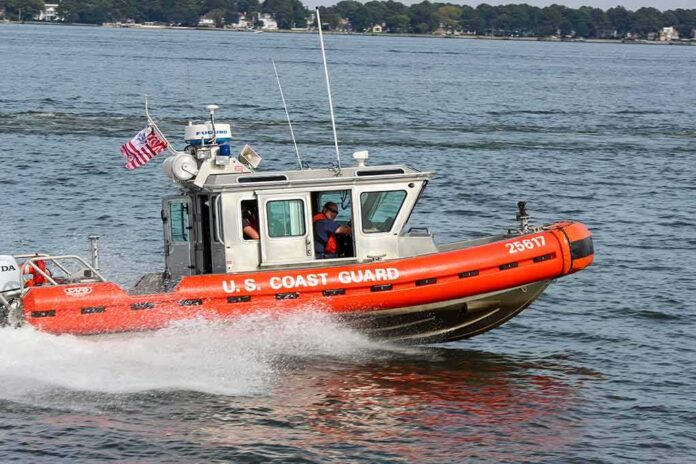
U.S. Coast Guard crews launched before dawn on October 16 after a distress call reported a sinking vessel about 140 miles west of Ensenada, Mexico. Air and surface units found people in the water and debris instead of an intact boat. Crews pulled 16 survivors from the Pacific and began immediate medical care during transfer. The operation took place outside United States waters, but rescuers flew survivors to San Diego for treatment and further support.
Officials said the initial report described 27 people in the water. Rescuers saved 16, while 11 remained unaccounted for as search efforts stretched across a wide area. The Coast Guard later suspended the active search after covering the likely drift zone. The loss of the vessel has not been fully reconstructed, and officials have not released a confirmed cause for the sinking or capsizing during the emergency response phase.
Shark-Related Injuries And Hospital Care
Coast Guard statements said several survivors showed severe injuries consistent with shark bites. Flight crews and boat teams provided first aid during hoist and transport. In San Diego, Scripps Mercy Hospital reported receiving three survivors, including one treated for a suspected shark bite and two for hypothermia-like cold exposure. Medical teams focused on stabilizing patients after prolonged time in open water, where blood loss and cold are the biggest early threats to survival.
Reporters asked whether a specific shark species was identified. Officials and hospital staff used careful language such as “consistent with shark bites” and “suspected shark bite.” That phrasing is standard in fast-moving rescues when teams treat wounds before full forensic review. It reflects what medics saw on scene and in the emergency room, while the priority remained saving lives and preventing further trauma from cold seas and blood loss.
What Authorities Know And What They Are Still Checking
Investigators noted the location and route are common for illegal maritime runs, but they have not confirmed this voyage as a smuggling operation. The passenger total came from the distress report and on-scene counting of people in the water. No manifest or named operator has been released. Agencies often verify identities and travel purpose after survivors receive care and consular support, especially when the incident occurs outside United States waters.
The Coast Guard emphasized the rescue happened far offshore, with debris found instead of a craft that could be examined. That makes it harder to determine what failed first. Investigators will review radio logs, aircraft tracks, and debris photos. They will coordinate with Mexican authorities to identify the boat and its operators, while hospitals document injuries and recovery. Until then, officials are sticking to confirmed facts from the rescue and medical intake.
Why This Watershed Matters For Border And Coastal Security
Federal records and news reports show a surge in dangerous maritime runs near Southern California over recent years. Law enforcement logged a rise in sea smuggling events in the region, and past cases off San Diego have led to drownings and prosecutions. The pattern is clear: crowded boats, long distances, and cold water turn minor mishaps into mass-casualty events within minutes, straining rescue crews and coastal hospitals.
Sixteen people were pulled from the Pacific early on Friday, 16 October, several with wounds consistent with shark bites, after their boat capsized roughly 140 miles (225 kilometres) west of Ensenada in waters associated with suspected migrant smuggling routes to California. pic.twitter.com/WNZT4dC4DA
— Jim Manzon (@manzonjj) October 19, 2026
President Trump’s administration has pressed for tougher maritime enforcement and faster response along the Pacific corridor. This case highlights why. When traffickers or reckless operators push people into risky waters, American crews carry the burden to save lives and recover the lost. Strong borders, visible patrols, and real penalties deter these trips. Better cooperation with Mexico can disrupt launch points before families are put in mortal danger far from shore.
Sources:
usnews.com, abc7.com, people.com