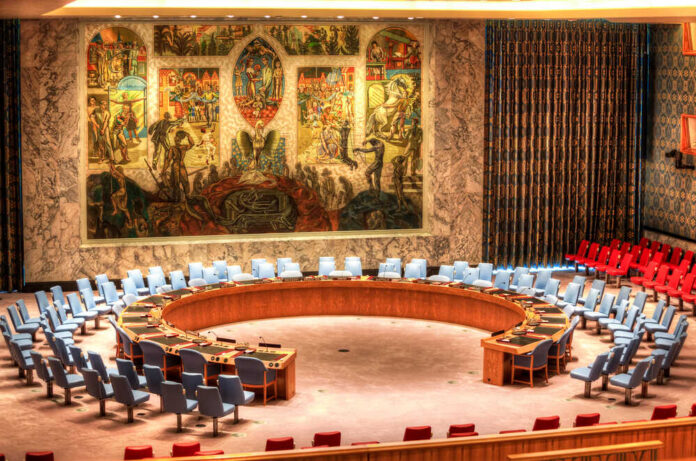
A new UN Security Council decision endorses Donald Trump’s Gaza peace plan, stirring global debate and challenging long-standing geopolitical dynamics.
Story Snapshot
- UN endorses Trump’s 20-point Gaza peace plan, authorizing an international stabilization force.
- The plan includes a “Board of Peace” chaired by Trump, with a path to Palestinian statehood contingent on reforms.
- Support from Arab states contrasts with opposition from the Israeli far-right and skepticism from Russia and China.
- Potential geopolitical shift as the U.S. reasserts leadership in Middle East diplomacy.
Trump’s Bold Peace Initiative
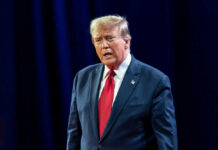
The United Nations Security Council is set to vote on a resolution drafted by the United States, endorsing President Donald Trump’s comprehensive 20-point Gaza peace plan. This plan, a novel approach to an enduring conflict, proposes the deployment of an international stabilization force and the creation of a transitional governance body, the “Board of Peace,” which Trump is slated to chair. This initiative aims to facilitate a ceasefire and outline a pathway for Palestinian statehood, contingent upon significant reforms by the Palestinian Authority.
UN Security Council votes to endorse Donald Trump’s Gaza plan https://t.co/8J8ydBpQ8m
— Anthony Kola-Olusanya, PhD (Toronto) (@kolthon) November 18, 2025
The plan has attracted backing from several Arab and Muslim-majority states, including Egypt, Saudi Arabia, and Turkey, who view it as a pragmatic step towards regional stability. However, it has sparked opposition from Israeli far-right ministers and skepticism from global powers like Russia and China, who are wary of the U.S. reestablishing its influence in the region. The Israeli government, while divided, faces internal pressure as Prime Minister Netanyahu contends with coalition tensions over the plan’s implications for Palestinian statehood.
Watch: United Nations Security Council Votes To Endorse Trump’s Gaza Plan | 10 News
Reactions and Challenges
While the Palestinian Authority has expressed conditional support for the resolution, seeing it as a potential path to statehood, some Palestinian factions, including Hamas, reject it outright, viewing it as an infringement on sovereignty. The plan’s endorsement highlights the geopolitical rifts within the UN, as Russia and China have proposed rival resolutions and are expected to abstain from the vote, rather than exercise their veto power.
The resolution’s success hinges on its ability to secure the necessary votes, with ongoing negotiations focusing on the mandate and composition of the proposed international stabilization force. This force is a key element in ensuring the plan’s implementation and its potential to reduce violence and begin reconstruction efforts in Gaza.
Geopolitical Implications
If endorsed, the plan could set a precedent for international governance in conflict zones, illustrating the potential for multinational intervention under U.S. leadership. It may also realign regional alliances, with Arab states pushing for stability and reconstruction efforts. The plan’s success or failure will significantly impact U.S. diplomatic influence, as well as the political landscape within Israel and Palestine.
In the short term, the plan might stabilize Gaza and reduce violence, but it risks political upheaval in Israel. Long-term effects could include a pathway to Palestinian statehood and shifts in regional politics. The international community will closely monitor this development, as it could redefine approaches to peacekeeping and conflict resolution in volatile regions.
Sources:
UN Security Council Set to Vote on Trump’s Gaza Peace Plan
UN Security Council to Vote on US Resolution on Trump’s Gaza Plan
UN Security Council Vote Monday on Trump Gaza Plan
UN Security Council to Vote on US Resolution on Trump’s Gaza Plan
UN Security Council to Vote Monday on Trump Gaza Plan