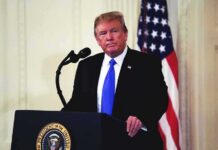

President Trump announced a deal giving the United States majority control over more than 65 billion barrels of Venezuelan oil, promising lower gas prices and stronger energy security.
Story Highlights
- White House allies say a private joint venture grants a 55% U.S. output stake tied to vast Venezuelan reserves.
- Reports describe a 100-year concession covering 17 oil fields and major investment in production.
- Trump says taxpayers will not pay, while critics in Venezuela question legality and authority.
- Supporters argue the pact boosts U.S. supply and undercuts Chinese influence in the region.
What The Deal Claims To Deliver For America
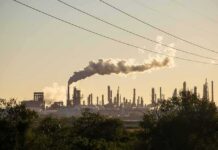
President Trump said the United States secured majority control over more than 65 billion barrels of Venezuela’s proven oil, with no cost to U.S. taxpayers. A White House official told reporters the structure centers on a private joint venture that gives the United States 55 percent of effective output. Supporters say the extra supply could ease prices at the pump and build long-term energy security for families and small businesses who have battled years of high costs.
Several outlets reported concrete scope and scale. Reports described a 100-year concession spanning 17 strategic oil fields and a reserve base measured in the tens of billions of barrels. Venezuelan counterpart Delcy Rodríguez said the country expects over one hundred billion dollars in investment and hundreds of billions in tax revenue, signaling that production growth and revenue sharing are central parts of the framework announced by both sides.
How Control And Access Would Reportedly Work
Coverage stressed that “control” likely means control of output share, not ownership of Venezuela’s oil. The joint venture model cited by officials suggests the United States would guide a majority of production from agreed fields, with Venezuela retaining sovereignty and title. This setup matches past global practice where foreign partners receive operating rights and output shares while the host nation keeps formal ownership of the resource base and sets tax and royalty terms.
Backers tie the deal to relief for U.S. drivers. More barrels moving to market can pressure prices down, especially if supplies fit U.S. refineries. Trump’s team argues that increasing secure Western Hemisphere oil reduces the leverage of adversarial regimes and helps rebuild the strategic buffer that shrank under earlier energy and sanctions chaos. Supporters also point to closer regional ties and a reduced opening for Beijing to lock up future barrels in America’s backyard.
Points Of Friction: Legal, Political, And Practical Unknowns
Venezuelan figures across factions challenged the deal’s legitimacy and staying power. Opposition voices said Rodríguez lacks constitutional authority to bind the country, warning future leaders may not honor the terms. Hard-liners in the ruling movement called it a surrender of sovereignty. Critics also noted that the full agreement text was not released, leaving key legal and financial details outside public view for now.
Reporting revealed inconsistencies in how “control” was described. Some stories used “majority control” of reserves, while others focused on a 55 percent output share in a private venture. Those are not the same as direct ownership. Without a published contract, it is not clear how enforcement, arbitration, or sanctions licensing would work, or how promised investments square with “no cost to taxpayers.” These gaps invite questions even as the core claims drew wide coverage.
Why This Matters For U.S. Families And Energy Security
American families have paid the price for years of hostile energy policy, weak supply chains, and global shocks. A steady flow of nearby oil can help stabilize prices, keep trucking and farming costs down, and protect jobs tied to manufacturing and logistics. If the venture delivers barrels on schedule, it supports the basic conservative goal: reliable, affordable energy that reduces dependence on unstable suppliers and cuts the risk of price spikes at home.
5 AM Top-of-the-Hour News
At Nepal's border with Tibet, more than 600 are confirmed dead… officials doubling the number of people missing to 25-hundred, nearly one hundred Americans among them. Bodies still washing up in the aftermath of Wednesday's avalanche that swept away… pic.twitter.com/MlaFFg8Z7h
— Worldwide News Network (@WorldwideNNX) August 29, 2026
The path forward turns on execution and transparency. Publishing the governing documents and production plan would answer doubts about legal footing and who bears which costs. Proving up reserves with audited engineering and posting clear timelines would show whether the 65-billion-barrel headline translates into real supply. If the barrels flow, Americans could see lower costs and stronger security. If not, critics will argue the promises overstated what the law and geology can deliver.
Sources:
facebook.com, theguardian.com, cnbc.com, abcnews.com, nbcnews.com