
After the Supreme Court shut down a shortcut for unilateral tariffs, the Trump administration is moving to rebuild its trade wall the old-fashioned way—case by case, with investigations that could hit roughly 60 countries.
Story Snapshot
- USTR Jamieson Greer announced new Section 301 investigations targeting “structural excess capacity” and forced labor-linked supply chains.
- The probes are designed to establish a legal basis for future tariffs after a Supreme Court ruling limited tariff authority under IEEPA.
- A temporary 10% global tariff under Section 122 is in place and set to expire July 24, 2026, raising pressure to act fast.
- The administration says the investigations can proceed regardless of existing trade agreements, including with major partners.
Why the Administration Shifted From Emergency Tariffs to Section 301
Late February 2026 brought a key legal constraint: the Supreme Court ruled the administration lacked authority to impose broad unilateral tariffs under the International Emergency Economic Powers Act. That forced a pivot toward tools that are slower but more durable in court. Section 301 of the Trade Act of 1974 requires an investigative record on “unfair” foreign practices before retaliation, making it the central pathway for any post-July tariff regime.
Early March, the White House used a separate authority—Section 122—to impose a temporary 10% global tariff meant to bridge the gap while longer investigations move forward. That interim tariff is time-limited, expiring July 24, 2026, with the administration warning it could rise to 15%. The clock matters for U.S. businesses planning inventories, but it also matters for constitutional governance: durable policy now hinges on building a defensible record instead of improvising emergency powers.
What the New Probes Target: Overproduction and Forced Labor Networks
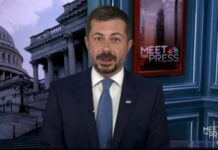
On March 11, USTR Jamieson Greer announced a Section 301 investigation into what the administration calls “structural excess capacity,” describing a pattern where foreign producers manufacture more than their home markets can absorb and then push surplus into the United States. Countries cited across reporting include major partners and competitors—such as the EU, China, Mexico, Japan, and India—along with others named in the briefing.
A second track expands the scope dramatically: a forced-labor-focused probe expected to cover roughly 60 countries and launching immediately after the March 11 announcement. The practical target is not only a flag or a capital city, but the supply chains behind consumer and industrial imports—areas where compliance and traceability can be difficult. Greer’s public posture was straightforward: if tariffs are needed to resolve the issues identified, the administration is prepared to use them.
How Section 301 Works—and Why It Matters for Accountability
Section 301 has a long record because it forces the government to articulate the alleged practice, gather evidence, and follow a process before imposing remedies. That structure can be frustrating to Americans who want quick results, but it also creates transparency that emergency tariff declarations often lack. From a limited-government perspective, the most important feature is that the administration is now leaning on an established statutory framework rather than stretching “emergency” logic to fit long-term economic policy.
The administration has also emphasized that these investigations can proceed independently of existing trade agreements. That approach cuts both ways. It reduces the chance that a deal’s dispute process slows enforcement, but it also puts pressure on relationships with allies that buy U.S. exports. Reporting already points to Europe’s consideration of countermeasures in earlier tariff disputes, and the current investigations revive that risk if the process ends with broad duties.
What to Watch Before the July 24 Deadline
July 24, 2026 is the key date because the temporary Section 122 tariffs expire then unless extended, and the administration has signaled it wants findings from the investigations before that window closes. Several uncertainties remain: the government has not promised a fixed timeline for conclusions, and it is still unclear how narrowly any resulting tariffs would be tailored by sector or country. Businesses should expect more country-specific follow-ups as the USTR builds its record.
For ordinary Americans, the competing effects are familiar. Higher tariffs can raise costs in the short run, especially where supply chains are hard to replace quickly. At the same time, the stated goal is to protect U.S. workers and producers from market distortions tied to overproduction and to push back against forced labor-linked imports. The core test will be whether the investigations produce specific, defensible findings that survive court scrutiny and deliver enforceable leverage without drifting into endless, inflationary uncertainty.
Sources:
https://www.axios.com/2026/03/11/trump-tariffs-trade-301
https://www.cbsnews.com/news/trump-tariffs-301-investigation-trade/
https://www.tradecomplianceresourcehub.com/2026/03/08/trump-2-0-tariff-tracker/