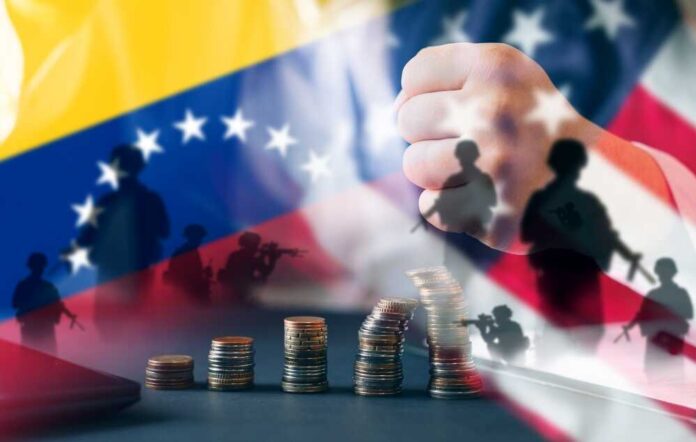
A Senate move to shackle President Trump’s ability to confront Venezuela’s narco‑regime has opened a new front in the war over presidential power and America’s security.
Story Snapshot
- The Senate advanced a war powers resolution to restrict further U.S. military action in or against Venezuela without new congressional approval.
- The vote followed a large U.S. operation that captured Nicolás Maduro and his wife and brought them to the United States to face narcoterrorism charges.
- Five Republicans joined Democrats, exposing a sharp split inside the GOP over Trump’s authority as commander in chief.
- The White House has threatened a veto, warning the measure would weaken U.S. self‑defense and embolden cartels and dictators.
Senate Targets Trump’s Venezuela Authority After Maduro Capture
The U.S. Senate has moved to restrict President Trump’s ability to use military force in or against Venezuela, even after American forces executed a major operation to capture Nicolás Maduro and his wife and bring them to the United States on narcoterrorism and cocaine-conspiracy charges.
The resolution, led by Democratic Senator Tim Kaine, bars further U.S. armed “hostilities in or against Venezuela” without explicit congressional authorization. It comes after the administration framed the Maduro operation as a law-enforcement mission “facilitated by the military,” arguing the United States is not formally at war with Venezuela.
Watch: https://www.youtube.com/watch?v=fusgJ10aStc
Rare Bipartisan Revolt Exposes GOP Divide Over War Powers
The procedural vote to advance the measure passed 52–47, with five Republicans—Rand Paul, Lisa Murkowski, Todd Young, Susan Collins, and Josh Hawley—breaking with most of their party to side with Democrats. These Republicans generally support Maduro’s capture but say they do not back long-term or expanded military commitments without a specific mandate from Congress.
President Trump and Senate GOP leaders responded forcefully, warning the resolution would weaken America at the very moment cartels and hostile regimes are testing U.S. resolve in the Western Hemisphere. Trump blasted the Republican defectors, saying they should be ashamed and never return to office, and argued the measure would “greatly hamper” national self-defense. Senate leaders framed the resolution as sending a dangerous signal to narcotraffickers and dictators.
Clash Between Article I and Article II Powers Enters New Phase
This fight revives the long-running debate over the 1973 War Powers Resolution and how far Congress can go in limiting a commander in chief’s ability to act without a formal declaration of war. Advocates of the Venezuela-specific measure say decades of limited conflicts and overseas operations have eroded the Constitution’s assignment of war powers to Congress, pointing to past clashes over Iran and other theaters.
The administration counters that the Maduro operation fits squarely within the president’s duty to enforce U.S. law and protect Americans from a regime tied to narcotrafficking and regional destabilization. Officials emphasize that the United States is not “at war” with Venezuela and say ongoing maritime interdictions and security missions in the Caribbean are focused on illegal trafficking and hostile activity, not regime-change warfare.
What Comes Next for Trump, Congress, and U.S. Strategy in Venezuela
The resolution has cleared a major hurdle but still faces a challenging path. The Senate must hold a final vote, the House would need to pass a companion measure, and any final bill would go to Trump’s desk, where advisers have already recommended a veto. Overriding that veto would require two-thirds support in both chambers—an unlikely threshold given the current vote margins and the pressure Trump continues to exert on Republican lawmakers who cross him on high-profile national security issues.
For conservative readers, the stakes reach beyond Venezuela. At the core is whether an elected president, chosen to restore borders, crush cartels, and project strength after years of perceived weakness and globalist drift, will be allowed to act decisively when hostile regimes threaten American communities with drugs and chaos. The outcome will help define the balance between necessary checks on endless wars and preserving the executive authority needed to confront real enemies.
Sources:
Senate advances war powers resolution to rein in Trump on Venezuela
Does the War Powers Resolution apply to military actions taken in Venezuela?
Trump, war powers, and Republican defections in the Senate