A looming Supreme Court showdown over birthright citizenship could reshape who counts as an American — and whether Washington can finally shut down “anchor baby tourism” and illegal‑immigration loopholes for good.
Story Snapshot
- Trump’s 2025 executive order narrows birthright citizenship for children of illegal and temporary visitors.
- The Supreme Court’s coming ruling in Trump v. Barbara will decide if that limit stands or falls.
- Liberal groups claim the order “flouts” the Fourteenth Amendment, while Trump argues it restores its true meaning.
- The Court has already allowed the order to take effect in some states, raising the stakes nationwide.
Trump’s Order Targets Birth Tourism and Illegal Entry Loopholes
On his first day of the new term in January 2025, President Donald Trump signed Executive Order 14160, called “Protecting the Meaning and Value of American Citizenship.”[1] The order tells federal agencies not to treat certain babies born in the United States as citizens at birth. It applies when a mother is in the country illegally, or only on a short-term visa, and the father is not a citizen or lawful permanent resident.[1][6] Trump says this closes a loophole that rewards illegal entry and “birth tourism.”
Under the order, agencies such as the Department of State and the Social Security Administration are told to deny passports, Social Security numbers, and other citizenship documents to these children.[1][6] The change is forward-looking, covering births after a set date in February 2025.[6] Local governments can still issue birth certificates, but those papers no longer automatically count as proof of citizenship under federal rules.[1] Trump argues that this move protects taxpayers and preserves the real value of being an American citizen.
Fourteenth Amendment Clash: What “Jurisdiction” Really Means
The heart of the fight is one short phrase in the Fourteenth Amendment: “subject to the jurisdiction thereof.”[1][2] For over a century, courts and agencies have read that to mean that almost everyone born on United States soil is a citizen, except narrow cases such as children of foreign diplomats.[1][8] The State Department’s own manual cites the 1898 case United States v. Wong Kim Ark as confirming this broad rule for children of noncitizen parents.[8] Trump’s lawyers say that reading went too far and must be corrected.
Challengers, backed by groups like the American Civil Liberties Union and the Asian Law Caucus, claim the order violates both the Constitution and federal law that lists who is a citizen at birth.[4][6] They argue that the Fourteenth Amendment’s drafters knew immigrants were here in the 1860s and still chose broad language that covers their children.[1] They also warn that cutting off birthright citizenship for babies of undocumented or temporary parents would affect hundreds of thousands of children born every year.[2] To them, Trump is trying to “rewrite” the Constitution from the Oval Office.[4][7]
Trump v. Barbara: A High-Stakes Supreme Court Decision Ahead
Multiple lawsuits were filed as soon as the order was signed, and several federal trial judges tried to block it nationwide.[2] In June 2025, the Supreme Court pushed back on those sweeping injunctions and said lower courts could not freeze federal policies for the entire country based on a single case.[2][3] The Court allowed the order to take effect in states that had not joined the challenges, leaving families in different legal positions depending on where their child was born.[3] That move already signaled the justices are rethinking aggressive lower-court resistance.
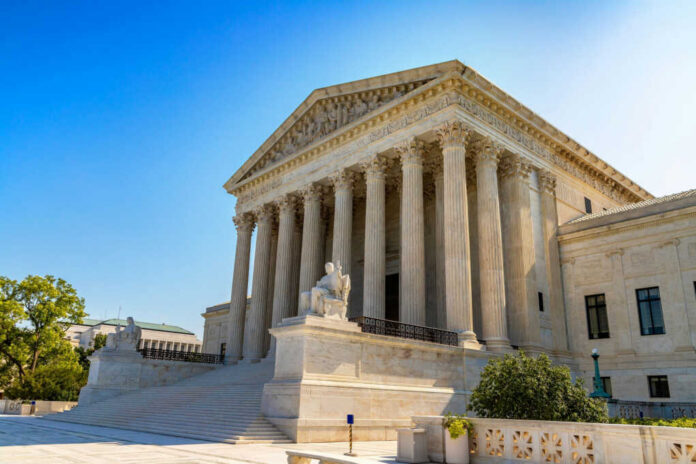
The main battle is now a class-action case called Trump v. Barbara, argued at the Supreme Court on April 1, 2026.[4][6] Civil rights groups brought the case on behalf of children denied, or at risk of being denied, citizenship under the order.[4] They say federal law and the Fourteenth Amendment guarantee citizenship to any baby born here, no matter the parents’ status.[4] Trump’s team answers that presidents must be able to protect the nation’s borders and that “subject to the jurisdiction” cannot mean a blank check for illegal entry and short-term visits.[6] A ruling is expected by early summer.[2][4]
Conservative Concerns: Sovereignty, Costs, and the Limits of Executive Power
For many conservatives, this case is about more than one executive order. It is about whether the United States remains a sovereign nation that decides its own membership, or a borderless welfare magnet where simply touching American soil grants a lifetime claim on taxpayers. Trump has warned that, if the current system stays in place, a huge share of future immigration will come through birthright claims that strain schools, hospitals, and social programs.[1][6] Supporters see the order as a needed course correction after decades of open-border drift.
If the Supreme Court strikes down birthright citizenship, all of Balogun's goals are vacated. Your move Alito
— Ser Lampy The Hostel Hedge Knight (@JustLampy) June 13, 2026
At the same time, the case raises real questions about executive power that matter to limited-government conservatives. Even critics of birthright citizenship argue that the safest way to change it is through a constitutional amendment or a clear law from Congress.[2] Legal analysts across the spectrum note that United States v. Wong Kim Ark has stood for more than a century and that only the Supreme Court, not a president acting alone, can narrow its reach.[6][7] How the justices draw that line will shape immigration, federal power, and the meaning of American citizenship for generations.
Sources:
[1] YouTube – Birthright citizenship decision looms as Trump court cases mount
[2] Web – Supreme Court to Review Constitutionality of Birthright Citizenship …
[3] Web – Supreme Court Arguments Wrap in Landmark Challenge to Trump …
[4] Web – The Supreme Court’s Birthright Citizenship Decision Could …
[6] Web – Supreme Court Expresses Skepticism at Trump’s Effort to Eliminate …
[7] Web – Birthright Citizenship Under the U.S. Constitution
[8] Web – 8 FAM 102.3 SUPREME COURT DECISIONS – Foreign Affairs Manual