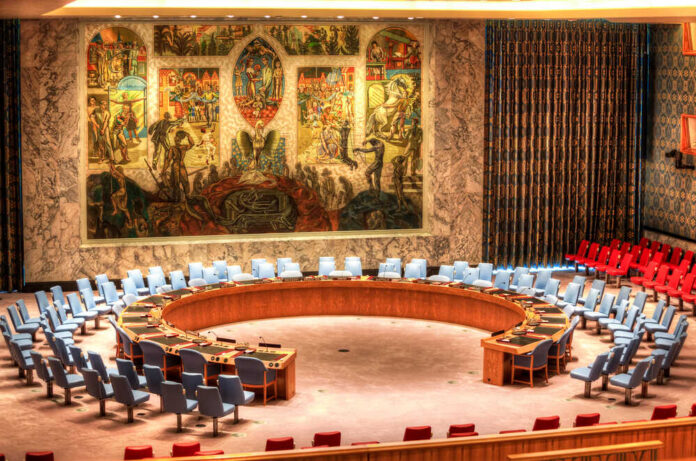
The UN Security Council’s emergency meeting on Venezuela’s crisis exposes international tensions and threatens U.S. credibility.
Story Highlights
- U.S. captures Venezuelan President Maduro, prompting UN session.
- Colombia, Russia, and China challenge U.S. actions at UN.
- Concerns over international law violations and regional stability.
- Potential impacts on U.S.-Latin America relations and oil markets.
U.S. Military Action and International Response
The recent U.S. military operation that led to the capture of Venezuelan President Nicolás Maduro and his wife has triggered a geopolitical upheaval. The emergency UN Security Council meeting, scheduled for January 5, 2026, was requested by Colombia, with backing from Russia and China. This development marks an unusual alignment of these nations against the U.S.’s actions, which have been criticized as a “colonial war” aimed at exploiting Venezuela’s oil reserves. The UN Secretary-General António Guterres has expressed significant concern over potential violations of international law.
Watch: https://www.youtube.com/watch?v=eMS68Imoh5s
Geopolitical Tensions and Stakeholder Positions
The situation underscores the complex dynamics in global politics, with Colombia’s leftist President Gustavo Petro aligning with Russia and China to oppose U.S. intervention. The Trump administration’s actions, framed as necessary to counter threats such as drug cartels, have drawn criticism from various Latin American leaders. Brazilian President Lula da Silva has warned against setting a dangerous precedent, while Maduro’s allies, including Cuba, fear disruptions in oil supplies. This tension is further amplified by Venezuela’s vast oil reserves, which are central to accusations of resource exploitation.
Potential Impacts and Future Implications
Short-term impacts include an expected surge of refugees into Colombia and Brazil, border tensions, and possible disruptions to oil supplies. The legal debate within the UN Security Council could lead to a veto showdown, highlighting divergent perspectives on sovereignty and intervention. Long-term, this crisis risks eroding U.S. credibility in Latin America while boosting Russia and China’s influence. It may also pave the way for future capture operations of national leaders, challenging the norms of international diplomacy.
UN Security Council to Hold Emergency Meeting at Colombia's Request with Russia and China's Support – Maduro Also Expected in Court Monday https://t.co/g7mrlxcSWb #gatewaypundit via @gatewaypundit
— Thomas Register (@Gregister) January 4, 2026
Ultimately, this situation threatens to destabilize the region further, challenging the notion of Latin America as a “zone of peace” and testing global sovereignty norms amid U.S.-China rivalry. The world watches as the UNSC prepares to meet, with the potential outcomes likely to shape international relations profoundly.
Sources:
Regional Tensions Rise After U.S. Military Action and Removal of Maduro
UN Security Council to Hold Emergency Meeting on US Attack on Venezuela