NATO’s promise of an “irreversible path” for Ukraine and a 5% defense spending push now raises hard questions about how far Washington should keep bankrolling Europe’s security while many Americans struggle at home.
Story Snapshot
- NATO chief Mark Rutte met Volodymyr Zelenskyy and again vowed Ukraine “will be in NATO.”
- Rutte highlighted a program buying U.S. weapons with European cash to arm Ukraine.
- He backs a huge 5% of gross domestic product defense-spending target to fund long‑term aid.
- Some nations still resist Ukraine’s NATO entry, revealing deep cracks inside the alliance.
Rutte and Zelenskyy Push NATO Deeper Into Ukraine’s War
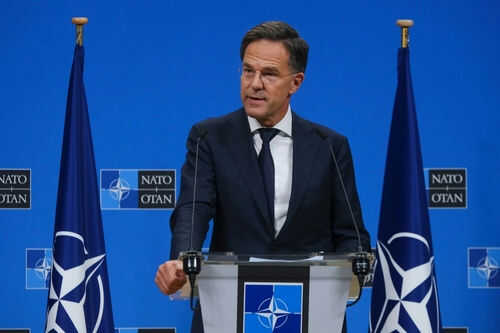
NATO Secretary General Mark Rutte and Ukrainian President Volodymyr Zelenskyy have turned their latest meetings and press conferences into a full‑court press for deeper NATO involvement in Ukraine’s war against Russia. Speaking in Kyiv, Rutte brought the entire North Atlantic Council for a “historic” NATO‑Ukraine Council session, a strong political signal that the alliance now treats Ukraine almost like a member. Zelenskyy used the moment to renew his call for more air defense and faster moves toward formal NATO membership.
Rutte told Zelenskyy and the world that allies had already agreed in past summits that Ukraine is on an “irreversible path” into NATO, and he said plainly, “Ukraine will be in NATO.” That language goes beyond vague promises and sounds like a guarantee, even though he admitted there is still no unanimous agreement inside the alliance to issue a formal invitation. For American readers, this means NATO elites are publicly locking in long‑term security obligations that could reach far into the future, well beyond today’s battlefield.
Europe Buys U.S. Weapons As NATO Builds A Long War Plan
Rutte underscored one key tool: a program where NATO coordinates buying American weapons from United States military stockpiles using European money, then sending those systems directly to Ukraine. He described this effort as providing “essential U.S. equipment,” including air defense systems and interceptors to shield Ukrainian cities from Russian missile attacks. This setup keeps European governments on the hook to pay for gear while U.S. factories and arsenals stay central to the war effort, even as direct American budget aid has slowed.
At other events, Rutte has tied this to a broader “Coalition of the Willing” that mixes European troop deployments, Ukrainian forces, and a U.S. “backstop” to make sure Ukraine can deter Russia after any ceasefire or peace deal. The goal he laid out is simple: build such a strong package of support that Russia “will never try to attack again” once the fighting cools. This is not a short‑term help plan; it is a long‑term security architecture that assumes years of Western spending, training, and arms flows into Ukraine even after the war’s main phase ends.
The 5% Defense Spending Push And Alliance Fault Lines
The most eye‑popping part of Rutte’s agenda is his push for NATO allies to raise defense budgets to around 5% of gross domestic product, far above the old 2% pledge. He has described how leaders at the Hague summit backed a massive ramp‑up in defense production, meant in part to sustain Ukraine with air defense systems and other heavy equipment. Some interviews suggest this new target was framed as a “historic pledge,” making it harder politically to walk back once the public narrative is set. For taxpayers in Europe and the U.S., that level means hundreds of billions more each year into military programs.
Yet behind the bold talk, Rutte has admitted that not every country is fully on board. He noted that nations such as Germany, Slovakia, Hungary, and at times the United States are hesitant on Ukraine’s NATO path and the pace of support. Reporting from Brussels has echoed this, with diplomats saying the alliance is “in waiting mode” on a formal invitation and stressing that membership is “a matter of the future, not the present.” These cracks matter: they show that, despite loud promises, there is no united front on taking on treaty‑level obligations to defend Ukraine as if it were Poland or Estonia.
What This Means For U.S. Conservatives Watching NATO
For American conservatives, Rutte’s plans raise serious questions about sovereignty, spending, and mission creep. NATO leaders are pledging long‑term security guarantees, higher defense budgets, and deep involvement in Ukraine’s air defense, even as many U.S. voters want Washington to fix inflation, border chaos, and crime at home before writing more checks overseas. While European allies are now paying more of the bill, the structure still leans heavily on U.S. weapons, technology, and political cover, tying our defense industry and foreign policy firmly to a war with no clear end date yet.
🗣 NATO Secretary General Mark Rutte urged Russians to “think twice” before joining Russia’s occupying army.
Zelenskyy noted that Ukrainian defenders neutralized around 28,000 Russian occupying troops in June alone.
Read more (https://t.co/eY1sBdPfvF)
— UATV English (@UATV_en) July 7, 2026
There is also the risk of further alliance expansion feeding tensions with Russia, something analysts have warned about since long before the 2022 invasion, and which Moscow uses to justify its aggression. Rutte’s “irreversible path” language pushes NATO toward another round of enlargement right on Russia’s border at a time when the region is still on edge. As debate continues inside the Trump administration over how and when to end the war, conservatives will want to watch closely whether NATO’s promises line up with actual burden‑sharing and whether U.S. leaders keep American interests, and the Constitution, at the center of any future Ukraine deal.
Sources:
cbsnews.com, democrats.senate.gov, nato.int, youtube.com, reddit.com