
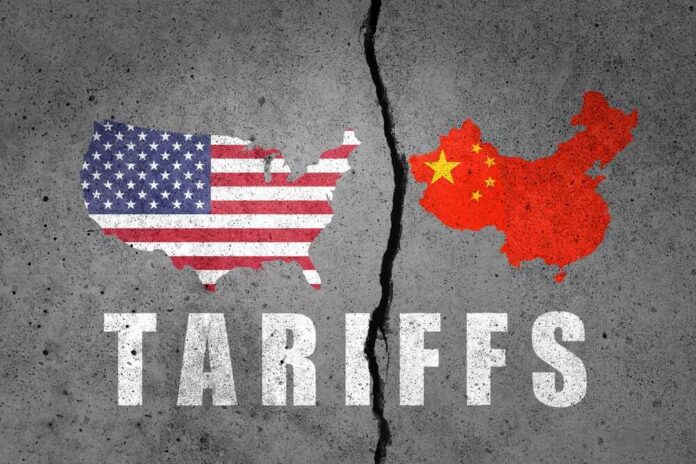
China’s grip on rare earth magnets has become a national-security choke point—and Washington is now threatening tariffs as high as 200% to keep U.S. industry from being held hostage.
Story Snapshot
- President Trump warned China it must continue supplying rare earth magnets or face steep U.S. tariffs, escalating a trade fight centered on critical components for defense and manufacturing.
- China imposed export controls that require licenses for some rare earth elements and magnets, framing the move as a national-security measure rather than an outright ban.
- U.S. officials argue the magnet supply chain is a strategic vulnerability because China dominates both mining and processing capacity globally.
- Weekend talks signaled the dispute is still negotiable, even as both sides publicly project strength and prepare for economic fallout.
Trump’s Tariff Threat Targets a Critical Industrial Bottleneck
President Donald Trump’s latest warning to Beijing zeroes in on a product most Americans never think about: rare earth magnets. These magnets sit inside equipment that makes modern life—and modern defense—work, from jet engines and radar systems to smartphones and electric vehicles. Trump said China must supply magnets to the United States or face tariffs reported as high as 200%, framing the issue as leverage in a wider trade standoff.
China’s recent move was not described as a total cutoff, but as export controls that require licenses, with officials insisting civilian uses can still be approved. That distinction matters because it suggests Beijing wants bargaining power without owning the full blame for global factory slowdowns. Even so, a licensing regime can function like a throttle when approvals slow or become selective, leaving U.S. manufacturers uncertain about whether parts will arrive on schedule.
Why Magnets Matter: Defense Readiness and the Cost of Dependency
Rare earths are often discussed as minerals, but the magnet component is where the strategic pain becomes immediate for manufacturers. Research cited in reporting notes China controls roughly 70% of global rare earth mining and about 90% of processing, which means the United States can’t easily substitute suppliers when pressure rises. For voters already skeptical of globalism, this is the picture they fear: essential inputs concentrated inside an adversary’s system.
The dispute also exposes how modern supply chains blur the line between “consumer convenience” and military readiness. Defense contractors and aviation firms rely on stable flows of specialized materials, and delays can ripple into production schedules, maintenance timelines, and contract costs. The research also describes a recent case in which the United States withheld Boeing parts tied to supply frictions, underscoring that both sides can use industrial dependencies as leverage in a geopolitical argument.
Beijing’s Message: No Fear of a Tariff War, But Room for Talks
Chinese officials publicly emphasized they are “not afraid” of a tariff war while also calling for consultation on an “equal-footed” basis. That combination signals a familiar posture: strength for domestic audiences, negotiation for economic reality. Xi Jinping has also warned that U.S.-China confrontation would be a “disaster,” language that aligns with the idea that both countries can inflict pain, even if the long-run objective is to avoid a total rupture.
U.S. Vice President JD Vance described China’s control of these supplies as a “national emergency,” a phrase that places magnets in the same category as defense stockpiles and critical infrastructure. In practical terms, that framing supports a policy approach that goes beyond tariffs—such as reshoring, strategic reserves, faster permitting, and industrial investment—because the vulnerability is structural. The available research does not confirm a final agreement from the most recent weekend negotiations.
What Comes Next: Reshoring Pressure Meets Real-World Timelines
Trump has projected confidence that domestic production can expand dramatically, arguing the United States can reach a point where it has “so many” magnets it won’t know what to do with them. The strategic logic is straightforward: a secure supply chain reduces the leverage of foreign controls. The timeline is the harder piece. Mining, processing, and manufacturing capacity take time, capital, and regulatory clarity—areas where Washington’s performance often frustrates voters across the spectrum.
For conservatives, the magnet dispute reads like a case study in why “America First” supply-chain policy exists: concentrated foreign control can translate into political coercion. For liberals who worry about costs and inequality, tariff escalation raises familiar concerns about price pressures and retaliation that hits workers. The shared bottom line is that decades of policy choices left the U.S. exposed in a critical niche, and a government that often feels reactive is now trying to negotiate from a position of urgency.
Until clearer outcomes emerge from negotiations, U.S. companies remain stuck between two realities: China can tighten export approvals, and Washington can raise tariffs high enough to force painful supply-chain rewrites. If boardrooms accelerate diversification away from China, Beijing risks losing long-term customers; if the U.S. fails to build domestic capacity, the leverage problem returns in the next crisis. The research supports one conclusion with confidence: giving China durable control over critical magnets is a strategic risk neither party can ignore.
Sources:
Xi says US-China confrontation would be disaster
Trump’s Policy Toward China Is Already A Disaster Even Before Taking Office