
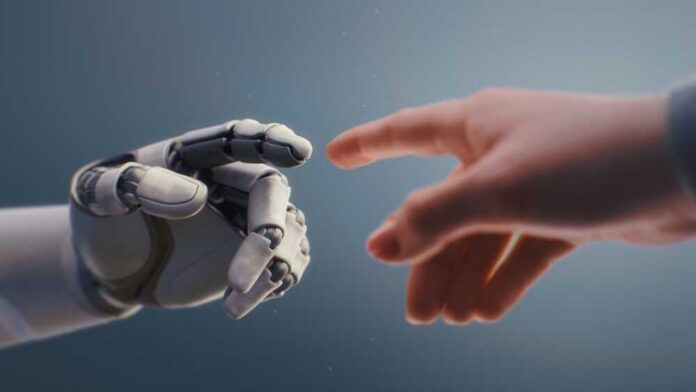
A chilling new novel envisions Americans turning to child-like robots for family amid crashing birth rates, raising alarms about eroding traditional values in a tech-driven future.
Story Highlights
- *Luminous* by Silvia Park depicts a reunified Korea where robots serve as eternal children, pets, lovers, and siblings, mirroring real-world fertility declines.
- Characters form deep emotional bonds with non-aging robots like Yoyo, a forever 12-year-old, evoking Peter Pan’s grief-frozen youth.
- Author warns robots could substitute for human children due to economic fears, climate woes, and low birth rates—trends hitting U.S. families hard.
- Story exposes human prejudices and robot abuse, blurring lines between machine utility and family love without dystopian uprisings.
- Critics praise its exploration of grief, war trauma, and redefining humanity amid advancing AI in 2026.
Novel Premise and Core Plot
Silvia Park’s debut novel *Luminous*, set in near-future Seoul after reunification war and climate change, centers interconnected lives shaped by humanoid robots. Disabled girl Ruijie discovers damaged child-like robot Yoyo in a scrapyard, forming a profound bond. Transgender detective Jun, mostly bionic from war injuries, probes a missing child robot Eli amid his robot-heavy family history. His sister Morgan, a robotics engineer, dates custom robot Stephen and secretly models new child robot Boy X on Yoyo. Robots integrate as workers, pets, family, and partners without uprisings or superpowers. (78 words)
Family Dynamics and Human-Robot Bonds
Jun and Morgan grew up treating prototype Yoyo as a non-aging sibling, a legacy of their father’s pioneering robot tech. Yoyo’s “disappearance” haunts their estrangement. Ruijie, reliant on robowear braces for her genetic disease, befriends the legless, dying-battery Yoyo, highlighting child-robot friendships. Morgan advances companion robots at Imagine Friends, blurring romantic and familial lines. Park draws from *Peter Pan*’s eternal childhood fixation, born of real grief, to probe attachments amid declining birth rates. These bonds challenge traditional family structures. (82 words)
Themes of Grief, Abuse, and Societal Shifts
*Luminous* rejects dystopian tropes, portraying queer acceptance and post-climate survival where robots fill voids left by low fertility and war trauma. Female robots endure abuse mirroring women’s treatment, coded for subservience and hurt for pleasure. Robots make utilitarian decisions without true emotions, exposing human projections akin to *Blade Runner*. Park explores “banality of evil” in robot treatment, inspired by *Memories of Murder*. In 2026, as U.S. birth rates plummet under elite-driven policies, the novel warns of redefining love and family through machines. (79 words)
Relevance to American Concerns in 2026
Park, a University of Kansas professor, states robots as child substitutes seem viable given economic and environmental fears, predating AI superiority. Critics like Diana Arterian note it illuminates human anxieties intensified by robots. Max Nurnus highlights emotional needs projected onto emotionless machines. With Trump’s second term prioritizing America First amid GOP congressional control, *Luminous* resonates as a caution against globalist tech dependencies eroding self-reliance and traditional values. Both conservatives and liberals decry government failures fueling such crises. (74 words)
Sources:
Relationships with robots drive plot of novel Luminous | KU News
Review: Luminous by Silvia Park – Max Nurnus
Luminous by Silvia Park – blog tour – AnnaBookBel
Book Review: Luminous by Silvia Park – David Agranoff