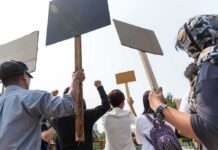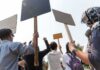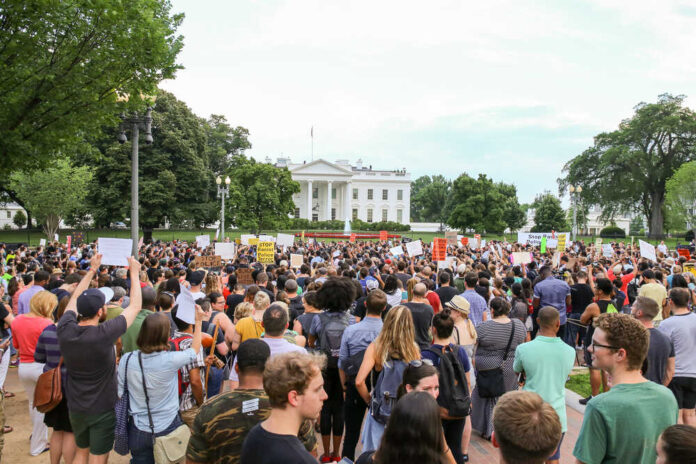
A nationwide protest challenges President Trump’s immigration enforcement policies, drawing thousands into the streets.
Story Overview
- Thousands participate in nationwide “Free America Walkout” on January 20, 2026.
- Organized by the Women’s March, the protest opposes aggressive immigration enforcement.
- The event marks one year since Trump’s second inauguration.
- Protesters decry ICE raids and military deployments in U.S. cities.
Nationwide Protest Marks Trump’s Second Term
On January 20, 2026, exactly one year into President Donald Trump’s second term, a coordinated nationwide walkout dubbed the “Free America Walkout” took place. Organized by the Women’s March, it aimed to voice opposition against the administration’s immigration policies. The protest saw thousands leave their workplaces and schools at 2 p.m. local time to stand against ICE raids and military deployments in cities like Washington D.C., Los Angeles, and Oklahoma City.
This synchronized protest highlights the enduring resistance to policies perceived as threats to civil liberties and human rights. The timing during business hours was strategic, emphasizing the importance of labor in societal function. Following the fatal shooting of Renee Nicole Good by an ICE agent, the momentum for the protest escalated, particularly in Minnesota, where tensions have been high.
Watch: https://www.youtube.com/watch?v=eg8Ry9cA9vo
Background and Catalysts
The Women’s March, originating from mass protests in 2017, continues to lead resistance efforts against the Trump administration. The recent escalation began with “Operation Metro Surge” in December 2025, when the Department of Homeland Security intensified immigration enforcement in Minneapolis and St. Paul. The tragic killing of Renee Nicole Good, a U.S. citizen, by an ICE agent further galvanized public outrage, leading to daily protests in Minnesota throughout January.
Local government officials, including Minneapolis Mayor Jacob Frey, have criticized federal actions, labeling the potential deployment of 1,500 soldiers to Minnesota as unconstitutional. A federal judge’s ruling preventing officers from using tear gas on peaceful protesters has been contested by the Department of Justice, indicating deep institutional conflict over enforcement tactics.
Implications and Future Outlook
The “Free America Walkout” not only underscores the persistent public dissent against Trump’s immigration policies but also highlights the broader implications for civil liberties. In the short term, the protest has disrupted commerce and reinforced the value of labor. Legal battles over protest rights and potential military involvement could shape future demonstrations and policy approaches.
In the long term, this movement may influence political dynamics, particularly as the nation approaches the 2026 midterm elections. Continued aggressive enforcement, as seen with 3,000 arrests in Minnesota, underscores the administration’s commitment to its policies, despite public opposition. The walkout serves as a rallying call for those advocating for constitutional protections and human rights.
Sources:
TIME Magazine: Nationwide “Free America Walkout” Held in Protest
Fox News: Nationwide Walkout Draws Thousands
CBS News: Georgia Students Walkouts Protest ICE Action
Los Angeles Times: Anti-Trump Protesters Join Walkout