
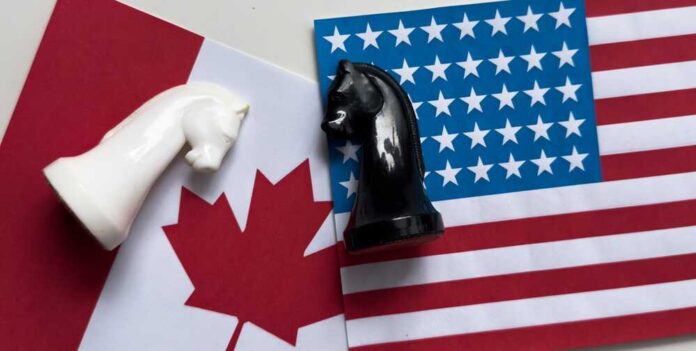
For the first time in over a century, Canada’s military has war-gamed a defense against a potential American invasion.
Story Snapshot
- Canadian Armed Forces develop first U.S. invasion defense model in 100+ years amid Trump administration’s territorial ambitions
- Defense strategy includes guerrilla warfare, drone attacks, and NATO ally support from France, UK, and Germany
- Military estimates Canada would have only 2 days to 3 months to prepare against U.S. forces numbering 1.3 million versus Canada’s 66,000
- Public opinion shifts dramatically as majority of Canadians now view America as their greatest national security threat
Historic Defense Planning Marks Unprecedented Shift
The Canadian Armed Forces has developed a military model responding to a hypothetical U.S. invasion for the first time since before World War I. This extraordinary planning exercise represents a fundamental break from over a century of peaceful relations along the world’s longest undefended border. The model emerged in January 2026 following President Trump’s repeated public statements about acquiring Canada as America’s “51st state” and expressing interest in Greenland’s strategic Arctic territory. Canadian officials emphasize the planning remains theoretical and precautionary, yet the mere existence of such modeling signals genuine concerns about eroding continental security arrangements.
Watch: https://www.youtube.com/watch?v=KDccvgXHtdY
Asymmetric Warfare Strategy Reveals Military Reality
Canada’s defensive model embraces unconventional tactics inspired by Afghan Mujahideen resistance during the Soviet-Afghan War. The strategy incorporates guerrilla-style operations, drone warfare, sabotage missions, and hit-and-run ambushes rather than conventional military confrontation. With American forces outnumbering Canadian troops nearly twenty-to-one—1.3 million active-duty personnel versus Canada’s 66,000 regulars and 25,000 reservists—traditional defense proves unrealistic. The model assumes U.S. forces would begin operations from the south, potentially overrunning strategic positions within two days while Canada scrambles for a maximum three-month preparation window. This represents prudent contingency planning given asymmetrical capabilities.
Canada's Military Preps Model Of Hypothetical US Invasion In Historic First https://t.co/S8a8GSOxIC
— TYLΞR 🏴☠️ (@anonymous_ib) January 23, 2026
NATO Allies Coordinate Against American Territorial Ambitions
Canada’s planning explicitly includes requesting European military support from France, United Kingdom, and Germany, marking unprecedented NATO coordination against potential American aggression. France and Germany have already deployed troops to Greenland following Trump’s statements about acquiring the Danish territory, with Canada considering similar Arctic deployments. Retired Major-General David Fraser emphasizes that any attack on Canada would trigger an international response, stating “you are going to have the world coming after you” and predicting German ships and British planes would reinforce Canadian sovereignty.
Canadian Public Sentiment Reflects Growing Distrust
Polling conducted in summer 2025 revealed most Canadians now view the United States as their country’s greatest threat—a dramatic reversal from historical attitudes. This shift in public opinion preceded the military modeling and reflects genuine alarm at Trump’s rhetoric about Canadian “vulnerability” and America’s right to acquire neighboring territories. Canadian Prime Minister Mark Carney has publicly affirmed support for Greenland and Denmark’s sovereignty, declaring Canada stands “firmly with Greenland and Denmark” in supporting “their unique right to determine Greenland’s future.” The Canadian Armed Forces is experiencing increased recruitment following years of declining enlistment, suggesting citizens take these threats seriously enough to consider military service.
Constitutional Concerns and Sovereignty Protection
Trump’s territorial ambitions toward Canada and Greenland represent troubling departures from American constitutional principles of national sovereignty and self-determination that conservatives traditionally champion. The suggestion that military force could secure territorial acquisition contradicts fundamental values of limited government and respect for established borders. Current U.S.-Canadian military cooperation continues through NORAD exercises, yet the existence of invasion modeling underscores how dangerous rhetoric erodes trust between allies. Canadian preparedness serves legitimate defensive purposes while highlighting the importance of respecting international borders and alliance commitments rather than pursuing expansionist policies.
Sources: