One dead and seven treated in Northeast Washington, D.C., is the latest warning that fentanyl still turns city sidewalks into crime scenes.
Quick Take
- Eight people suffered suspected overdoses on H Street NE, and one person died at the scene.[1]
- Police and fire crews responded after reports of several unconscious people, and officers used Narcan on victims.[1]
- District officials said Washington, D.C., recorded 3,125 overdose deaths in 2024.[1]
- Past city reports and health data point to fentanyl as the main driver of the overdose crisis.[12][17]
Mass Overdose Hits H Street NE
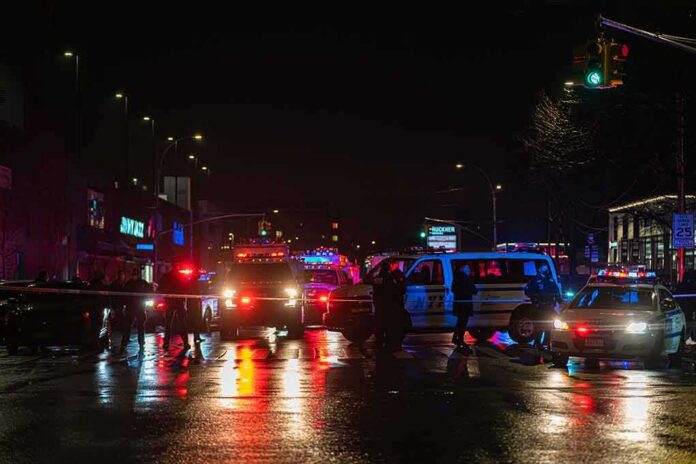
Police say eight people suffered suspected overdoses on Thursday afternoon in Northeast Washington, D.C., along the 900 to 1400 blocks of H Street NE.[1] One person died at the scene, while seven others were treated or taken for care. First responders arrived after reports of several unconscious people. Officers gave Narcan to several victims, which shows how fast these cases can become life or death.
The immediate facts are serious, but one point still needs care. The public report does not confirm what substance caused this incident, so the label “suspected overdose” matters.[1] That is important because drug deaths in the city often involve mixed substances, and headlines can move faster than lab results. Even so, the scene fits a pattern that D.C. residents know too well: sudden overdose clusters that strain police, fire, and hospital crews.
A City Still Buried Under the Overdose Crisis
The district recorded 3,125 overdose deaths in 2024, according to the report cited in this package.[1] That is a staggering toll for one city and one reason so many families feel abandoned by years of failed policy. The larger problem is not hard to see. Federal and local leaders have spent years talking about treatment, outreach, and prevention, yet the body count keeps rising while street-level drug use stays visible in many neighborhoods.
Earlier city and health reporting points to fentanyl as the main force behind the crisis. The District of Columbia Office of the Chief Medical Examiner’s 2021 annual report said fentanyl was involved in 95 percent of opioid deaths.[12] The Drug Enforcement Administration has also warned that fentanyl-related mass overdose events are happening in multiple cities and that traffickers often mix fentanyl with other drugs.[17] For ordinary families, that means one bad purchase can still kill.
What This Means for Public Safety
This incident will likely renew debate over how D.C. responds to addiction, crime, and street disorder. Some public health voices push test strips, outreach, and medically assisted treatment. The District Policy Center has argued that fentanyl test strips and active outreach backed by treatment are part of the answer.[9] Those tools may help at the margins, but they do not replace hard enforcement against dealers who poison neighborhoods and walk away while victims fall over on sidewalks.
7 taken to the hospital, 1 dead after mass overdose in Northeast DC https://t.co/jYw75sd1Eu
— VE Davis (@ve_davis86139) June 25, 2026
Washington, D.C., has seen too many overdose waves to treat this as routine. Previous reports in the package describe other deadly clusters in Northeast D.C. and near Nationals Park, showing that the same problem keeps returning in different neighborhoods.[2][7] The larger lesson is plain. A city cannot protect families, restore public order, or defend basic human life if it treats fentanyl as a nuisance instead of a public emergency.
Sources:
[1] Web – One Dead After Eight People Overdose While DC Struggles to Combat …
[2] Web – 10 Dead From Drug Overdoses In Northeast DC Over Past 3 Days: Police
[7] Web – Three people dead after 10 suspected fentanyl overdoses near DC’s …
[9] Web – Confronting the opioid—and fentanyl—crisis in the District
[12] Web – OPIOID
[17] Web – DEA Warns of Increase in Mass-Overdose Events Involving Deadly …