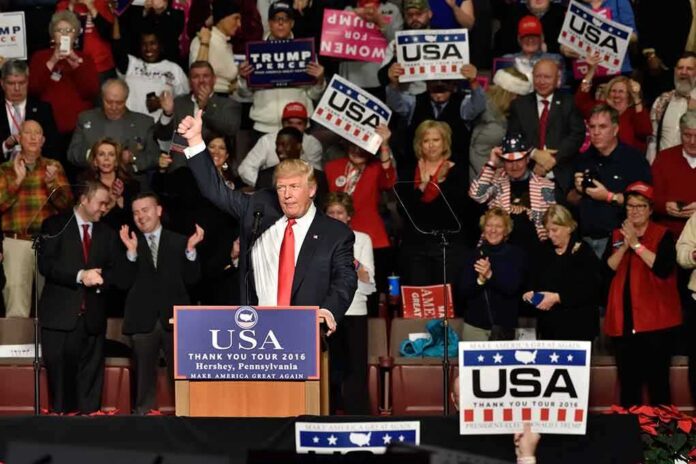
President Trump is launching a 32-day coast-to-coast campaign blitz to help Republicans hold Congress before November.
Story Highlights
- Trump announced a “32-day tour” to boost Republicans before the midterms.
- The push centers his record and message in key House and Senate races.
- Initial stops include Texas and Ohio, with more states to follow.
- The strategy aims to energize turnout in tough midterm conditions.
President Trump Sets 32-Day Sprint To Protect The Majority
President Trump said he will spend the next 32 days on the road to campaign for Republican candidates. He framed the effort as a “literally a 32-day tour” that puts his record and message front and center as voters decide control of Congress in November. The plan mirrors how presidents often step in during midterms to defend their agenda and help their party hold seats when the other side is pushing hard to flip the map.
The tour begins this week and stretches through Election Day. Trump said the schedule includes Texas first, then Ohio, and “all different places,” with additional stops to be confirmed as races tighten. The itinerary is built to draw crowds, raise funds, and deliver a clear contrast on border security, crime, inflation, and energy policy. Campaign events will press Republicans’ case on jobs, lower costs, and secure borders while calling out Democrats for policies that have hurt families.
Why A Long Midterm Tour Matters For Republicans
Midterm elections usually cut against the party in the White House. Since World War II, most presidents have seen House losses in the midterms. That is why the focus now is turnout, enthusiasm, and keeping swing voters engaged in close races. Research on presidential campaigning shows leaders tend to visit where contests are most competitive, because a timely stop can lift attention, donations, and volunteer energy in the final stretch. The Trump team is following that playbook.
Republicans see this tour as a force multiplier for candidates facing heavy spending from national Democrats. A presidential visit drives local news coverage, fills rally venues, and builds volunteer lists overnight. That effect can matter in House districts and statewide Senate races decided by a few thousand votes. The travel also helps unify message discipline around core conservative goals: secure the border, restore energy dominance, cut wasteful spending, and defend parental rights and the Second Amendment.
Early Stops Signal Turnout Strategy And Ground Game
Starting in Texas and then Ohio, the schedule pairs friendly ground with contested areas nearby, so the campaign can surge volunteers and media attention into tight races. These states also spotlight issues that move voters: oil and gas jobs, farm and manufacturing strength, and the cost of living. By visiting plants, small towns, and suburbs, Trump aims to show how conservative policies support work, lower costs, and safe streets, while tying Democrats to higher prices and weaker borders.
NOW OR NEVER | President Trump is launching a 32-day, 30-stop nationwide campaign.
President Donald Trump is kicking off a massive 32-day campaign blitz in Texas and Oklahoma to rally voters and help Republicans protect their slim congressional majorities.
Here is the breakdown… pic.twitter.com/oQMnZsTzAa— Illinois247 (@illinois247news) October 1, 2026
The White House and party groups plan to sync each stop with voter registration drives and early vote pushes. That means phone banks, door knocking, and church and veterans outreach tied to rally dates. The goal is simple: bank votes early and squeeze every point of turnout from reliable conservatives and right-leaning independents. If Republicans execute, the tour can help blunt the usual midterm drag and keep control of Congress in conservative hands when it counts most.
Sources:
facebook.com, aljazeera.com, theepochtimes.com, ktnv.com